






Movies & TV Shows

‘Send Help’ Review: Sam Raimi Returns to Horror With a Twisted Survival Tale

Reading Time: 7 minutes

Share via

Our team of editors and experts thoughtfully chooses each product. If you decide to buy through one of our links, we may earn a commission. Learn more. Want to know how we test products? Click here for more details.

For horror fans, ‘Send Help’ feels like a homecoming. While Sam Raimi has spent years directing big movies and producing projects behind the scenes, this is his first real return to horror in theatres since ‘Drag Me to Hell’ came out in 2009. Almost twenty years later, the filmmaker still has his skill. Send Help combines suspense, dark humour, and survival drama in a way that quickly brings back the energy and style that made Raimi a unique voice in the genre.

The story focuses on two coworkers, Rachel McAdams and Dylan O’Brien, who are stranded on a remote island after a disaster. What started as a struggle to survive some becomes more complicated as old annoyances, personal secrets, and personality clashes surface. Sounds like a simple story, right?

Well, when you have Sam Raimi as the film director, he knows how to handle it, creating a thrilling suspense, laughs, and so many awkward moments. Yet the film is still fun to watch, offering the kind of big-screen horror experience that keeps viewers munching popcorn.

Drifting Into Disaster

If you’ve ever sat through a flight and thought, “What’s the worst that could happen?” well, ‘Send Help’ has a few ideas up its sleeve. What begins as an ordinary business trip quickly turns into a nightmare when a violent storm sends a company plane spiralling towards disaster. What follows is messy, chaotic, and exactly the kind of opening Sam Raimi fans will appreciate. Once the dust settles—or, in this case, the waves—only Linda and Bradley are left standing, though Bradley is barely so.

They end up washed up on an island that looks like paradise from far away, but surviving is not as easy as finding coconuts and waiting to be saved. Food runs low, injuries add up, and every day brings more worry that no one knows they are there. Raimi creates a lot of tension from their situation, yet he still finds space for dark humour, making you feel almost guilty for laughing, but that is what makes his work stand out.

The film focuses on how these two survivors cope, bringing together two very different lifestyles they are used to. Linda has spent years dreaming about adventure, watching survival shows, and gaining outdoor skills that suddenly become very useful. Bradley comes with fancy shoes, a country-club lifestyle, and no clue how to survive in the wild. After his injuries and feeling helpless, he has to trust Linda to keep him alive, which is the last thing his pride wants.

That’s where the film starts having real fun. As days stretch into weeks, the island brings out their polished selves and exposes who they really are. Frustrations, insecurities, and personal baggage rise to the surface, turning every conversation into a potential powder keg. McAdams and O’Brien bounce off each other beautifully, making it impossible to predict where the relationship is headed next. One minute you’re rooting for them to make it home together, the next you’re wondering whether one of them is going to lose their mind first.
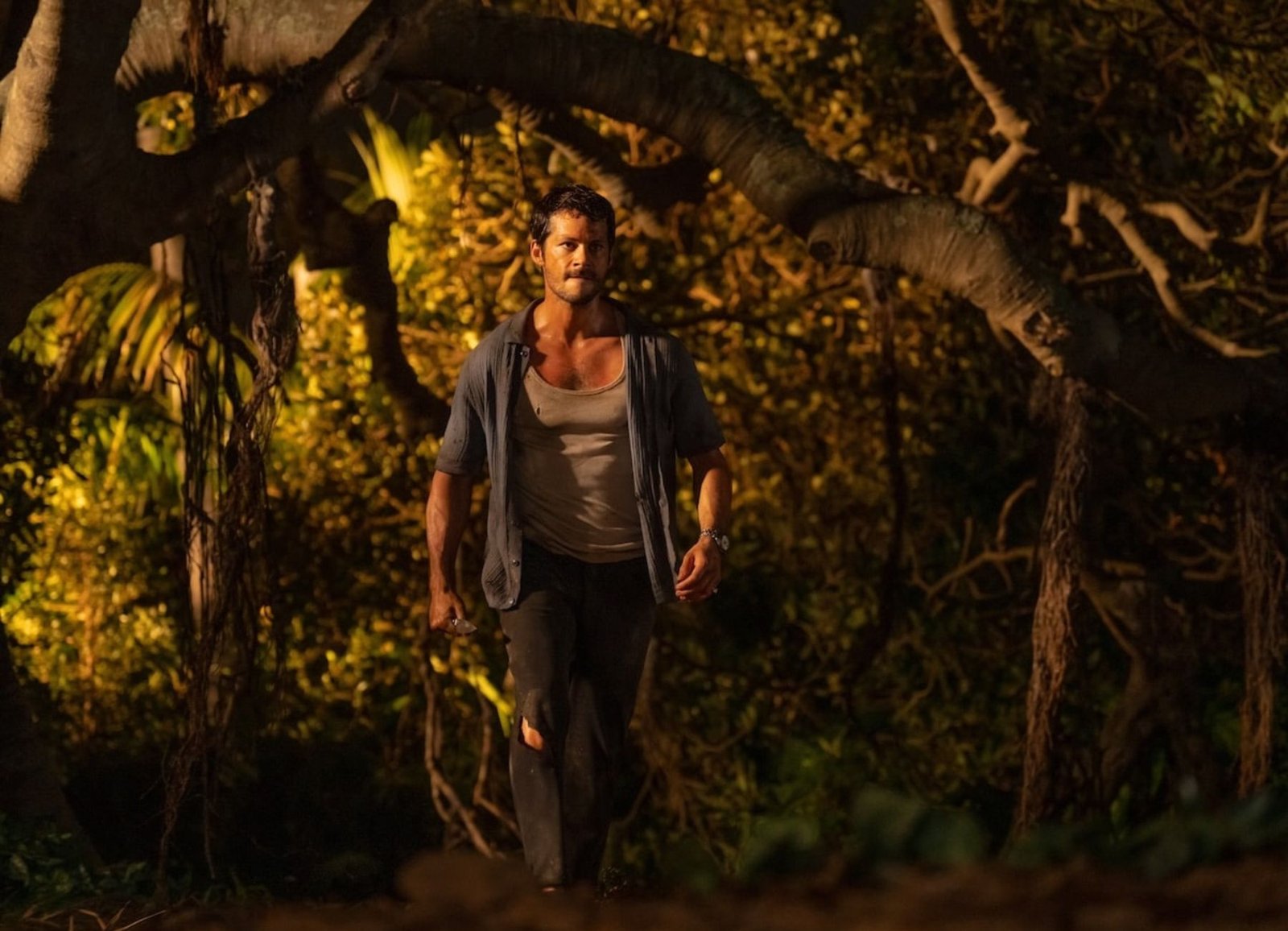
Bradley Preston, played by Dylan O’Brien in ‘Send Help’ | Image: 20th Century Studios

A Fight for Survival

Once the shock of the crash wears off, ‘Send Help’ settles into a survival story—but not the kind you might expect. The island presents plenty of obstacles on its own, from injuries and hunger to the uncertainty of being rescued, which is only half the struggle; the real struggle comes from the people stranded there. Linda and Bradley aren’t natural allies. They’re co-workers with very different outlooks on life, and being trapped together only magnifies those differences.

The film is really engaging because of how the balance between them changes. At first, Linda seems to have everything under control, being clever, practical, and much more at ease in the wilderness than Bradley. But as the days go by and feelings begin to flare up, their relationship becomes less predictable. Small arguments turn into big fights, and surviving feels more like a mental battle than a physical one

At times, it feels like the world’s worst couples therapy session ever—just with fewer therapists and more dangerous situations. Besides that, both actors perform these scenes beautifully. McAdams and O’Brien have great chemistry that keeps the story going even in its quieter parts, and both actors make their characters feel imperfect, annoying, and surprisingly easy to relate to. Just when the film seems ready to calm down, it adds another challenge, making sure neither the characters nor the audience gets comfortable.
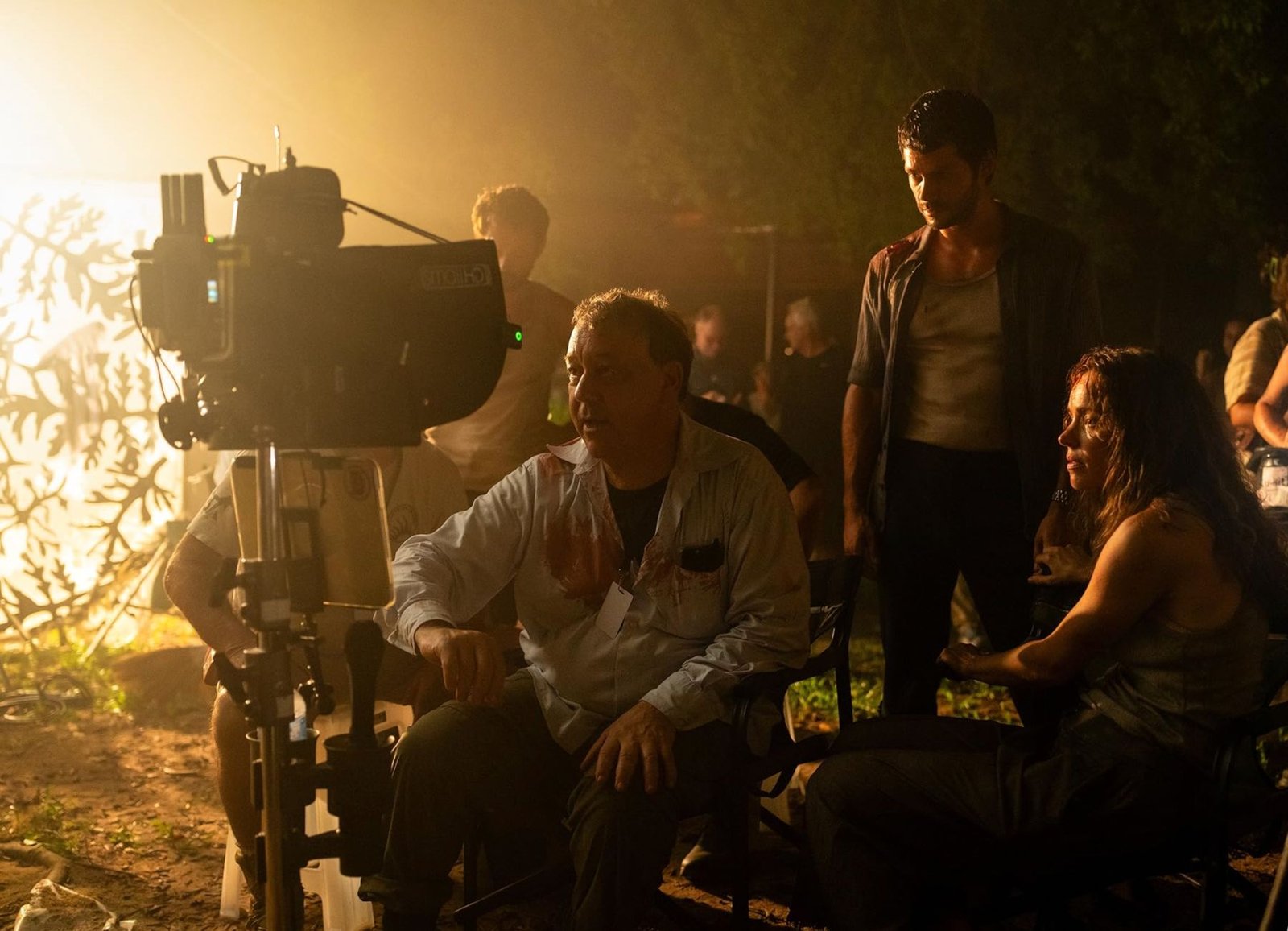
Sam Raimi behind the scenes in ‘Send Help’ | Image: 20th Century Studios

Sam Raimi’s Bag of Tricks

‘Send Help’ feels like Sam Raimi returning to the playground he built. Only a few filmmakers are as comfortable blending horror and comedy, and even fewer can switch between the two as easily as Raimi does here. It has defined Raimi’s career for decades, and he hasn’t lost his touch.

Let’s not forget to give credit to the writers, Damian Shannon and Mark Swift, who deliver a script that feels like several genres colliding in the best way. Survival drama, workplace comedy, horror, and even a touch of relationship drama all find a place here. It’s the sort of concept that could easily become a mess, but the film somehow keeps its footing even when it veers into unexpected twists.

The visual effects can be a little rough, particularly when the film relies on CGI, giving it a scrappy energy that fits perfectly with Raimi’s style. But the question isn’t how to survive on a deserted island—it’s whether you’d survive being stranded with someone you can barely tolerate. And what better way than Raimi pushing characters in uncomfortable situations in darker, bloodier, and far more chaotic ways as the story unfolds.

The third act throws subtlety overboard and embraces pure mayhem, including one sequence guaranteed to make every male audience member instinctively cross their legs. Through it all, McAdams and O’Brien remain fully committed, with McAdams perhaps summing up the experience best when she joked, “It’s a rite of passage to have Sam Raimi throw blood in your face.”

Bradley Preston, played by Dylan O’Brien, and Linda Liddle, played by Rachel McAdams, in ‘Send Help’ | Image: 20th Century Studios

The Final Distress Call

‘Send Help’ is the kind of movie that shows why Sam Raimi became such a loved horror filmmaker. It’s tense, funny, strange, and sometimes really gross, often all in the same scene. Not every effect works perfectly, and the film sometimes goes into wonderfully exaggerated moments, but that’s part of the fun.

Strangely, even with all the blood, injuries, and emotional breakdowns, the film might make you dream about a tropical vacation. Of course, you’ll probably want one with room service and good Wi-Fi. Thanks to strong performances from Rachel McAdams and Dylan O’Brien, the dark humour, and several moments that made my audience groan, laugh, and cover their eyes all at once. One scene will likely make every man in the theatre shift uncomfortably in his seat. By the end, Raimi has given fans exactly what they wanted: a wildly fun survival thriller that shows he still has his playful style.

IMDb: 6.7 | Tomatometer: 92 | Popcornmeter: 86% | Average: 81.6

★★★★☆

Linda Liddle, played by Rachel McAdams in ‘Send Help’ | Image: 20th Century Studios

Movies Review
About the Author

Related Articles

Cars

Mercedes-Benz Goes Full Gangster With The Vision Iconic

Reading Time: 7 minutes

Our team of editors and experts thoughtfully chooses each product. If you decide to buy through one of our links, we may earn a commission. Learn more. Want to know how we test products? Click here for more details.

Ever wanted to arrive at a wedding in full gangster mode, dressed head to toe in a blacked-out tuxedo, sunglasses on, and hell of confidence dialled all the way up, and own the room? That’s exactly what you are looking at, even though this is a concept by Mercedes-Benz called the ‘Vision Iconic’. Even though it will almost certainly never see a production line, the Vision Iconic feels like it’s making a dramatic entrance, and yet it dangerously is aware of its surroundings.

Mercedes-Benz calls it the Vision Iconic, and while the name might be bold, the design supports it. In an era where many concept cars feel awkward or overdesigned, this one manages to look genuinely good, leaning into exaggerated luxury. It definitely takes inspiration from the 1930s and 1940s and grand concepts like the Cadillac 16, the Maybach Excelero, and even the Daimler Double-Six, all of which feature a modern cinematic edge.

The Vision Iconic isn’t about what will hit showrooms next year, but about reminding everyone of what the brand is capable of when it allows creativity to lead. As Markus Schäfer explains, “Vision Iconic embodies our vision for the future of mobility,” adding, “With groundbreaking innovations such as neuromorphic computing, steer-by-wire, solar paint, and Level 4 highly automated driving, along with state-of-the-art technology, we are setting new standards for the electric and digital age. This beautiful vehicle is a testament to our commitment to making the mobility of tomorrow a reality today.”

Mercedes-Benz Vision Iconic | Image: Mercedes-Benz

Let’s start with the front end, where the Vision Iconic immediately grabs everyone’s attention with its grille. Its upright stance is a nod to some of Mercedes-Benz’s most commanding luxury cars, including the 600 Pullman and the W108 and W111 sedans, but the execution feels completely modern. The wide chrome trim around the smoked-glass grille, along with the small lights tucked into the design, give the Vision Iconic its character. One thing is certain: that front grille isn’t just for show; it delivers that strong Mercedes-Benz presence, reasserting some of the authority and prestige many fans think has been lost in recent models.

Speaking about the headlights, they really nailed it, didn’t they? They’re thin, sharp, and they definitely complement the car’s overall look like little star lights. They’ve got all the latest lighting tech and don’t detract much from the overall design, and I think that hits the sweet spot, mixing old ways with modern lighting innovations and what Mercedes-Benz does best.

Mercedes-Benz Vision Iconic | Image: Mercedes-Benz

This is where things get interesting, especially once automation comes into play. Mercecedes uses the Vision Iconic to explore options beyond driving, and the end result feels more like a rolling lounge than a traditional cockpit. The entire dashboard feels like a floating, glass-like centerpiece inspired by the classic Zeppelin structure, giving it that old 30s and 40s vibe, and I gotta say, it definitely grabs our attention.

That’s not all from the floating centre structure; if you take a closer look, inside sits a decorative surface finished in mother-of-pearl marquetry, which continues onto the door panels and wraps around beautifully polished brass door handles. The rear seating area is framed by a glowing star pattern, while up front, the driver and passenger share an old-school bench seat trimmed in deep blue velvet. Add in a boat-style four-spoke steering wheel and a floor finished in straw marquetry, and the whole space feels more like an Art Deco salon than anything you’d expect from a modern concept car.

What’s interesting is how the technology is presented here because it doesn’t demand attention. When the door opens, the cabin activates with a fully analogue-style animation inspired by luxury chronograph watches—a small detail that feels surprisingly satisfying. One of the four clock-like displays is even shaped like the Mercedes star and functions as an AI companion. It’s a curious blend of traditional luxury and futuristic technology, and they seem to complement each other well. The real question is: how should we view this car?

Mercedes-Benz Vision Iconic | Image: Mercedes-Benz

Interestingly, despite all the talk about automation, Mercedes-Benz hasn’t forgotten the moments when you actually want to drive. One of the more radical ideas shown here is the introduction of steer-by-wire technology, marking a first for the brand. There’s no mechanical link between the steering wheel and the front wheels, which initially sounds strange, but when combined with rear-axle steering, it aims to make a vehicle of this size feel much more manageable. In theory, it allows for quicker responses at low speeds and greater stability at higher speeds, giving drivers a sense of control even in something as long and imposing as the Vision Iconic.

With that said, the Vision Iconic leans toward the future, where driving becomes an optional feature, similar to a Tesla. The Vision Iconic envisions an advanced urban assistance system that manages point-to-point travel within city environments, operating at an improved Level 2 standard. On highways, it shifts to a Level 4 automated driving system that takes full control, and the cabin transforms entirely, allowing the driver and passenger to relax and enjoy browsing or listening to music. As the brand itself states, “the car becomes a luxurious lounge,” as the interior design begins to better reflect what’s happening.

Not much has been said about the powertrain technology yet, but Mercedes has been experimenting with concept cars, such as the Mercedes-AMG GT XX concept from last summer, to understand how it will sustain itself in the future. The brand has been exploring the idea of using ultra-thin solar coatings on the vehicle’s exterior, turning the bodywork into an energy-harvesting surface. Pretty impressive, right? This idea creates a photovoltaic layer that could generate enough power to cover up to 12,000 kilometres of driving per year for a mid-size SUV. It’s not a promise just yet, but it does show how luxury and technology are evolving.

Mercedes-Benz Vision Iconic | Image: Mercedes-Benz

The Vision Iconic launch extended beyond just the car, with the overall presentation resembling a scene from a Great Gatsby dream. Alongside the concept, Mercedes-Benz revealed a curated collection of bespoke outfits for both men and women, inspired by the glamour and excess of 1920s and 1930s luxury. Dark blue tones and silver-gold accents run throughout the collection showcased during Shanghai Fashion Week.

As Gorden Wagener puts it, “Inspired by the golden era of automotive design of the 1930s, this show car embodies the pure essence of Mercedes-Benz,” he says. “With its seemingly hood giving it a majestic presence, sculptural flowing lines, and a touch of Art Deco, it rises to become a true icon of automotive beauty. The interior with its continuous bench seat and the elegant rear, evoking memories of the legendary 300 SL. Our Vision Iconic is more than just an automobile – it is a sculpture in motion, a homage to timeless elegance, and a statement for the future. The symbiosis of traditional craftsmanship, state-of-the-art technology, and an unmistakable design language makes it the ultimate expression of value, prestige, and grace: the most beautiful, most prestigious kind of thing.”

Of course, this remains exactly that, a design concept. It’s highly unlikely that the Vision Iconic will ever go into production, but that’s not really the point. Its purpose is to spark conversation, challenge expectations, and show other brands what Mercedes-Benz looks like when it dreams without limits.

Mercedes Benz
About the Author
arrow_drop_up