






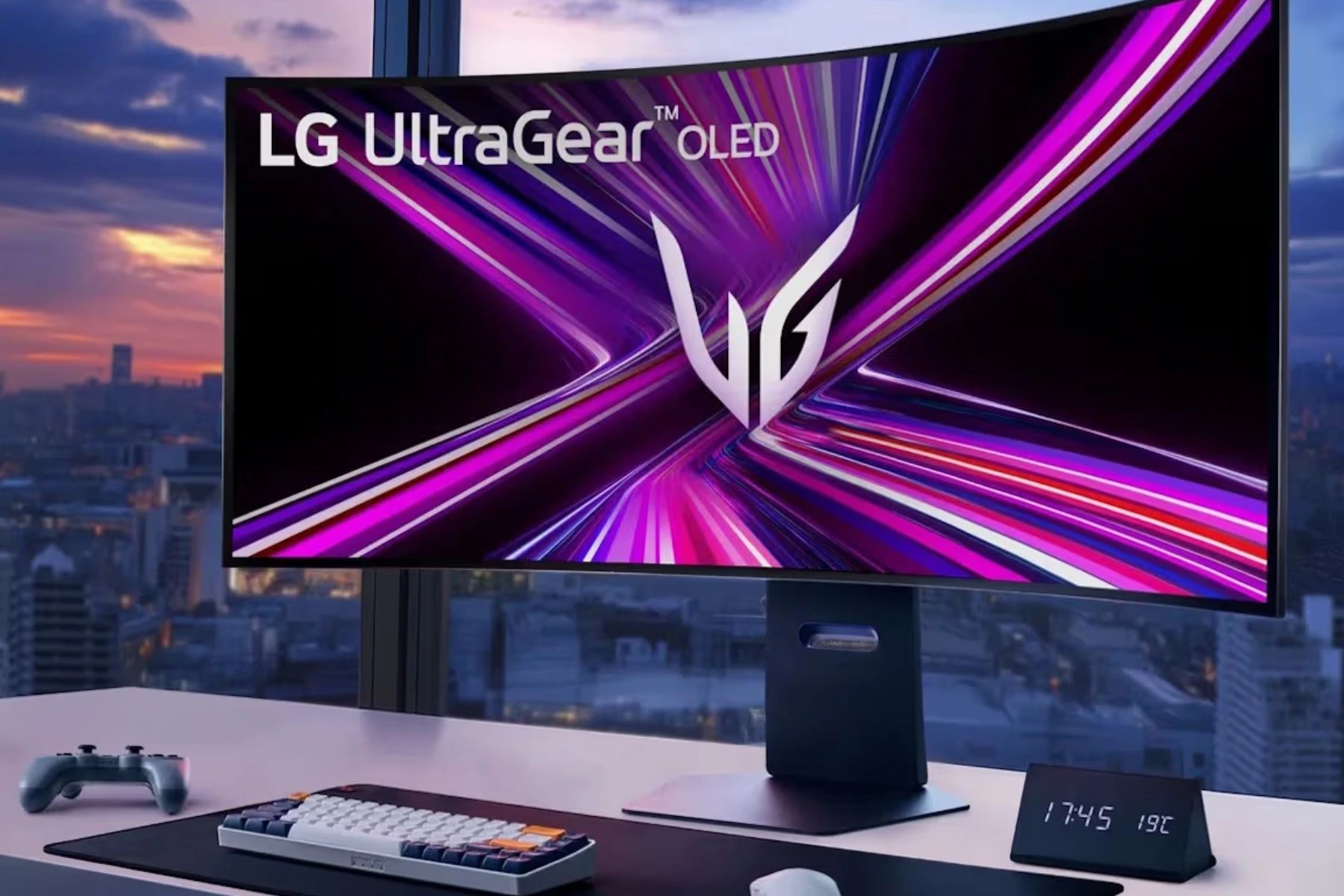

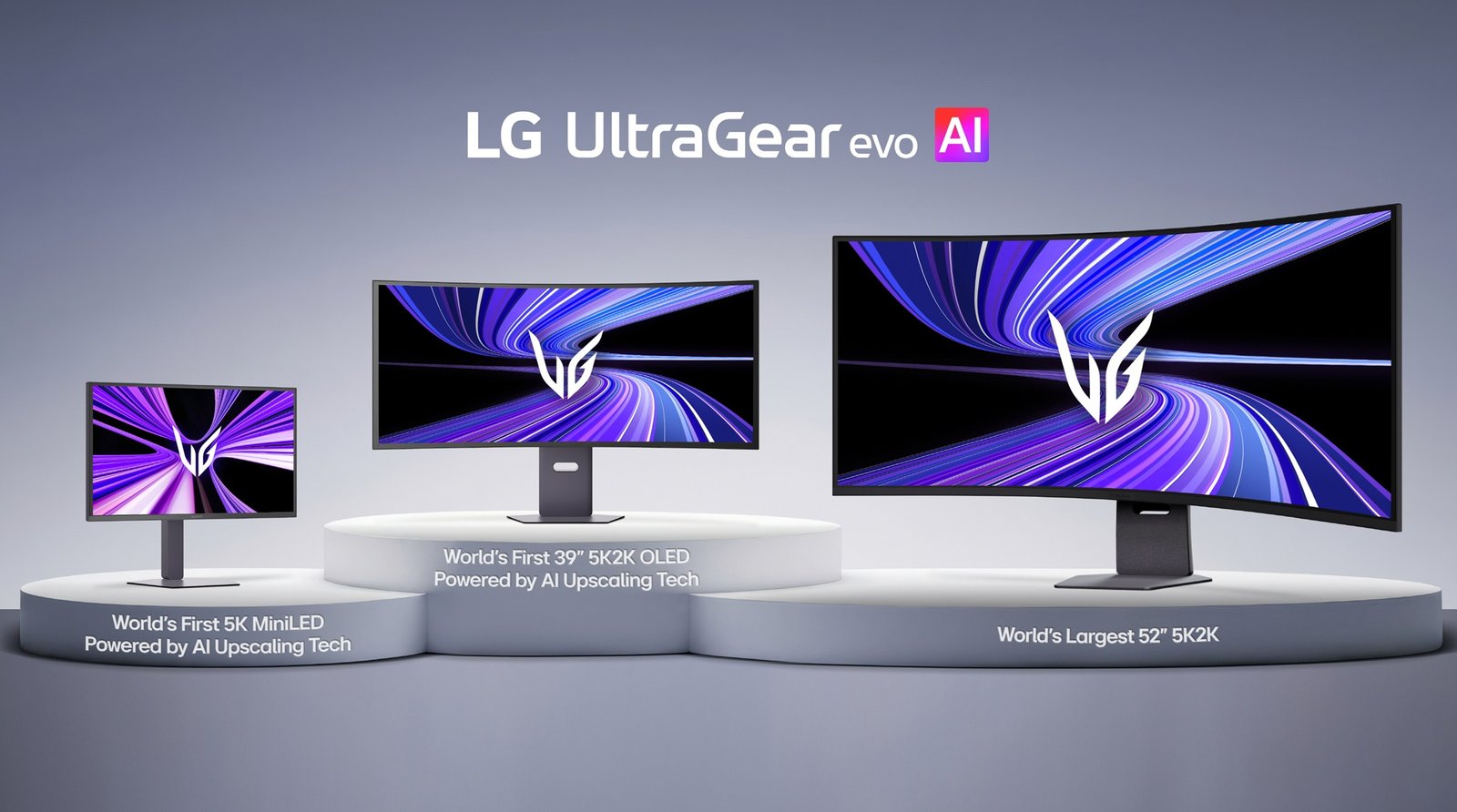
Gaming monitors have reached a point where raw specs alone are no longer enough to stand out. Higher refresh rates, sharper resolutions, and OLED panels have become increasingly common across the premium market, which means manufacturers are now looking toward smarter software features and AI-powered tools to push gaming displays even further. During the Consumer Electronics Show, LG Electronics officially unveiled the LG UltraGear Evo, a monitor the company describes as the world’s first 5K gaming display featuring AI upscaling technology.
Alongside its massive resolution, the UltraGear Evo promises improved image processing, adaptive performance optimization, and AI-driven enhancements designed for both PC and next-generation console gaming, talking about the future right there. This is more than just another high-refresh-rate monitor announcement; the UltraGear Evo feels like LG trying to push premium gaming displays into a new direction. Between its futuristic feature set, premium design, and strong focus on gaming performance, the monitor quickly became one of the most talked-about hardware reveals at CES 2026.
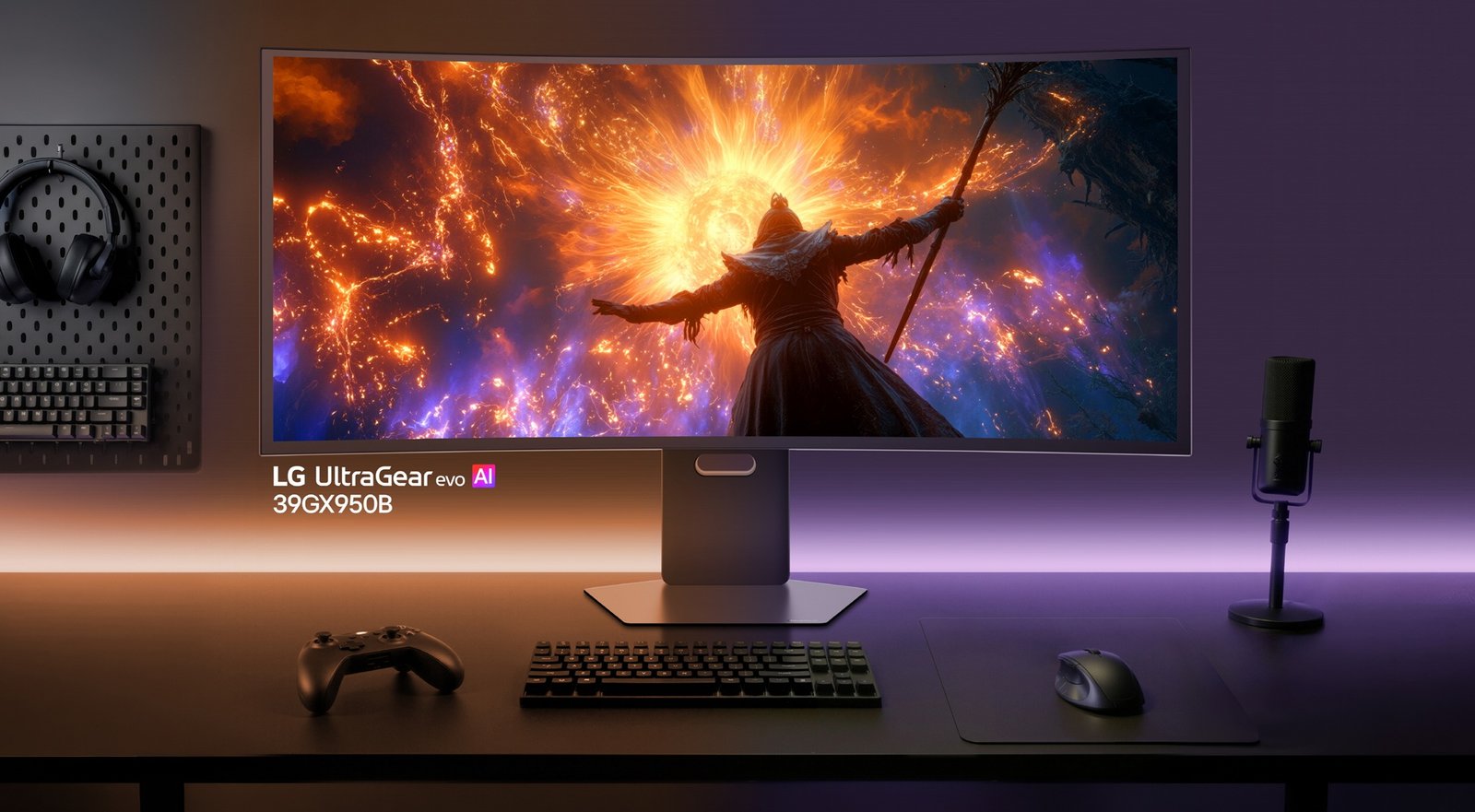
One of the biggest talking points surrounding the new UltraGear evo lineup is LG’s on-device upscaling technology, which powers what the company calls the world’s first 5K AI upscaling system. Available on the 39GX950B and 27GM950B, the feature analyzes games and media in real time before the image reaches the display itself, helping lower-resolution content appear sharper and more detailed on a 5K panel. LG is clearly aiming this feature toward players who want cleaner visuals without constantly needing the latest high-end graphics card to run everything at native 5K resolution.
Advertisement · Continue Reading Below
The company also introduced Scene Optimization and Sound Optimization features that automatically adjust visuals and audio based on what users are playing or watching. Instead of forcing players to constantly tweak settings manually, the monitor automatically adapts its brightness, colour, contrast, and sound profiles based on the content currently on screen.
The 39-inch UltraGear evo GX9 is easily one of the centrepiece models in the lineup. Built around a curved 5K2K OLED panel, the monitor uses LG’s Primary RGB Tandem OLED technology, which promises higher brightness, greater colour accuracy, and improved panel longevity. The 21:9 display carries a 1500R curve while maintaining the vertical height of a standard 32-inch monitor, giving players a much wider field of view for cinematic games, multitasking, and racing simulators. LG’s Dual Mode feature also allows players to switch between 165Hz at full 5K2K resolution or 330Hz at WFHD, depending on the game, while maintaining an extremely fast 0.03ms response time.
The smaller 27-inch UltraGear evo GM9 takes a different approach by focusing heavily on precision and image clarity. LG describes it as the world’s first 5K MiniLED gaming monitor, featuring 2,304 local dimming zones designed to reduce blooming and improve contrast control across both bright and dark scenes. The monitor also uses what LG calls Zero Optical Distance engineering, which minimizes the gap between the panel and the LED backlighting system for cleaner overall image quality. Like the larger GX9, the GM9 supports Dual Mode, allowing users to switch between 165Hz at full 5K resolution and 330Hz at QHD, and it also supports VESA DisplayHDR 1000 certification and peak brightness up to 1,250 nits.
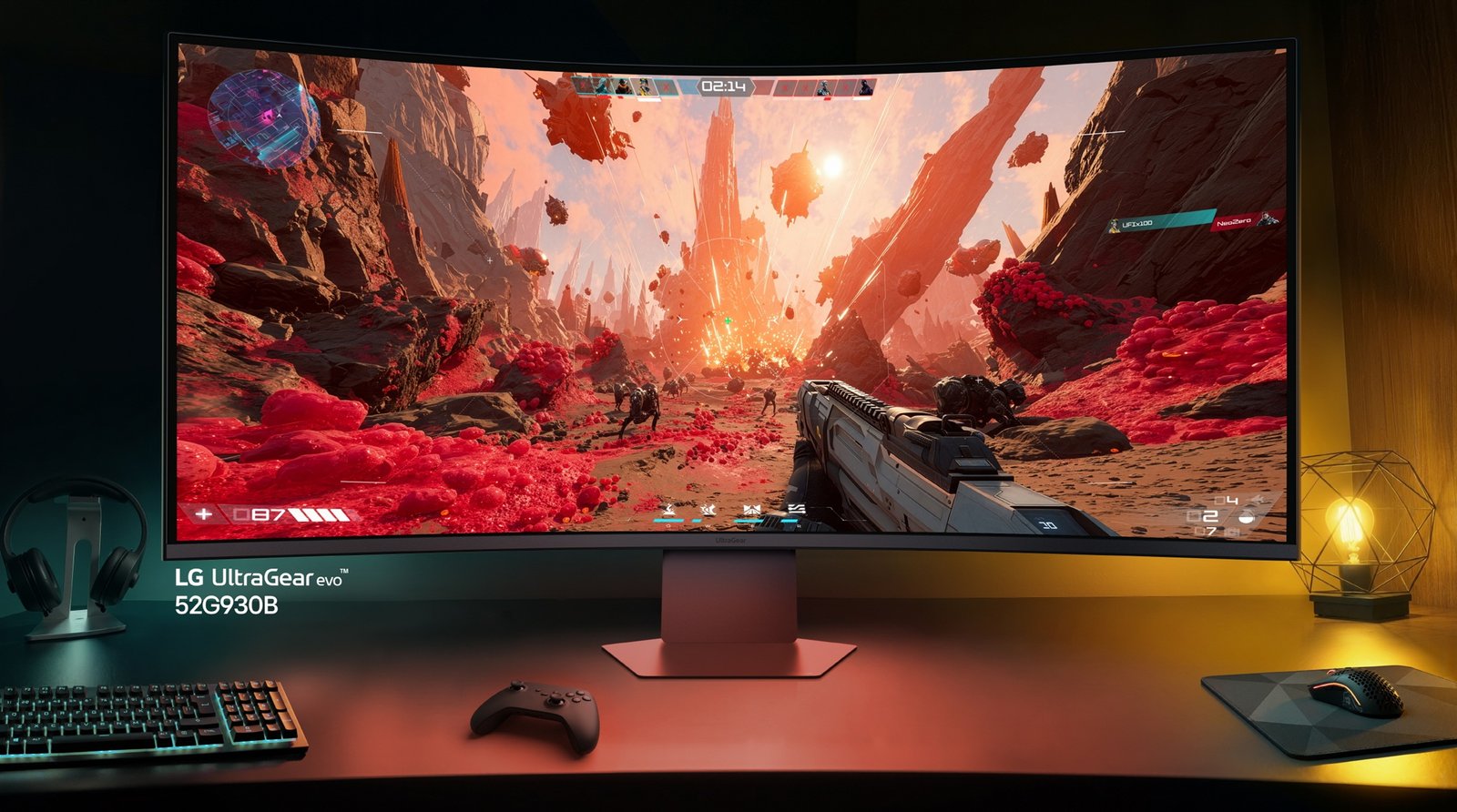
Then there is the massive 52-inch UltraGear evo G9, which LG says is currently the world’s largest 5K2K gaming monitor. Featuring a dramatic 1000R curve and an enormous 12:9 aspect ratio, the display is clearly aimed toward sim racers, flight simulator players, and gaming setups that blur the line between monitor and television. According to LG, the screen offers the vertical size of a standard 42-inch display while delivering significantly more horizontal workspace compared to a traditional UHD monitor. Realistically, most people will probably need a much larger desk before even considering adding this to their setup.
Lee Choong-hwoan, head of the Display Business at LG Electronics Media Entertainment Solution Company, also spoke about the company’s direction for the new lineup, stating, “With innovations like industry-first 5K AI Upscaling, the lineup ensures that whether gamers prefer perfect blacks, unmatched brightness, or expansive scale, they can enjoy the same high standard of performance, clarity and immersion in high resolution.” The statement gives a fairly clear idea of what LG aims to achieve with the UltraGear evo range — offering different monitor sizes and panel technologies without compromising the overall gaming experience.
LG also confirmed that the UltraGear evo lineup extends beyond the headline 5K models. The range includes a 32-inch 4K OLED monitor with upscaling support alongside a 27-inch QHD OLED model capable of reaching an extremely high 540Hz refresh rate. Combined with Dual Mode support, broad connectivity options, software-driven display tools, and a strong focus on gaming performance, the UltraGear evo lineup feels like LG making a serious push toward the future of premium gaming monitors.
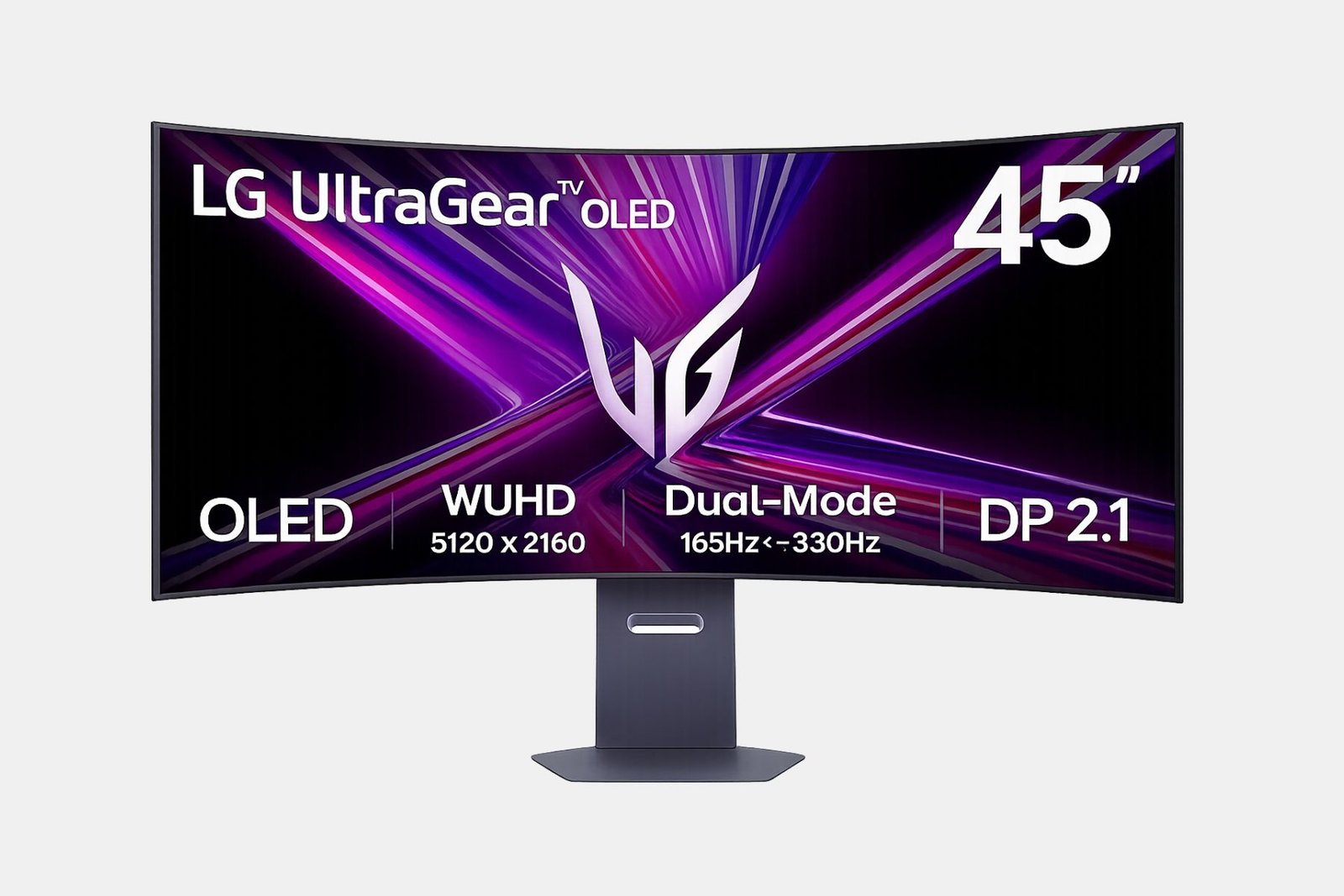
- Panel: 39-inch 4th Gen Primary RGB Tandem OLED
- Resolution: 5K2K (5120 × 2160, WUHD)
- Aspect Ratio: 21:9
- Curvature: 1500R
- Refresh Rate: 165Hz at 5K2K, 330Hz at WFHD (Dual Mode)
- Response Time: 0.03ms (GtG)
- HDR: VESA DisplayHDR True Black 500
- Colour: DCI-P3 99.5% (Typ.)
- AI Features: 5K AI Upscaling, AI Scene Optimization, AI Sound
- Connectivity: DisplayPort 2.1, HDMI 2.1 ×2, USB-C (90W PD)
- Panel: 27-inch MiniLED with Minimised Blooming
- Resolution: 5K (5120 × 2880)
- Local Dimming: 2,304 zones, 9,216 LEDs
- Refresh Rate: 165Hz at 5K, 330Hz at QHD (Dual Mode)
- Response Time: 1ms (GtG)
- HDR: VESA DisplayHDR 1000
- Colour: DCI-P3 99.5% (Typ.)
- AI Features: 5K AI Upscaling, AI Scene Optimisation, AI Sound
Advertisement · Continue Reading Below
- Panel: 52-inch ultra-wide
- Resolution: 5K2K
- Aspect Ratio: 12:9
- Curvature: 1000R
- Refresh Rate: 240Hz
- HDR: VESA DisplayHDR 600
- Colour: DCI-P3 99.5% (Typ.)
- Panel: 27-inch 4th Gen OLED
- Resolution: UHD OLED (3840×2160) Gaming Monitor
- Refresh Rate: UHD 240Hz – FHD 480HZ (Dual Mode
- Response Time: 0.03ms Response Time (GtG)
- HDR: VESA DisplayHDR™ True Black 500
- Colour DCI-P3 99.5% (Typ.)
- Connectivity: DisplayPort 2.1, HDMI 2.1 (x2) USB-C (90W PD)
- Panel: 27-inch 4th Gen OLED
- Resolution: QHD (2560 × 1440)
- Curvature: 1500R
- Refresh Rate: 540Hz at QHD, 720Hz at HD (Dual Mode)
- Response Time: 0.02ms (GtG)
- HDR: VESA DisplayHDR True Black 500
- Colour: DCI-P3 99.5% (Typ.)
- Connectivity: DisplayPort 2.1, HDMI 2.1 ×2, USB-C (90W PD)