





LG OLED evo W6
TechAppliance & TVs

LG Brings Back the Wallpaper TV, Now Wireless and Thinner Than Your Phone

Reading Time: 5 minutes

Share via

Our team of editors and experts thoughtfully chooses each product. If you decide to buy through one of our links, we may earn a commission. Learn more. Want to know how we test products? Click here for more details.

  • LG’s iconic Wallpaper TV returns for 2026 as the OLED evo W6, featuring an ultra-thin 9mm-class design that sits flush against the wall.
  • The separate Zero Connect Box wirelessly transmits visually lossless 4K video and audio from up to 10 metres away, eliminating the need for HDMI cables to the display.
  • Hyper Radiant Colour Technology and the α11 AI Processor Gen3 bring LG’s latest OLED picture technology to the ultra-thin W6.
  • Gamers get 4K at up to 165Hz, NVIDIA G-SYNC compatibility, AMD FreeSync Premium and a claimed 0.1ms pixel response time.

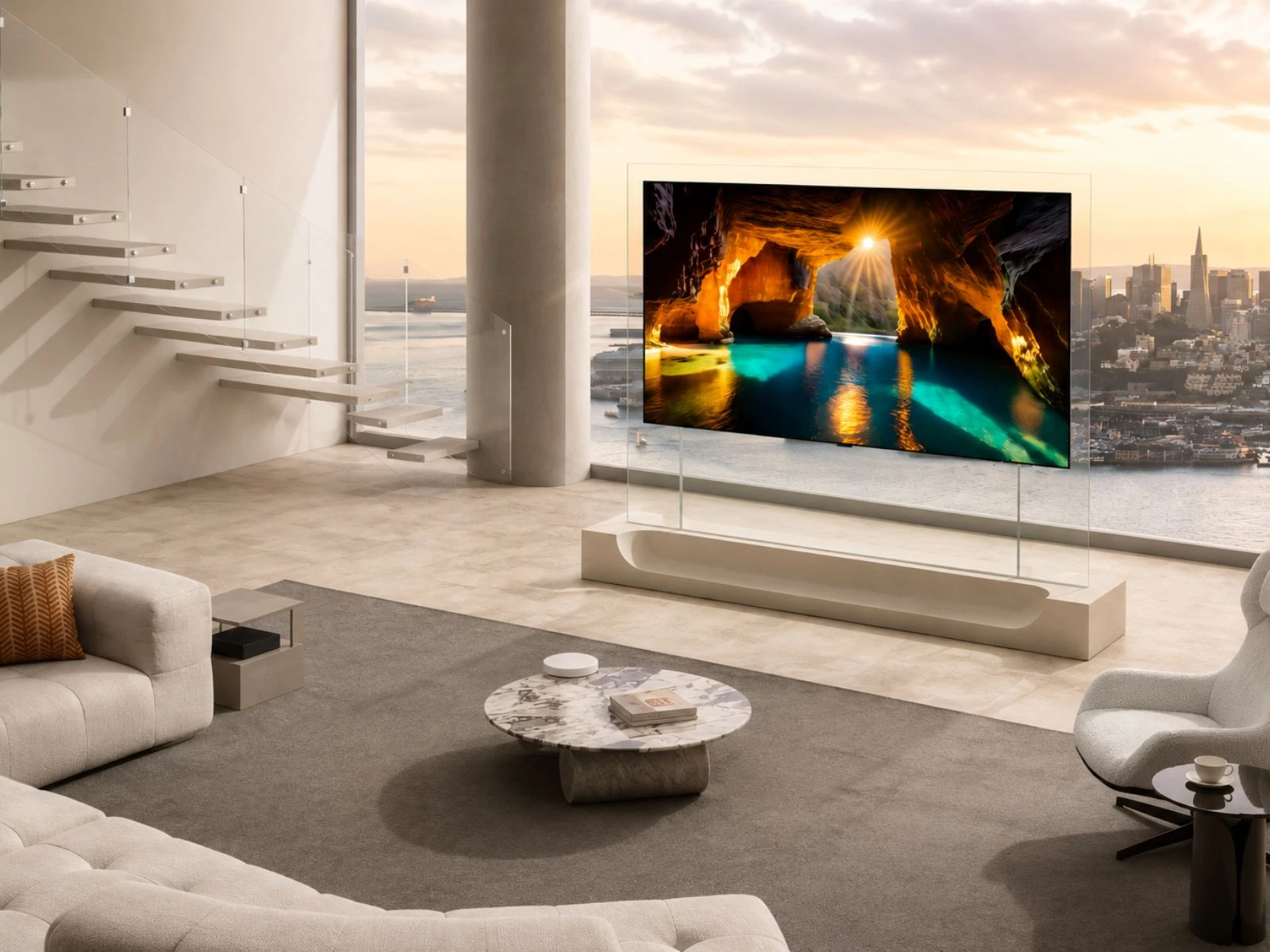
LG is bringing back one of its most memorable TV designs for 2026, and somehow it has made the idea even more extreme. First introduced in 2017, the Wallpaper TV returns as the LG OLED evo W6, an impossibly slim OLED measuring just 9mm thick and designed to sit almost completely flush against the wall. More importantly, LG has paired that barely-there profile with True Wireless technology, moving the usual collection of HDMI ports and connections away from the screen itself.

Unveiled at CES 2026, LG calls the W6 the world’s thinnest True Wireless OLED TV, and at 9mm it’s thinner than plenty of smartphones once you factor in their camera bumps. Achieving that profile required LG to miniaturize key components and rethink the television’s internal architecture, while an improved wall mount allows the display to sit flush against the wall from edge to edge.
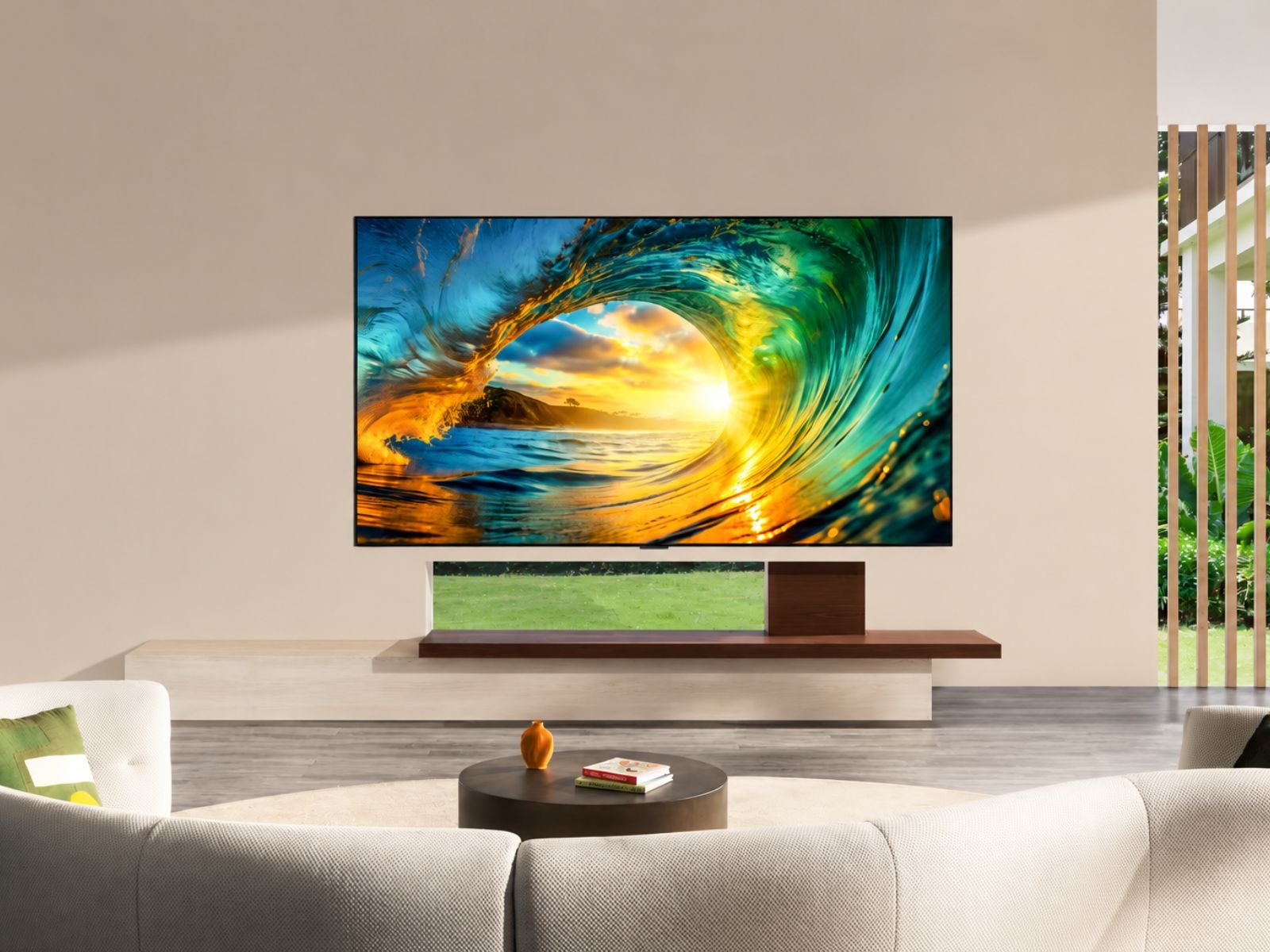
LG OLED evo W6
LG OLED evo W6 | Image: Supplied / LG

LG OLED evo W6 Specifications

  • Screen: OLED evo, Wallpaper-style 9mm-class design
  • Resolution: 4K
  • Refresh rate: Up to 165Hz
  • VRR: NVIDIA G-SYNC Compatible; AMD FreeSync Premium
  • Processor: α11 AI Processor Gen3
  • Wireless connectivity: True Wireless via Zero Connect Box
  • Wireless range: Up to 10 metres
  • Colour technology: Hyper Radiant Color Technology
  • Brightness: Brightness Booster Ultra, up to 3.9× conventional OLEDs under LG’s testing conditions
  • Reflection control: Intertek Reflection Free Premium certified

The clever part is what LG removed from the television. Instead of plugging consoles, streaming boxes and other devices directly into the W6, those connections live inside the separate Zero Connect Box, which can sit up to 10 metres away and transmit visually lossless 4K video and audio wirelessly to the screen. That means you can keep most of the usual HDMI clutter somewhere else, although the television itself still needs power, so “True Wireless” refers specifically to the connection between the Zero Connect Box and display rather than a completely cable-free TV.

LG hasn’t made the W6 ridiculously thin at the expense of picture quality, either. Its new Hyper Radiant Colour Technology is designed to improve brightness, colour and black levels while reducing reflections, with Brightness Booster Ultra capable of reaching luminance levels up to 3.9 times brighter than conventional OLEDs under LG’s testing conditions. The screen has also received Intertek’s Reflection Free Premium certification, which should make that OLED picture easier to appreciate in rooms where sunlight and reflections would normally be distracting.

Driving it all is LG’s new α11 AI Processor Gen3, which features a Neural Processing Unit the company says is 5.6 times more powerful than the previous generation. The new Dual AI Engine can handle noise reduction and detail preservation simultaneously, while gamers get an equally serious specification sheet with 4K at up to 165Hz, NVIDIA G-SYNC Compatible, AMD FreeSync Premium, a claimed 0.1ms pixel response time and Auto Low Latency Mode.

LG is also leaning into the idea that a television this thin should become part of the room when you aren’t watching it. LG Gallery+ offers more than 4,500 visuals alongside personal photos and AI-generated imagery, while the latest webOS adds Voice ID, Google Gemini and Microsoft Copilot integration, allowing the W6 to do considerably more than simply disappear into the wall once the movie is over.
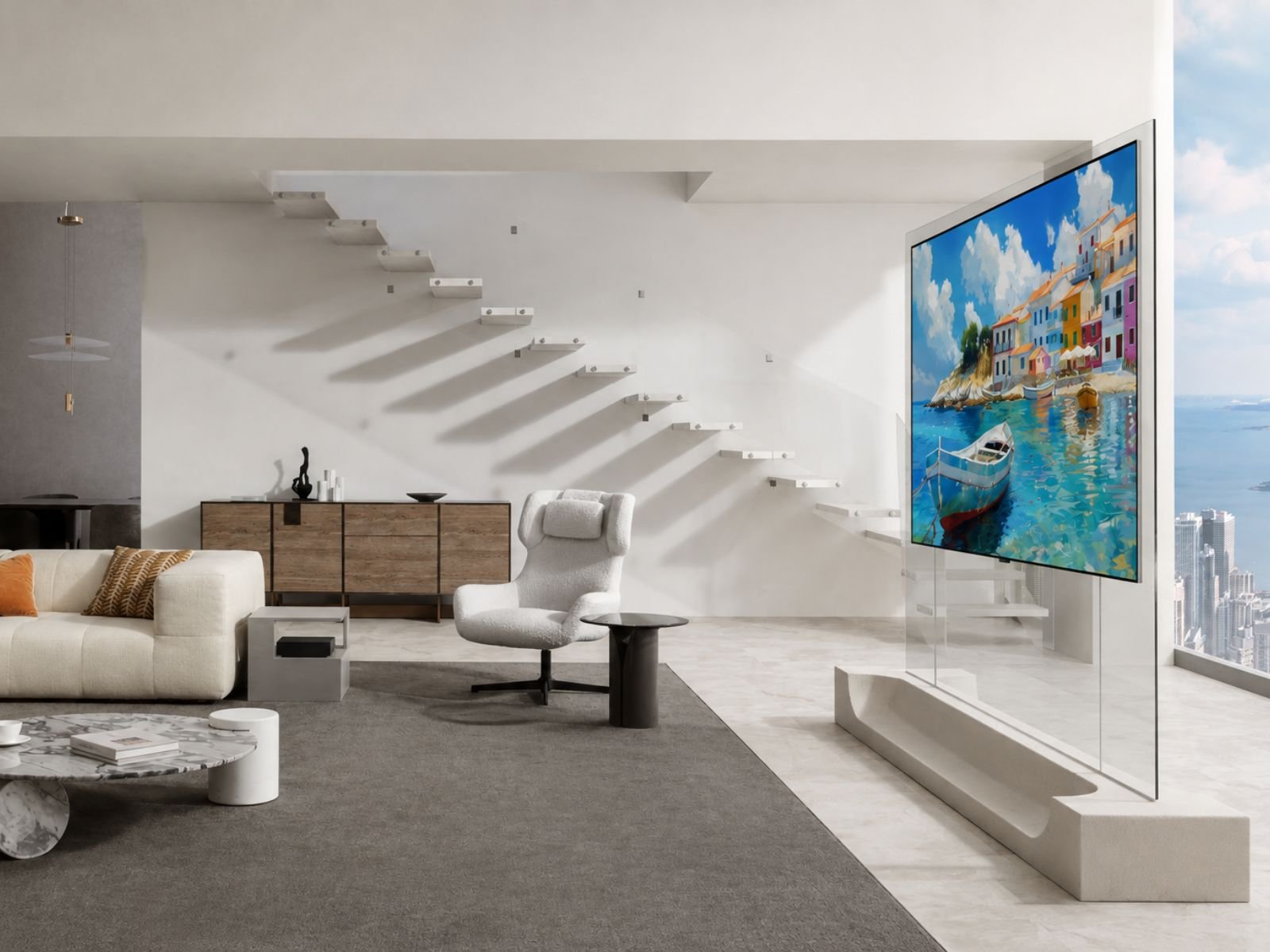
LG OLED evo W6
LG OLED evo W6 | Image: Supplied / LG

For LG, bringing back the Wallpaper TV isn’t simply about reviving one of its most recognizable designs. The company sees the W6 as the point where more than a decade of OLED development meets its increasingly wireless approach to home entertainment.

“The Wallpaper TV represents the beautiful convergence of our True Wireless leadership, form factor innovation and 13 years of OLED mastery,” said Park Hyoung-sei, president of the LG Media Entertainment Solution Company. “LG continues to raise the bar for OLED TVs, setting the standard for what’s next.”

The original Wallpaper TV was already one of those products that made far more sense once you saw it mounted than it ever could on a specification sheet, but the W6 takes the idea closer to its logical conclusion. Making an OLED around 9mm thick is impressive on its own; removing most of the cables that would normally be hanging underneath it is what makes the concept considerably more convincing.

There’s something slightly ridiculous about a television this large being thinner than the phone sitting in your pocket, but that’s also what makes the W6 interesting. LG hasn’t chased thinness alone, either, with wireless 4K transmission, flagship OLED picture technology and 165Hz gaming support all squeezed into a television designed to look more like part of the wall than another piece of electronics.

Nine years after LG first introduced the Wallpaper concept, it finally feels much closer to what the name always promised: a huge OLED screen that can live against your wall without forcing the rest of the room to revolve around it. For a television designed to disappear, the LG OLED evo W6 may be hard to ignore.


CESLG
About the Author

Related Articles

Bang & Olufsen x Fragment Design Collection
TechAudio

Hiroshi Fujiwara Brings Fragment Design’s ‘Liquid Black’ Treatment to Four Bang & Olufsen Icons

Reading Time: 9 minutes

Our team of editors and experts thoughtfully chooses each product. If you decide to buy through one of our links, we may earn a commission. Learn more. Want to know how we test products? Click here for more details.

  • Bang & Olufsen has partnered with Hiroshi Fujiwara’s Fragment Design on a four-piece limited-edition audio collection.
  • The collaboration covers the Beoplay H100, Beosound A1, Beosound Shape and Beosystem 9000c.
  • Specialized anodizing and hand polishing create the collection’s liquid-like black aluminium finish.
  • The Beoplay H100, Beosound A1 and Beosound Shape launched internationally on June 3, 2026.
  • The USD $69,650 Beosystem 9000c is made to order and sold exclusively in Japan.

Bang & Olufsen has teamed up with Hiroshi Fujiwara’s Fragment Design to rework four of its most recognizable audio products. Rather than introduce an entirely new speaker or pair of headphones, the collaboration takes familiar Bang & Olufsen hardware and gives it the monochrome treatment that has become inseparable from the Japanese design studio.

Fujiwara comes to the partnership as a longtime customer rather than a designer who discovered the brand last week. Bang & Olufsen says he has spent around 35 years listening to its products, making the collaboration feel more considered than the usual limited edition built around a new colour and an extra logo.

Everything has gone black—although not just any black.

The collection stretches from personal audio to a full home-listening system, with each product receiving its own interpretation of Fragment’s stripped-back visual style. Some of the changes are subtle, while others turn already distinctive Bang & Olufsen designs into serious collector pieces. Either way, there is considerably more happening here than simply reaching for a can of black paint.

Bang & Olufsen x Fragment Design Collection | Image: Bang & Olufsen

Four Bang & Olufsen Icons Get the Fragment Treatment

The four products may come from very different corners of Bang & Olufsen’s catalogue, but the thinking behind them is consistent. Fragment Design has not attempted to disguise the original forms or make them look like entirely new devices. Instead, the collaboration builds on the Danish brand’s century-long approach to precision, longevity and recognizable industrial design, then filters it through Hiroshi Fujiwara’s considerably darker visual language.

Fujiwara’s connection with Bang & Olufsen stretches back more than three decades, beginning with the Beocenter 2300 and eventually becoming serious enough for him to design his home around the company’s integrated audio system.

As Hiroshi Fujiwara explains it — “This collaboration has been a long-time dream of mine. Since building my home around Bang & Olufsen’s integrated home sound system in the 1990s, the brand has been my first choice for audio. This collaboration feels like a meaningful continuation for our journey together,” says Hiroshi Fujiwara, founder of Fragment Design.

The finish is where the collection becomes more interesting than four existing products painted black. Bang & Olufsen developed a specialized anodization process for selected aluminum surfaces before polishing them by hand, producing a deep, reflective appearance that looks almost liquid under the light. It remains unmistakably Fragment, but the way it has been applied relies heavily on Bang & Olufsen’s experience working with precision-milled aluminum.

“We applied a highly artisanal anodization and polishing process for the first time on our portable products as part of the Fragment Design collaboration,” says Kresten Bjørn Krab-Bjerre, Bang & Olufsen’s senior director of design. “This meticulous approach brings Fragment’s signature black to life through a finish only achievable by hand.”

Fragment’s double-lightning symbol and wordmark appear throughout the collection, although the branding has been kept restrained enough to let the original designs remain recognizable. The result is one shade of black expressed across four very different objects, ranging from something you can carry in one hand to a home-audio system that may require considerably more space—and an equally substantial bank balance.

The Beoplay H100 Fragment Edition
Bang & Olufsen x Fragment Design Collection | Image: Bang & Olufsen

The Beoplay H100 Fragment Edition

  • Product type: Premium over-ear wireless headphones
  • Design details: High-gloss black anodized aluminum, black leather headband and cushions, & contrasting white logos
  • Fragment branding: Double-lightning emblem on the left ear cup and a co-branded leather pouch
  • Features:
    • Titanium drivers
    • Dolby Atmos
    • Spatial audio
    • Adaptive noise cancellation
    • 32 hours battery life
  • Availability: Globally, available from June 3, 2026
  • Price: USD $2,400 (Limited Edition)

Starting with the Beoplay H100 Fragment Edition, Bang & Olufsen’s flagship headphones trade their usual mix of colours and exposed metal for high-gloss black anodized surfaces, contrasting white logos and black leather across the headband and ear cushions. They remain unmistakably H100s, only now wrapped almost entirely in Fragment’s signature monochrome aesthetic.

The headphones retain their glass touch surfaces, physical control dials and automatic wear detection, while the magnetically attached ear cushions and inner headband can be removed and replaced when worn. That matters on a limited edition this expensive, because “collectible” sounds considerably better when the parts touching your head are not expected to last forever.

Beosound A1 3rd Gen Fragment Edition
Bang & Olufsen x Fragment Design Collection | Image: Bang & Olufsen

Beosound A1 3rd Gen Fragment Edition

  • Product type: Portable Bluetooth speaker
  • Design details: High-gloss black anodized aluminum, monochrome body & matching black carrying strap
  • Fragment branding: Double-lightning emblem integrated beneath the speaker grille
  • Features:
    • 360-degree sound
    • Upgraded bass performance
    • IP67 dust & water resistance
    • 24 hours of battery life
  • Availability: globally available from June 3, 2026
  • Price: USD $475 (Limited Edition)

Next is the Beosound A1 3rd Gen Fragment Edition, which brings the same high-gloss black treatment to Bang & Olufsen’s portable speaker. Fragment’s double-lightning emblem sits beneath the aluminum grille, giving the smallest piece in the collection a recognizable stamp without making it look like branded keychain merch. It remains practical enough for everyday use, with IP67 dust and water resistance, 360-degree sound and the ability to pair with another compatible A1 for stereo playback—although the reflective finish may encourage you to handle this limited edition rather more carefully than the average Bluetooth speaker.

Beosound Shape Fragment Configuration
Bang & Olufsen x Fragment Design Collection | Image: Bang & Olufsen

Beosound Shape Fragment Configuration

  • Beosound Shape Fragment Configuration
  • Product type: Modular wall-mounted speaker system
  • Design details: Seven-tile flower configuration with black & grey fabric covers
  • Fragment branding: Aluminium tag carrying the Bang & Olufsen and Fragment Design logos
  • Features:
    • Modular wall-mounted construction
    • Room-filling sound
    • Integrated acoustic-dampening tiles
    • Wireless music streaming
    • Bang & Olufsen app control
  • Availability: Globally available through selected Bang & Olufsen stores
  • Price: USD $7,100

Moving onto the most spatial piece in the collection, the Beosound Shape Fragment Configuration turns Bang & Olufsen’s modular wall-mounted speaker into something closer to installation art. After seeing Beosound Shape at the company’s headquarters in Struer, Hiroshi Fujiwara reportedly returned to his hotel room and sketched the seven-tile flower arrangement, which was later completed with monochrome black-and-grey fabric covers and a discreet aluminum logo tag. This comes with a combination of room-filling audio and acoustic treatment, with a design intended to become part of the wall, with a price tag of USD $7,100.

Beosystem 9000c Fragment Edition
Bang & Olufsen x Fragment Design Collection | Image: Bang & Olufsen

Beosystem 9000c Fragment Edition

  • Product type: Made-to-order six-disc CD audio system
  • Included: Beosystem 9000c CD player, pair of Beolab 28 wireless speakers & Beoremote One
  • Design details: Matte-black anodized surfaces contrasted by glossy natural aluminium
  • Fragment branding: Co-branded CD clamper & Beolab 28 speaker stands
  • Features:
    • Vertical six-disc CD mechanism
    • Automatic disc changing & return system
    • High-resolution wireless stereo speakers
    • Adjustable Beolab 28 sound beams
    • Music streaming through the Beolab 28 speakers
  • Availability: Japan exclusive
  • Price: USD $69,650 (Limited Edition)

Finishing the collection is the Beosystem 9000c Fragment Edition, a made-to-order setup pairing Bang & Olufsen’s restored six-disc CD player with two Beolab 28 wireless speakers and a Beoremote One. Fragment applies matte-black anodized surfaces across the system while retaining sections of glossy natural aluminum, with both brands represented on the CD clamper and speaker stands. It is the largest, rarest and comfortably most expensive piece in the collaboration—the sort of audio system that makes displaying six CDs feel like an architectural decision.

The original Beosound 9000 was designed by David Lewis and introduced in 1996, with a mechanism that rapidly moves between six vertically displayed discs before returning each one to its original position after playback. That mechanical theatre particularly appealed to Hiroshi Fujiwara, and it remains at the centre of this modernized version, now supported by the wireless capabilities and high-resolution sound of the Beolab 28 speakers. Limited to made-to-order purchases in Japan only and priced at USD $69,650, this is less an impulsive return to physical media and more a collector’s monument to the compact disc.

Beosystem 9000c Fragment Edition
Bang & Olufsen x Fragment Design Collection | Image: Bang & Olufsen

price & Availability

The Bang & Olufsen x Fragment Design collection made its first appearance at a temporary Isetan Shinjuku installation in Tokyo, held from May 20–26, 2026. The Japanese release followed on May 27, with the Beoplay H100, Beosound A1 and Beosound Shape reaching selected international stores and online markets from June 3.

Prices begin at USD $475 for the portable Beosound A1, rising to USD $2,400 for the Beoplay H100 and USD $7,100 for the Beosound Shape. Sitting in an entirely different financial neighbourhood is the USD $69,650 Beosystem 9000c, a made-to-order setup reserved exclusively for customers in Japan.

Most of us will probably admire these pieces through a screen and leave our bank accounts undisturbed. Still, Bang & Olufsen and Fragment Design clearly understand their audience — collectors who see the material, finish and cultural story surrounding an audio product as part of its value—and who are unlikely to lose much sleep over the extra cost of making everything liquid black.

Beosound Shape Fragment Configuration
Bang & Olufsen x Fragment Design Collection | Image: Bang & Olufsen
Beosystem 9000c Fragment Edition
Bang & Olufsen x Fragment Design Collection | Image: Bang & Olufsen
The Beoplay H100 Fragment Edition, and Beosound A1 3rd Gen Fragment Edition
Bang & Olufsen x Fragment Design Collection | Image: Bang & Olufsen
CollaborationsSpeakersHeadphonesBang & Olufsen
About the Author
arrow_drop_up