






Official Milano Cortina 2026 Winter Olympics logo with the Olympic rings
Sports

Everything You Need to Know About the Milano Cortina 2026 Opening Ceremony

Share via

Our team of editors and experts thoughtfully chooses each product. If you decide to buy through one of our links, we may earn a commission. Learn more. Want to know how we test products? Click here for more details.

The Olympic Winter Games are heading back to Italy, and before the first medals are won on snow and ice, the Milano Cortina 2026 Opening Ceremony will officially get the Games underway. The night will bring athletes and spectators from around the world together for a celebration of Italian culture, music and Olympic tradition, with Mariah Carey and The White Lotus actress Sabrina Impacciatore among the stars taking part.

This year’s ceremony has been built around “Armonia,” the Italian word for Harmony, an idea that can be seen in the balance, rhythm and movement of sport, as well as in the way people from different countries and cultures come together at the Olympic Games. Producer Marco Balich described the inspiration as a meeting between “Milan and Cortina, city and mountain, the harmony between man and nature, between cultures, people and different ways of thinking.”

That connection between Milan and Cortina d’Ampezzo will be a major part of the night, especially as Cortina returns to the Olympic stage 70 years after hosting the 1956 Winter Olympics. With the Games taking place across the city and the mountains, the 2026 Opening Ceremony is shaping up to be very different from what we’ve seen at previous Winter Games. So, when does it start, where will it take place, and who will perform?

Speaking to the Associated Press, Balich also explained why that message feels particularly important now, “In this moment, where forces and bullies are predominant, I think it’s very important for all of us to embrace the values that the Olympics represents, which is to compete respectfully and peacefully between all the countries and nations, summarized in the title ‘Harmony.’”

Here’s everything you need to know about the Milano Cortina 2026 Opening Ceremony.

Snow-covered mountains and winter landscape in Cortina d'Ampezzo, Italy.
Cortina d’Ampezzo, one of the key host locations for the Milano Cortina 2026 Olympic Winter Games. | Image: Getty Images

When Will the Opening Ceremony Be Held?

The Milano Cortina 2026 Opening Ceremony will take place on Friday, February 6, 2026, starting at 8 p.m. local time in Milan and 2 p.m. ET. The ceremony will last about 2 to 3 hours and will include the arrival of the Olympic Torch and the official welcome of athletes from all over the world as Italy opens the Winter Games.

However, some sports will have already started before the Opening Ceremony. Early matches and qualifying rounds in curling, women’s ice hockey, and men’s snowboarding will happen on February 4 and 5. The first day of figure skating will also take place on February 6, before the ceremony starts. So, even though Friday night is the official opening of Milano Cortina 2026, some athletes have already tasted the Olympic competition.
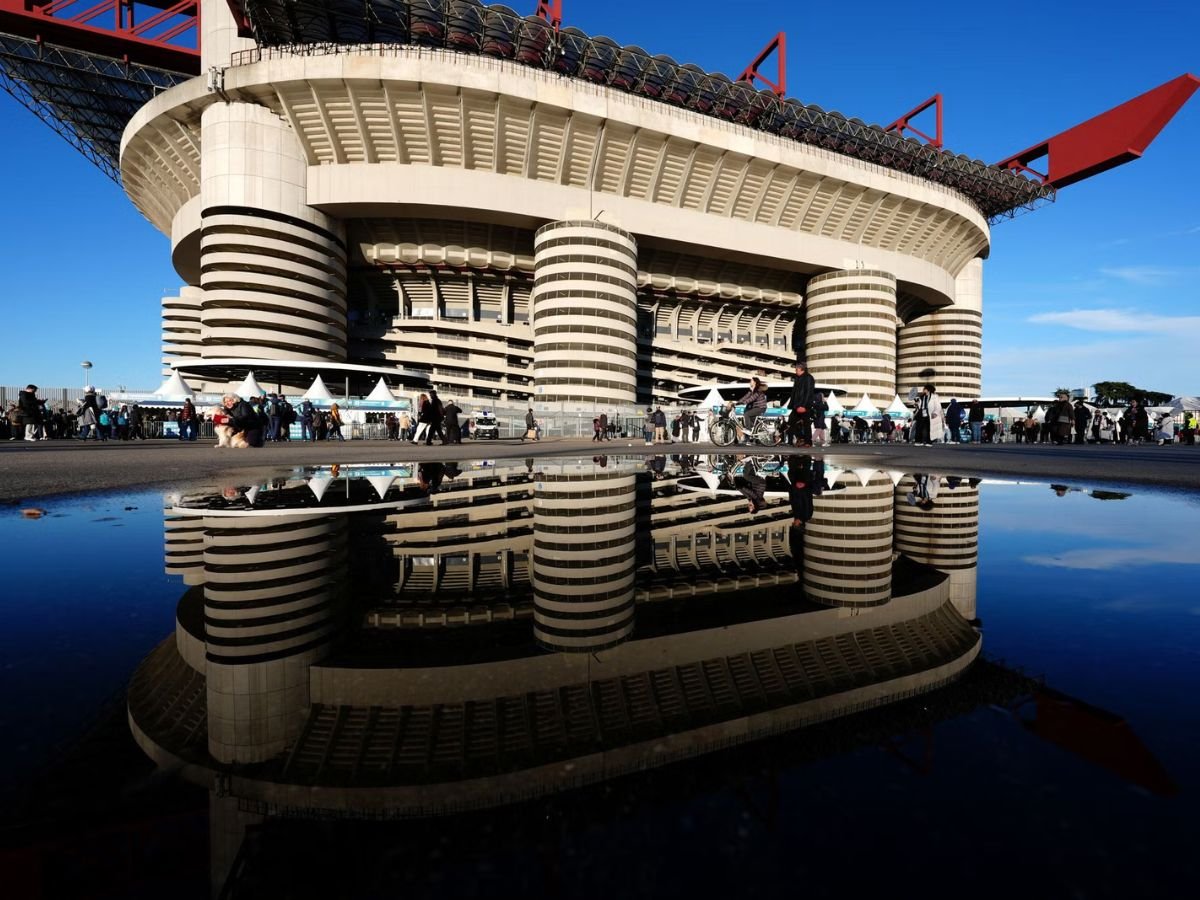
San Siro Stadium in Milan, the venue for the Milano Cortina 2026 Opening Ceremony.
San Siro Stadium in Milan is the main venue for the Milano Cortina 2026 Opening Ceremony. | Image: PA Images – David Davies

Where Will the Opening Ceremony Take Place?

The Milano Cortina 2026 Opening Ceremony will be centred on San Siro Stadium in Milan, one of Italy’s most famous sporting venues and home to AC Milan and Inter Milan. However, this won’t be an Opening Ceremony confined to a single stadium or city. Celebrations will unfold simultaneously across northern Italy, including Cortina d’Ampezzo, with two Olympic cauldrons set to be lit and later extinguished for the first time—one at the Arco della Pace in Milan and another in Piazza Dibona in the heart of Cortina.

Andrea Varnier, CEO of the Milano Cortina 2026 Organizing Committee, explained why the Games’ unusual two-city identity required a different approach. “For the first time, the name of our Games includes two cities, which means we have to hold the most significant moments twice: the flag-raising ceremony and the lighting of the Olympic cauldron will take place in two locations, and we have to manage this visibility,” he said.

The celebrations will stretch even further, with simultaneous athlete parades and events in Livigno, home to snowboarding and freestyle competitions, and in Predazzo, which will host skiing events. Rather than asking every athlete to travel to Milan, the format gives Olympians across the host regions a chance to be part of the Opening Ceremony wherever their competition takes them.
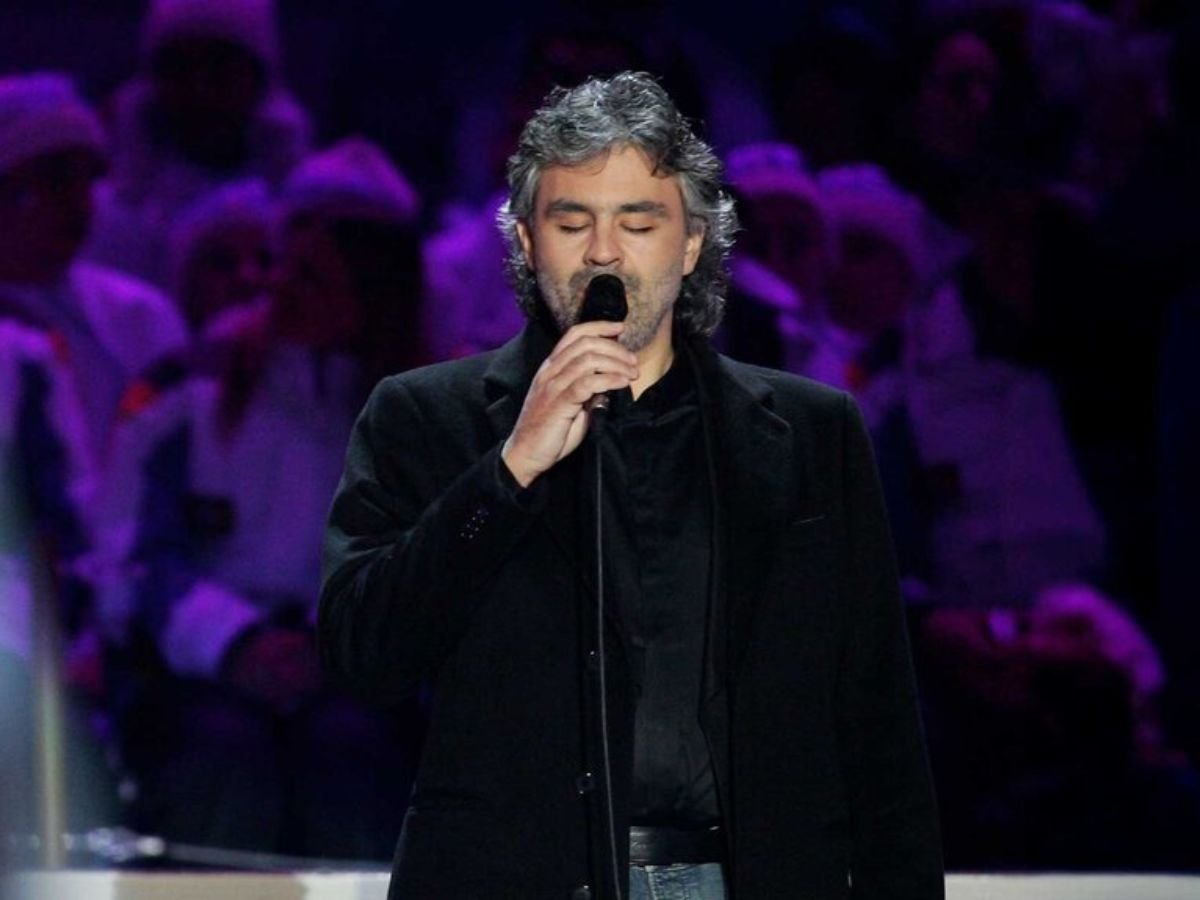
Andrea Bocelli performs at the Olympic Stadium in Turin, Italy, during the Closing Ceremony of the 2006 Winter Olympic Games. | Image: Getty Images – Vladimir Rys

Who Is Performing at The Opening Ceremony?

The Milano Cortina 2026 Opening Ceremony will bring some serious star power to San Siro Stadium, with Mariah Carey among the biggest names confirmed to perform. Known for hits including “We Belong Together,” Carey was chosen for more than her global fame, with the organizing committee saying she “fully represents the emotional atmosphere that accompanies the run-up to the Games. Music is a universal language that attracts different stories and sensibilities, and intertwines with the opening ceremony’s theme of harmony.”

Joining Carey will be ‘The White Lotus’ star Sabrina Impacciatore, while Italy’s music and film scene will be well represented throughout the night. Tenor Andrea Bocelli, singer Laura Pausini, actor Pierfrancesco Favino, actress and singer Matilda De Angelis and violinist Giovanni Zanon are also part of the line-up. It’s a wide mix of performers, but one that makes sense for a ceremony built around “Armonia,” bringing opera, contemporary music, acting and live performance together on the same Olympic stage.

The ceremony will also pay a special tribute to the late Italian fashion designer Giorgio Armani. His impact and influence went beyond fashion, helping shape how Italian style is viewed worldwide and leading to a night dedicated to the country’s culture and creative history.

The entire ceremony is being produced by Balich Wonder Studio, led by Marco Balich, who has worked on a record 16 Olympic and Paralympic ceremonies, from the Turin 2006 Winter Olympics to Rio 2016 Summer Olympics, as well as the opening ceremony of the 2022 FIFA World Cup. Meanwhile, Snoop Dogg will once again be part of NBC’s Olympic coverage after his memorable run as a roving correspondent at the Paris 2024 Summer Olympics. Now an honorary coach for Team USA, he’ll be back to bring his own personality to the Winter Games coverage.

Milano Cortina 2026 Winter Olympics logo above the snow-covered Italian Dolomites
Milano Cortina 2026 will bring the Olympic Winter Games to Milan, Cortina d’Ampezzo and the mountains of northern Italy. | Image: Olympics Committee

How Can You Watch the Opening Ceremony?

For Canadians viewers, the Milano Cortina 2026 Opening Ceremony is available on CBC, Bell Media, and Rogers Media. Coverage began on Friday, February 6, ahead of the ceremony, with the main event getting underway at around 2 p.m. ET and 11 a.m. PT. The Opening Ceremony was also carried across CBC/Radio-Canada’s wider Olympic broadcast network, giving Canadian viewers several ways to follow the celebrations from Milan and Cortina.

In the United States, the Opening Ceremony aired live on NBC and streamed on Peacock, with live coverage beginning at 2 p.m. ET and a pre-show starting at 1:40 p.m. ET. For anyone who missed the live broadcast, NBC also presented an enhanced primetime encore at 8 p.m. ET, and streaming was available on NBC Olympics and other NBC digital platforms with required access.

Outside North America, coverage will vary by country, with the Olympic Games available through local media rights holders and selected streaming platforms. The official Olympics Opening Ceremony Guide provides a country-by-country list of broadcasters, making it easier to find where the ceremony will be shown in your region. Whether you’re tuning in in the evening in Europe or watching from another part of the world, the Opening Ceremony marks the official start of the Olympic Winter Games Milano Cortina 2026.


Olympics
About the Author

Related Articles

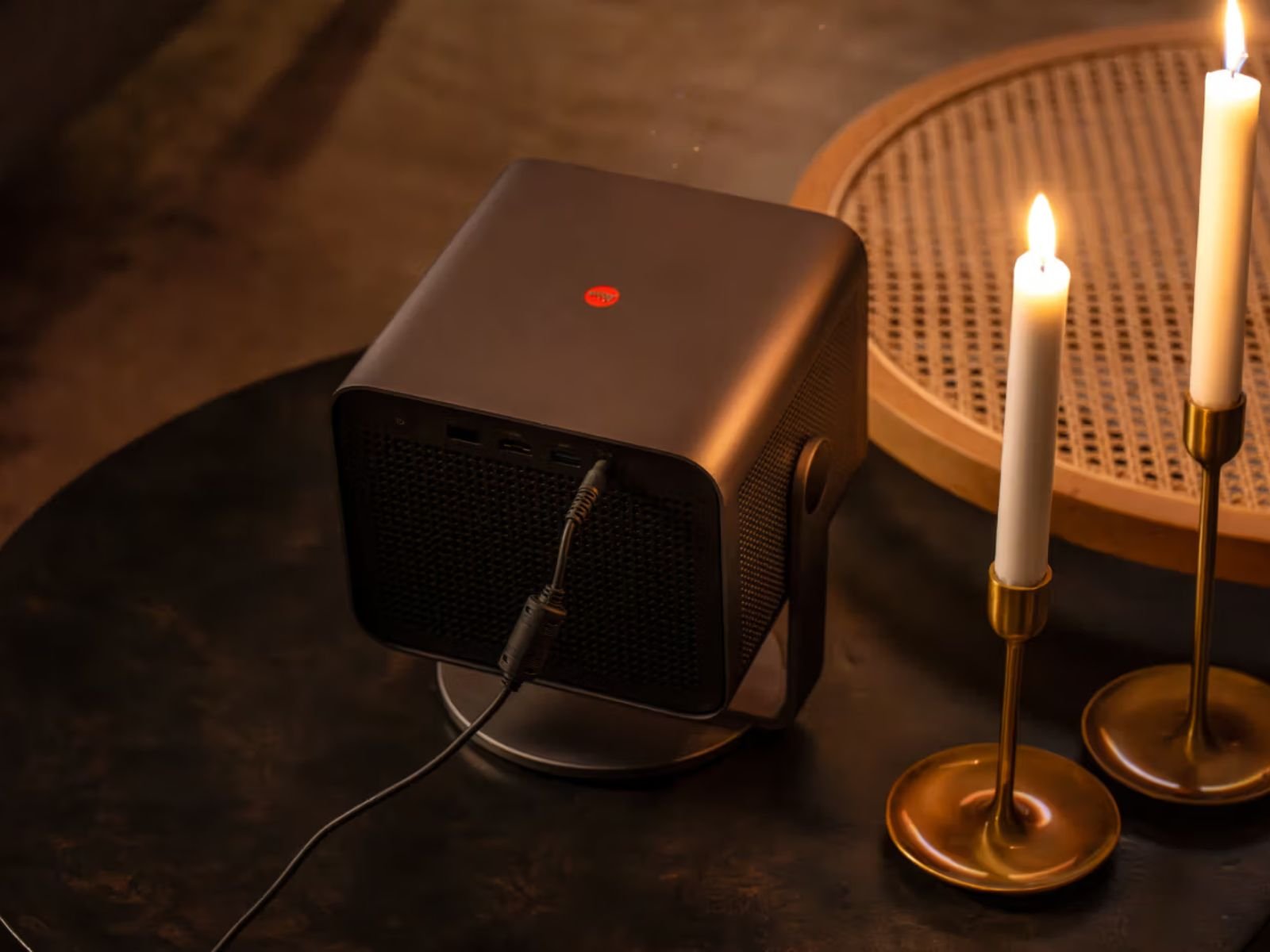
Leica Cine Compact 1
TechAppliance & TVs

Leica Cine Compact 1 Turns Your Ceiling Into a 220-Inch 4K Cinema

Reading Time: 6 minutes

Our team of editors and experts thoughtfully chooses each product. If you decide to buy through one of our links, we may earn a commission. Learn more. Want to know how we test products? Click here for more details.

  • The Leica Cine Compact 1 projects a 4K image measuring between 60 and 220 inches using a Leica Summicron lens and Triple RGB laser.
  • Its 360-degree rotating body can project onto walls, ceilings, and outdoor surfaces, with automatic focus, zoom, keystone correction, and screen-framing setup.
  • Built-in VIDAA provides access to Netflix, Disney+, Prime Video and YouTube, while two 10W speakers handle sound without requiring additional equipment.
  • The projector launches on June 18, 2026, with US pricing set at USD $1,995.00 and availability confirmed across several international markets.

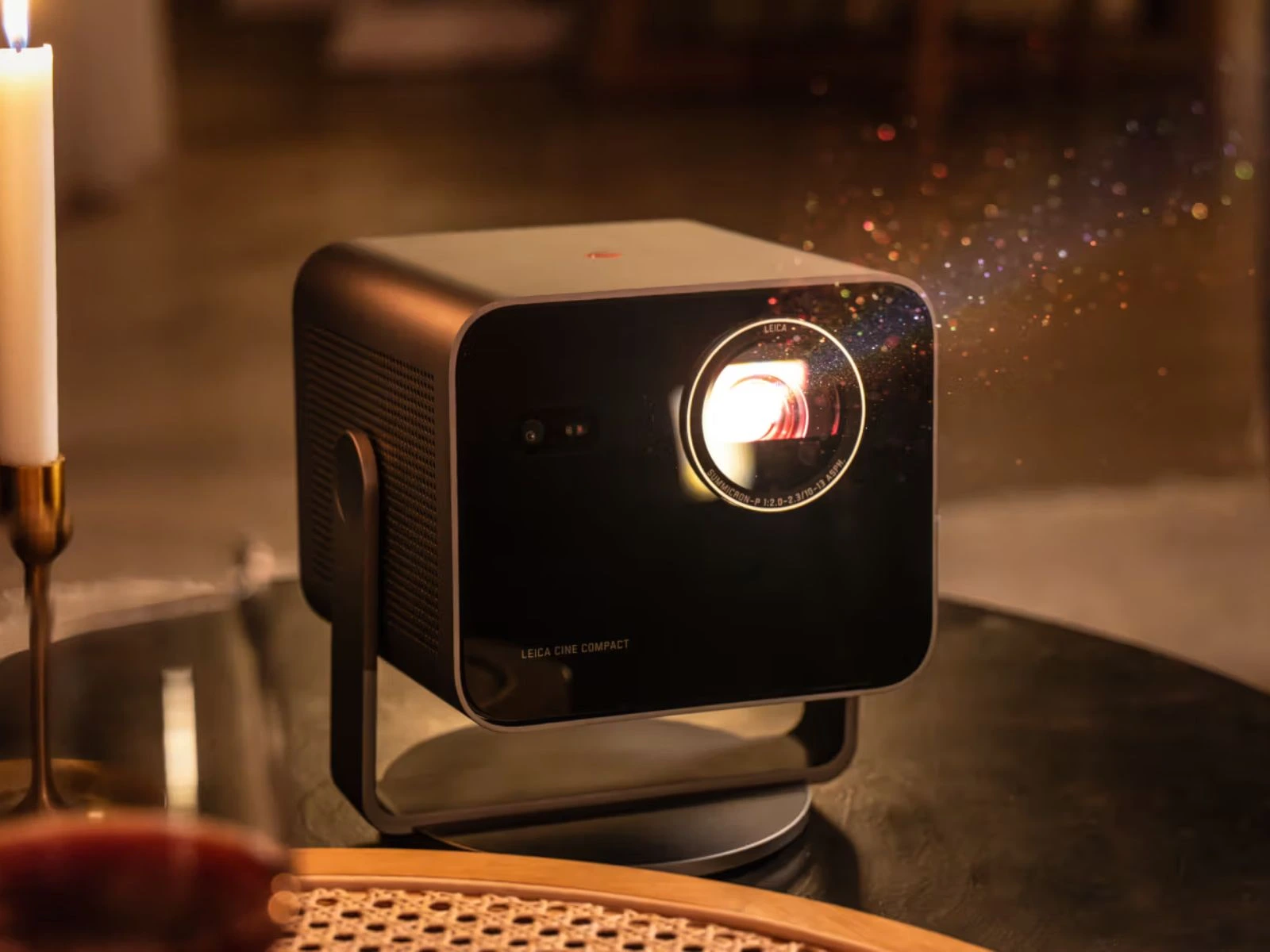
Leica is best known for making cameras that encourage people to point a lens at the world, but its latest release would rather point one at the ceiling. The Leica Cine Compact 1 is the company’s smallest home-cinema projector yet, combining a portable aluminum body with 4K resolution, Dolby Vision and enough flexibility to turn almost any suitable surface into a screen.

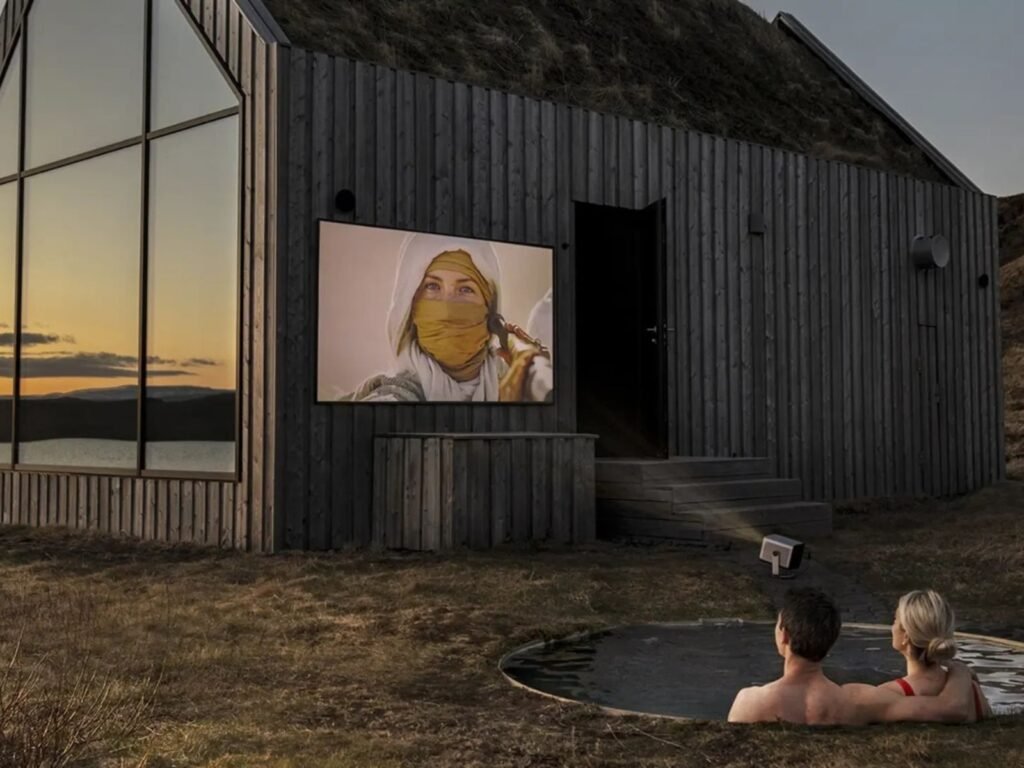
Point it at a wall, ceiling or outdoor surface, and its 360-degree rotating body allows the image to follow. The Cine Compact 1 is designed to remove most of the usual fiddling through automatic zoom, autofocus, keystone correction and intelligent screen framing, while its Leica Summicron zoom lens can produce an image measuring between 60 and 220 inches with up to 1,700 lumens of brightness. In other words, you should spend less time pushing the projector around the coffee table and more time deciding what to watch.

Leica Cine Compact 1 Makes 4K Cinema More Flexible

The Cine Compact 1 is the latest addition to Leica’s home-cinema range, bringing the company’s focus on lenses and image quality into a smaller format designed to move around the home. Instead of requiring a fixed installation or permanently mounted screen, it can travel between the living room, bedroom, backyard and anywhere else with a suitable surface and enough control over the surrounding light.

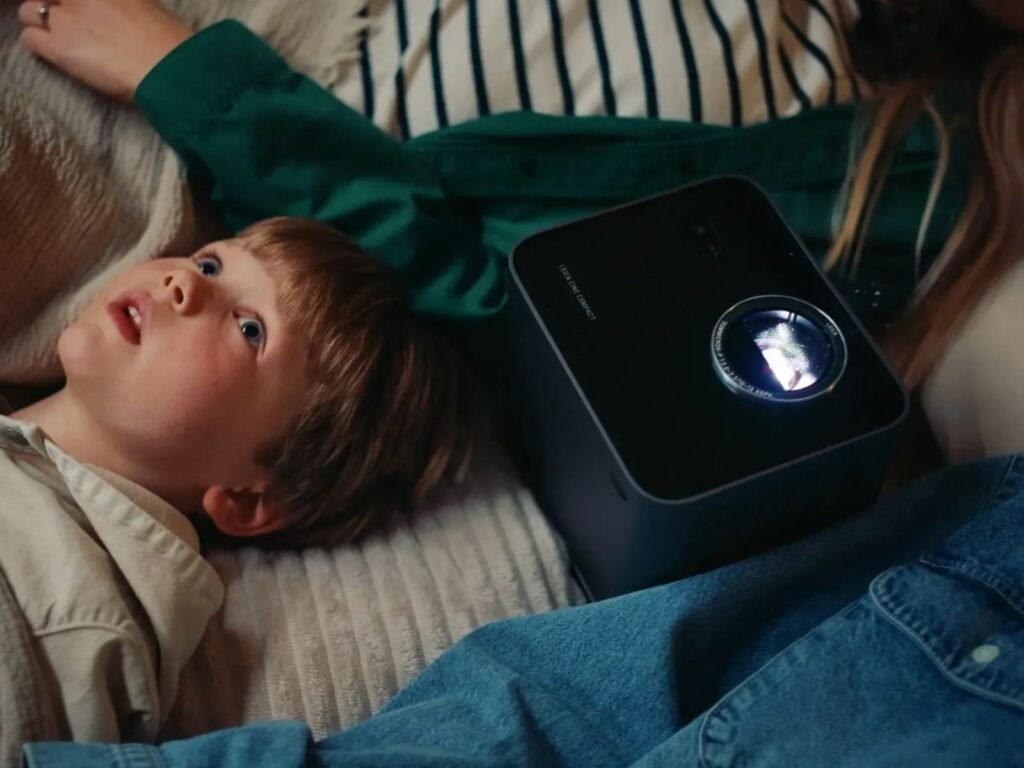
Its integrated rotation system allows the projector to rotate 360 degrees, directing the picture toward a conventional screen, blank wall, or ceiling without requiring the entire unit to be repositioned. Automatic zoom, autofocus, keystone correction and intelligent screen framing then align and resize the picture, helping users achieve a clean image without spending half the evening nudging the projector across the coffee table.

A Leica Summicron zoom lens with aspherical elements works alongside a 0.47-inch DMD imaging chip, Triple RGB laser system and Leica Image Optimization to produce a 4K picture measuring between 60 and 220 inches—roughly 152cm to 5.6 metres. Leica quotes brightness of up to 1,700 lumens, although the largest picture sizes will naturally look their best in darker surroundings. Smaller projections should be more practical in brighter living rooms, while the full 220-inch experience is better saved for movie night after sunset.

Streaming is handled through the integrated VIDAA operating system, with Netflix, Disney+, Amazon Prime Video and YouTube available through dedicated buttons on the remote. Wi-Fi 6, Bluetooth 5.4, Apple AirPlay, Apple HomeKit and screen mirroring provide additional ways to send content to the projector, while HDMI 2.1 with eARC and USB-A accommodate game consoles, media players and external storage.

Leica Cine Compact 1
Leica Cine Compact 1 | Image: Leica

Sound comes from two built-in 10W speakers housed within a 0.75-litre audio chamber, with Dolby Digital, Dolby Digital Plus and DTS Virtual:X providing a broader surround effect. External speakers can still be connected through Bluetooth or HDMI, while Game Mode reduces latency to 20 milliseconds or less and supports 2K content at up to 240Hz for players who would rather turn the ceiling into a racing circuit.

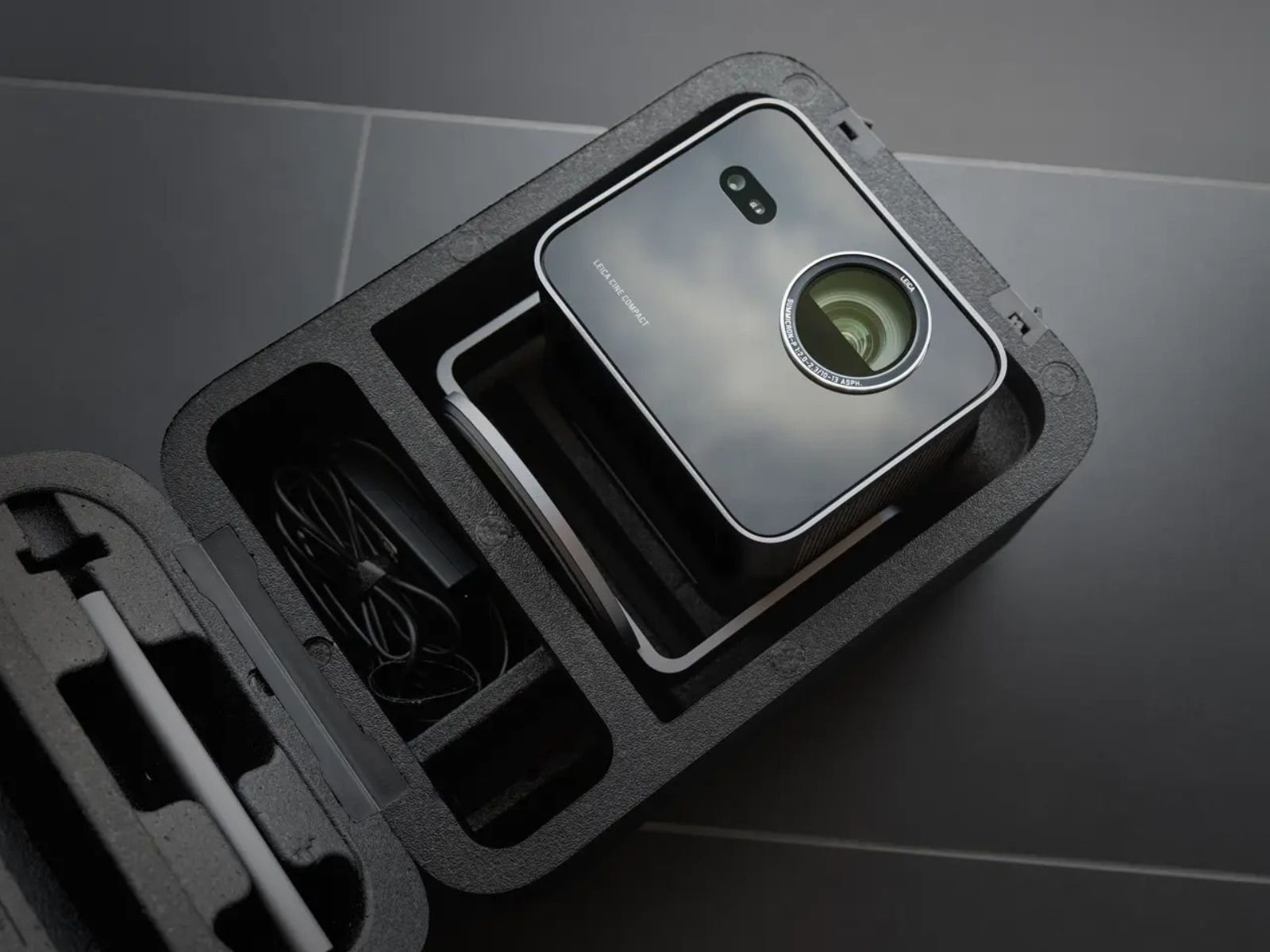
Leica has finished the Cine Compact 1 with a solid aluminum body, glass front and restrained metal-grey colour, giving it the sort of premium treatment normally associated with the company’s cameras. Its Triple RGB laser is rated to last more than 25,000 hours—equivalent to approximately 12,500 two-hour films—while an included recyclable EPP case protects it when moving between rooms or taking it away for the weekend. At approximately 4.4kg, it is portable in the “you can comfortably move it” sense rather than the “throw it into your backpack” sense.

Leica Cine Compact 1
Leica Cine Compact 1 | Image: Leica

Leica Cine Compact 1 Specifications, Price & Availability

Before we get to the release information, here is a closer look at the picture, sound, streaming and connectivity hardware packed inside Leica’s smallest home-cinema projector. Despite its compact design, the Cine Compact 1 combines a 4K Triple RGB laser system, Leica Summicron optics, built-in streaming, and integrated audio, with enough flexibility to project onto walls, ceilings, and outdoor surfaces.

That ability to move between different spaces is central to the projector’s appeal, particularly when its automatic adjustments handle most of the setup. As Icelandic adventure content creator Ása Steinars explains, “I’m so impressed by the image quality delivered by this small projector. You can use it anywhere, and it looks really good wherever you place it.”

Leica Cine Compact 1 Specifications

  • Resolution: 4K (3840 × 2160)
  • Projection Size: 60 to 220 inches
  • Brightness: Up to 1,700 lumens in Ultra Mode
  • Imaging Technology: 0.47-inch DLP DMD chip
  • Light Source: Direct Triple RGB laser
  • Lens: Leica Summicron zoom lens with aspherical elements
  • Image Processing: Leica Image Optimization
  • HDR Support: Dolby Vision, HDR10, HDR10+ and HLG
  • Contrast Ratio: Up to 1,500:1
  • Refresh Rate: 4K at 60Hz, or 2K at up to 240Hz
  • Gaming Latency: 20ms or less in Game Mode
  • Rotation: 360 degrees
  • Automatic Setup: Autofocus, zoom, keystone correction and intelligent screen framing
  • Audio: Two 10W speakers with Dolby Digital, Dolby Digital Plus and DTS Virtual:X
  • Operating System: VIDAA
  • Streaming Apps: Netflix, Disney+, Amazon Prime Video and YouTube
  • Connectivity: HDMI 2.1 with eARC, USB-A 3.0, Wi-Fi 6, Bluetooth 5.4, Apple AirPlay and Apple HomeKit
  • Dimensions: 209 × 226 × 193mm
  • Weight: Approximately 4.4kg
  • System Noise: Less than 29dB
  • Laser Lifespan: More than 25,000 hours
  • Included Accessory: Recyclable EPP transport case

The Leica Cine Compact 1 arrives on June 18, 2026, with availability confirmed for the United States, Canada, Europe, Australia, New Zealand and selected parts of Asia. Japan will follow in July, while US pricing has been set at USD $1,995.00.

Leica includes a recyclable EPP case for carrying and storing the projector, which is useful for something designed to move around the home. There is also a tripod thread if you want to mount it to the ceiling, while the optional Leica Floor Stand 1 offers a cleaner permanent setup without getting in the way of the projector’s 360-degree movement.

The Cine Compact 1 is not the cheapest alternative to buying a large television, but it is designed for people who want a bigger home-cinema experience without arranging an entire room around a fixed screen. Its Leica optics, automatic image adjustments, built-in streaming and integrated sound allow it to move from a living-room wall to a bedroom ceiling or backyard screen with most of the usual setup handled automatically—even if its 4.4kg weight means “portable” mostly applies to journeys around the house.

Leica Cine Compact 1
Leica Cine Compact 1 | Image: Leica
About the Author
arrow_drop_up