


The Best Moments from the Olympic Winter Games Milano Cortina 2026 Opening Ceremony

Share via

Our team of editors and experts thoughtfully chooses each product. If you decide to buy through one of our links, we may earn a commission. Learn more. Want to know how we test products? Click here for more details.

The Olympic Winter Games Milano Cortina 2026 officially got underway with a spectacular Opening Ceremony that celebrated Italy’s rich culture, breathtaking landscapes and enduring Olympic spirit. Hundreds of athletes from around the world were welcomed by thousands of fans at San Siro Stadium in Milan, while simultaneous celebrations unfolded across Cortina, Livigno and the surrounding mountain towns, creating the most geographically expansive Opening Ceremony in Olympic history.

Built around the theme “Armonia” (Harmony), the ceremony paid tribute to the contrast between the beauty of Italy’s snow-covered mountains and the vibrant energy of Milan. Throughout the evening, music, dance and storytelling took centre stage as global stars including Mariah Carey, Andrea Bocelli and Sabrina Impacciatore delivered unforgettable performances, while actress Charlize Theron surprised the audience with a heartfelt message of peace.

The celebrations reached an emotional finale as, for the first time in Olympic history, two Olympic cauldrons were lit simultaneously—one at Arco della Pace in Milan and another in Piazza Dibona in Cortina—symbolizing the unity of the host cities and officially opening the Winter Games.

From breathtaking performances and the Parade of Nations to the lighting of the Olympic flame and unforgettable athlete moments, here are the biggest highlights from the Olympic Winter Games Milano Cortina 2026 Opening Ceremony.

Claudio Coviello and Antonella Albano perform as Cupid and Psyche at the Milano Cortina 2026 Winter Olympics opening ceremony
Performers from the Accademia del Teatro alla Scala bring the myth of Cupid and Psyche to life at the Milano Cortina 2026 opening ceremony. | Image: Reuters – Yara Nardi

The Meaning Behind ‘Armonia’

Every Olympic Opening Ceremony is built around a central idea, and for the Olympic Winter Games Milano Cortina 2026, that idea was “Armonia,” the Italian and Greek word for harmony. Rather than serving as a simple title, Armonia became the thread that connected every performance, visual display and artistic moment throughout the evening, reflecting Italy’s vision of bringing together people, places and cultures through the shared language of sport. It was a fitting choice for a ceremony designed to celebrate not only athletic excellence, but also the values that have defined the Olympic Movement for generations.

The choice of Armonia held even greater significance because Milano Cortina 2026 is the first Winter Olympics to be shared among multiple host communities. Instead of focusing on a single city, the Games unite Milan, Cortina d’Ampezzo, Valtellina and Val di Fiemme, creating an Olympic experience that stretches from vibrant city streets to the breathtaking peaks of the Italian Alps. That balance between urban life and the natural world became one of the ceremony’s defining themes, celebrating the connection between innovation and tradition and the importance of living in harmony with the landscapes that enable winter sports.

As Creative Lead, Marco Balich explained, “It means ‘bringing together’ in musical terms, different elements. Because there are two cities, Milan and Cortina, city and mountain, the harmony between man and nature, between cultures, people and different ways of thinking… it is very meaningful and beautiful.”

That same vision extended far beyond Italy’s borders. At a time when much of the world continues to face division and uncertainty, the Opening Ceremony presented Armonia as a message of peace, welcoming athletes from every nation into a shared celebration built on friendship, respect and excellence. Rather than following tradition, Milano Cortina embraced a new way of hosting the Olympic Games, with ceremonies and symbolic moments unfolding across multiple locations while remaining connected through one common purpose.

As the Organizing Committee’s Olympic and Paralympic Ceremonies Director, Maria Laura Iascone, proudly said, “We are charting a new course. As Italians, we are innovators of a new spirit of Ceremonies. We will tell the world what we can do, our ability to create beauty and excitement.” By the time the ceremony came to a close, Armonia had become much more than the evening’s theme—it had become a reflection of the Olympic spirit itself, proving that even across different cities, cultures and landscapes, the Games can begin as one.

Mariah Carey performs at the Milano Cortina 2026 Winter Olympics opening ceremony at San Siro Stadium.
Mariah Carey opened the Milano Cortina 2026 Winter Olympics opening ceremony with performances of “Volare” and her new single, “Nothing Is Impossible,” setting the tone for an evening celebrating music, culture, and the Olympic spirit. | Image: Reuters – Yara Nardi

Mariah Carey Kicks Off the Olympic Winter Games Milano Cortina 2026 In Style

The honour of opening the Milano Cortina 2026 Opening Ceremony belonged to none other than Mariah Carey, who kicked off the evening with a performance that immediately set the tone for the celebrations ahead. Taking to the stage at San Siro Stadium before thousands of spectators and a global television audience, the Grammy Award-winning singer dazzled in a dramatic white gown embellished with shimmering silver jewels, a feathered shawl and sparkling diamond accessories. She opened with the beloved Italian classic “Volare,” known locally as “Nel blu, dipinto di blu,” before performing her latest single, “Nothing Is Impossible,” setting the stage for an evening centred on music, culture, and the Olympic spirit.

Carey’s appearance had been announced weeks earlier in a video message shared with fans, where she said, “Ciao. Get ready for Milano Cortina 2026. See you at the Stadium San Siro on the 6th of February for the Olympic opening ceremony. Ci vediamo a Milano.” Explaining why she was chosen to open the Games, the Milano Cortina 2026 Organizing Committee said Carey “fully represents the emotional atmosphere that accompanies the run-up to the Games,” adding that “Music is a universal language that attracts different stories and sensibilities, and intertwines with the opening ceremony’s theme of harmony.” It proved to be a fitting choice, as her performance welcomed athletes and fans from around the world while perfectly introducing the evening’s message of “Armonia.”

Charlize Theron delivers a speech at the Milano Cortina 2026 Winter Olympics opening ceremony.
Charlize Theron addresses the crowd at the opening ceremony of the Milano Cortina 2026 Winter Olympics, delivering a powerful message of peace inspired by Nelson Mandela. | Image: Reuters – Yves Herman

Charlize Theron Makes a Surprise Appearance with a Plea for ‘Peace’

Not all the memorable moments at the Opening Ceremony came from music or dance. Academy Award-winning actress Charlize Theron captured the audience’s attention with a heartfelt call for peace, sharing words from her “beloved countryman,” the late Nelson Mandela. Her speech reflected the ceremony’s themes of unity, respect, and hope. As South Africa’s representative, Theron gave everyone at San Siro Stadium and viewers around the world a moment to reflect on what the Olympic Games stand for beyond sport.

Theron quoted Mandela, telling the audience, “Peace is not just the absence of conflict. Peace is the creation of an environment where all can flourish, regardless of race, colour, creed, religion, gender, class, caste, or any other social markers of difference.” She added, “Today, this message seems more relevant than ever. So let these Games be more than just sport. Let them be a reminder of our common humanity and our respect for one another, and a resounding call for peace everywhere.” The audience responded with warm applause. Her words captured the spirit of “Armonia” and reminded everyone that, while athletes compete for medals, the Olympic Games begin with a shared commitment to friendship, respect, and bringing people from all backgrounds together.

Tenor Andrea Bocelli performs during the opening ceremony of the Milano Cortina 2026 Winter Olympics, marking his return to the Olympic stage 20 years after his unforgettable performance at the Turin 2006 Winter Games. | Image: Reuters – Yves Herman

Andrea Bocelli Returns to the Olympic Stage for a Historic Finale

As the Opening Ceremony neared its end, Andrea Bocelli, one of Italy’s most famous singers, returned to the Olympic stage. In front of more than 77,000 people at San Siro Stadium, Bocelli celebrated 20 years since his memorable performance at the Torino 2006 Winter Olympics, where he closed the Games with “Because We Believe.” Now, at 67, his appearance at Milano Cortina 2026 brought his Olympic journey full circle. Just before the Olympic cauldron was lit, Bocelli moved the audience with a powerful version of “Nessun Dorma,” the well-known aria from Puccini’s Turandot, a song closely tied to his career after the death of his mentor, Luciano Pavarotti.

As Bocelli’s voice filled the stadium, the Olympic torch made its way through several torchbearers on its final journey. Italian football legends Giuseppe Bergomi and Franco Baresi, both key figures in AC Milan and Italian football, were among those who carried the flame. Their involvement brought even more national pride to the emotional ending. Bocelli’s performance set the mood as everyone waited for one of the ceremony’s most important moments — the lighting of the Olympic cauldron and the official start of the Milano Cortina 2026 Winter Games.

Sabrina Impacciatore performs during the Milano Cortina 2026 Winter Olympics opening ceremony
Sabrina Impacciatore performs “Time Travel” at the opening ceremony of the Milano Cortina 2026 Winter Olympics, celebrating 100 years of the Winter Games with a vibrant musical journey through the decades. | Image: Reuters – Elsa

‘The White Lotus’ Comes to the Milan Winter Games

‘The White Lotus’ star Sabrina Impacciatore brought a burst of energy to the Milano Cortina 2026 Opening Ceremony with “Time Travel,” a vibrant song-and-dance performance celebrating 100 years of the Winter Olympic Games. Beginning with an animated sequence, the performance transitioned to a live stage production, taking spectators on a journey through each decade, from the 1920s to the 1990s, with colourful visuals, imaginative costumes, rhythmic choreography, and larger-than-life set pieces. Best known to international audiences for her role in HBO’s ‘The White Lotus’, Impacciatore helped transform the Olympic ceremony into one of its most creative and visually striking performances.

Matilda De Angelis performs at the Milano Cortina 2026 Winter Olympics opening ceremony as part of the "Armonia" performance.
Matilda De Angelis performs “Armonia” at the opening ceremony of the Milano Cortina 2026 Winter Olympics, bringing Italian art, music and creativity to life. | Images: Reuters – Yara Nardi
Matilda De Angelis leads the "Armonia" performance at the Milano Cortina 2026 Winter Olympics opening ceremony.
Matilda De Angelis, inspired by Antonio Canova’s works, leads the “Armonia” performance at the Milano Cortina 2026 Winter Olympics opening. | Image: Reuters – Claudia Grec

Actress Matilda De Angelis Helps Bring “Armonia” to Life

Italian actress Matilda De Angelis played one of the Opening Ceremony’s most distinctive roles, stepping onto the stage as the composer behind “Armonia,” the artistic vision that guided the Milano Cortina 2026 celebrations. Dressed in an elegant black-and-white gown and conducting with a baton in hand, De Angelis watched as 70 performers from the Accademia Teatro alla Scala transformed San Siro Stadium into a living work of art. Inspired by the work of renowned Italian architect and Neoclassical sculptor Antonio Canova, the performance saw statues come to life through music, movement and dance, offering one of the evening’s most visually captivating moments.

While international audiences may recognize De Angelis from acclaimed productions including The Undoing and The Law According to Lidia Poët, the Opening Ceremony offered a different side of the Italian actress as she helped introduce the world to the ceremony’s message of harmony. Reflecting on her passion for the arts in a previous interview, De Angelis once said, “I’m an actress, I feel like an actress, I want to be an actress, and I want to do what I do well.” That passion was evident throughout her performance, which blended elegance, creativity and Italian artistry into a memorable celebration that perfectly captured the spirit of Milano Cortina 2026.

Vittoria Ceretti carries the Italian flag at the Milano Cortina 2026 Winter Olympics opening ceremony.
Italian supermodel Vittoria Ceretti, wearing a Giorgio Armani-designed dress, carries the Italian flag before presenting it to President Sergio Mattarella during the opening ceremony of the Milano Cortina 2026 Winter Olympics. | Image: Reuters – Maja Hitij

Vittoria Ceretti, Leonardo DiCaprio’s Girlfriend, Honours Italy at the Opening Ceremony

Italian supermodel Vittoria Ceretti was entrusted with one of the Opening Ceremony’s most symbolic moments, proudly carrying the Italian flag across the stage before presenting it to Italian President Sergio Mattarella. While many international viewers know Ceretti as Leonardo DiCaprio’s girlfriend, the 27-year-old has built an acclaimed career of her own as one of Italy’s leading fashion models. Leading a group of women in shimmering red, white and green suits inspired by the colours of the Italian Tricolore, Ceretti helped set the stage for Laura Pausini’s performance of the Italian national anthem. The striking outfits were designed by the legendary Italian fashion designer Giorgio Armani, who passed away in September, and were part of a wider wardrobe collection he created for the Opening Ceremony, including costumes worn by performers and the official outfits for Italy’s Olympic team.

Performers representing Italian creativity and imagination at the Milano Cortina 2026 Winter Olympics opening ceremony.
A colourful parade of performers, inspired by Italian imagination and creativity, fills San Siro Stadium during the opening ceremony of the Milano Cortina 2026 Winter Olympics. | Image: Reuters – Alkis Konstantinidis

Pizza, Coffee and a Whole Lot of Italy

The Milano Cortina 2026 Opening Ceremony wasn’t just a celebration of sport—it was a celebration of everything that makes Italy one of the world’s most recognizable countries. After opening with a striking scene of performers dressed as ancient white marble statues, the atmosphere quickly shifted as enormous paint tubes descended from the rafters, releasing vibrant streams of colour across San Siro Stadium. Moments later, performers dressed in brilliant shades of yellow, blue, green and red filled the stage, transforming the ceremony into a joyful tribute to Italian imagination, creativity and national pride.

The colourful spectacle brought some of Italy’s most beloved symbols to life, with giant moka pots, pizza chefs, the Leaning Tower of Pisa and other iconic creations making memorable appearances throughout the performance. It was, as Eurosport commentators described, “a grand parade of characters inspired by symbolic categories of Italian imagination and creativity — Ancient Rome, cuisine, fashion, literature, the Renaissance, architecture, design and the Venice Carnival as well.” Together, the performances celebrated the traditions, inventions and cultural treasures that have shaped Italy’s identity and earned its place on the world stage.

Colourful performers dressed as traditional Italian moka coffee pots at the Milano Cortina 2026 Winter Olympics opening ceremony.
Performers dressed as iconic Italian moka coffee pots celebrate Italy’s coffee culture at the opening ceremony of the Milano Cortina 2026 Winter Olympics. | Image: Getty Images – Dean Mouhtaropoulos
Performers portraying iconic figures from Italian art and culture at the Milano Cortina 2026 Winter Olympics opening ceremony.
Performers portraying famous figures from Italian art and culture take part in the colourful “Italian Creative Parade” at the opening ceremony of the Milano Cortina 2026 Winter Olympics. | Image: Reuters – Yara Nardi

The vibrant display also reflected the ceremony’s central theme of “Armonia,” which organizers described as a deeply Italian value carrying a universal message of peace, unity and dialogue. Explaining the vision behind the production, Creative Lead Marco Balich said, “It is about people, emotion and humanity. In a complex world, we want to offer a message of harmony, beauty and peace that can be understood by everyone.” Through music, colour and storytelling, the ceremony became more than a showcase of Italian culture—it became an invitation for the world to experience the warmth, creativity and spirit that define the host nation.

More than anything, the performance showed that Italy wasn’t simply introducing the Olympic Games—it was introducing itself. Every scene, from the celebration of food and fashion to tributes to art, architecture and centuries of tradition, reflected a country proud of its heritage while embracing the future. It was a fitting reminder that some of Italy’s greatest contributions to the world extend well beyond sport, making the Opening Ceremony as much a celebration of the nation itself as the beginning of the Olympic Winter Games Milano Cortina 2026.

Team Greece enters the Milano Cortina 2026 Winter Olympics opening ceremony as part of the Parade of Nations.
Team Greece leads the Parade of Nations at the opening ceremony of the Milano Cortina 2026 Winter Olympics, proudly carrying the Greek flag, as tradition dictates for the birthplace of the Olympic Games. | Image: Getty Images – Stephanie Lecocq

The Parade of Nations Brings the World Together

The Parade of Nations is always a highlight of the Olympic Opening Ceremony, and Milano Cortina 2026 kept this tradition alive. Athletes from all over the world marched into San Siro Stadium, greeted by cheers from fans excited for the start of the Winter Olympics. For newcomers, it was the reward for years of dedication, while returning Olympians enjoyed the chance to represent their countries again on a global stage. The parade also showcased each country’s unique style, with uniforms from brands like Ralph Lauren for Team USA, Lululemon for Team Canada, Moncler for Team Brazil, and Giorgio Armani for Team Italy, which created Italy’s elegant outfits.

Following Olympic tradition, Greece entered first as the birthplace of the ancient Olympic Games, while Italy received a thunderous ovation as the host nation entered last. Between those unforgettable moments, thousands of athletes proudly waved their national flags, shared smiles with teammates and soaked in an atmosphere unlike any other. It was a celebration that perfectly reflected the spirit of “Armonia,” bringing together different cultures, languages and traditions in one unforgettable parade before the Olympic Winter Games Milano Cortina 2026 officially got underway.

Deborah Compagnoni and Alberto Tomba light the Olympic cauldron at the Milano Cortina 2026 Winter Olympics opening ceremony.
Torchbearers Deborah Compagnoni and Alberto Tomba light the Olympic cauldron at Milan’s Piazza Dibona as fireworks illuminate the sky during the opening ceremony of the Milano Cortina 2026 Winter Olympics. | Image: Getty Images – Lars Baron

Two Cities, Two Flames, One Olympic Dream

The closing moments of the Milano Cortina 2026 Opening Ceremony marked a historic first for the Olympic Winter Games, as the Olympic flame completed its journey through Italy after more than two months travelling from Olympia, Greece, to the host nation. As anticipation peaked, the torch made its final journey through a series of celebrated Italian sporting icons, including football legends Giuseppe Bergomi and Franco Baresi, while Andrea Bocelli’s stirring performance of “Nessun Dorma” provided the emotional soundtrack to one of the ceremony’s defining moments. With millions watching around the world, everything was in place for the official start of the Winter Games.

History was made as, for the first time in Olympic history, the flame’s journey ended in two cities rather than one. In Cortina d’Ampezzo, Olympic champion Gustav Thöni, who won alpine skiing gold at the 1972 Sapporo Winter Olympics, handed the torch to Sofia Goggia, Italy’s downhill gold medallist from PyeongChang 2018, who lit the cauldron in Piazza Dibona. At the same time in Milan, beneath the iconic Arco della Pace, Italian alpine skiing legends Deborah Compagnoni and Alberto Tomba, who each won three Olympic gold medals in the late 1980s and early 1990s, ignited the second cauldron. The simultaneous lighting reflected the unique identity of Milano Cortina 2026, bringing together two host cities, one Olympic dream.

Olympic rings illuminated by fireworks at the Milano Cortina 2026 Winter Olympics opening ceremony.
Fireworks illuminate the Olympic rings during the Milano Cortina 2026 opening ceremony. | Image: Reuters – Wang Zhao

What’s Next at the Olympic Winter Games Milano Cortina 2026

Now that the Opening Ceremony is over and the Olympic flame is burning in Milan and Cortina d’Ampezzo, everyone is focused on the competitions happening over the next two weeks. More than 2,900 athletes from around the world will compete in 16 Olympic sports, aiming to win medals in events such as alpine skiing, figure skating, ice hockey, biathlon, freestyle skiing, and snowboarding. For some athletes, these Games are the result of many years of hard work, while for others, Milano Cortina 2026 might be the beginning of an unforgettable Olympic journey.

After an unforgettable night of music, culture, and celebration, the stage is ready for moments that will be remembered for years to come. New champions will be named, records will be tested, and stories of victory, loss, and strength will happen on snow and ice across Italy. If the Opening Ceremony showed us anything, the Olympic Winter Games Milano Cortina 2026 will be an unforgettable celebration of sport, bringing together athletes and fans from around the world in pursuit of one shared dream—Olympic glory.

Team Great Britain waves Union Jack flags as the delegation parades at the Milano Cortina 2026 Winter Olympics opening ceremony.
Team Great Britain marches during the Milano Cortina 2026 opening ceremony. | Image: Getty Images –
Team Croatia parades at the Milano Cortina 2026 Winter Olympics opening ceremony, with athletes in red uniforms waving to spectators.
Team Croatia marches during the Milano Cortina 2026 opening ceremony. | Image: Reuters – Stephanie Lecocq
Team Australia parades during the Milano Cortina 2026 Winter Olympics opening ceremony, with athletes in green-and-gold uniforms waving Australian flags to the crowd.
Team Australia marches during the Milano Cortina 2026 opening ceremony. | Image: Reuters – Claudia Grec
Team China parades at the Milano Cortina 2026 Winter Olympics opening ceremony, with athletes waving Chinese flags as they enter the stadium.
Team China marches during the Milano Cortina 2026 opening ceremony. | Image: Reuters – Jennifer Lorenzin
Team Canada parades at the Milano Cortina 2026 Winter Olympics opening ceremony, with athletes in maple-leaf-themed uniforms waving to the crowd.
Team Canada marches at the Milano Cortina 2026 opening ceremony. | Image: Reuters – Piroschka Van De Wouw
Team Brazil parades during the Milano Cortina 2026 Winter Olympics opening ceremony, with the flag bearer leading the delegation and waving the Brazilian flag.
Team Brazil marches at the Milano Cortina 2026 opening ceremony. | Image: Reuters – Jennifer Lorenzini
Team Czech Republic parades at the Milano Cortina 2026 Winter Olympics opening ceremony, with athletes in colourful uniforms waving Czech flags.
Team Czech Republic marches at the Milano Cortina 2026 opening ceremony. | Image: Reuters – Kai Pfaffenbach
Team Nigeria enters the Parade of Nations at the Milano Cortina 2026 Winter Olympics opening ceremony.
Team Nigeria proudly enters the Parade of Nations during the Milano Cortina 2026 opening ceremony. | Image: Reuters – Stephanie Lecocq
Team Saudi Arabia parades at the Milano Cortina 2026 Winter Olympics opening ceremony, with athletes wearing traditional Saudi attire and carrying the national flag.
Team Saudi Arabia marches at the Milano Cortina 2026 opening ceremony. | Image: Reuters -Hannah Mckay 
Team Bulgaria parades during the Milano Cortina 2026 Winter Olympics opening ceremony, with one athlete carrying the delegation's sign while riding on a teammate's shoulders.
Team Bulgaria marches at the Milano Cortina 2026 opening ceremony. | Image: Reuters – Hannah Mckay
Host nation Team Italy enters the Parade of Nations at the Milano Cortina 2026 Winter Olympics opening ceremony.
Host nation Italy receives a rousing welcome during the Parade of Nations at the Milano Cortina 2026 opening ceremony. | Image: Reuters – Mike Segar
Team USA enters the Parade of Nations at the Milano Cortina 2026 Winter Olympics opening ceremony.
Team USA waves American flags during the Parade of Nations at the Milano Cortina 2026 opening ceremony. | Image: Reuters – Piero Cruciatti.
Team France enters the Parade of Nations at the Milano Cortina 2026 Winter Olympics opening ceremony.
Team France waves French flags during the Parade of Nations at the Milano Cortina 2026 opening ceremony. | Image: Reuters – Piroschka Van De Wouw
A South Korean athlete holds the national flag high as Team South Korea parades during the Milano Cortina 2026 Winter Olympics opening ceremony in Livigno.
Team South Korea parades during the Milano Cortina 2026 opening ceremony in Livigno. | Image: Getty Images – Cameron Spencer
Team Norway marches in the Parade of Nations at the opening ceremony of the Milano Cortina 2026 Winter Olympics.
Team Norway enters the Parade of Nations during the Milano Cortina 2026 opening ceremony. | Image: Reuters – Mike Segar

Olympics
About the Author

Related Articles

Grooming & Fragrance

15 Best Hairstyles for Men with Big Foreheads — That Actually Work

Reading Time: 26 minutes

Our team of editors and experts thoughtfully chooses each product. If you decide to buy through one of our links, we may earn a commission. Learn more. Want to know how we test products? Click here for more details.

A bigger forehead is one of those features people often overthink, even though it’s rarely the first thing anyone else notices. Most of the time, it isn’t the feature itself that looks off, but the haircut sitting above it. When the proportions are wrong, the whole look feels awkward; when they’re right, everything suddenly clicks into place.

These hairstyles are designed to complement your natural features rather than against them, focusing on balance, texture, and movement instead of trying to hide anything, which is exactly why this list comes in. Some of the cuts are clean and low-maintenance, others are more relaxed or expressive, but every style here is chosen for being easy to live with and genuinely flattering without feeling forced.

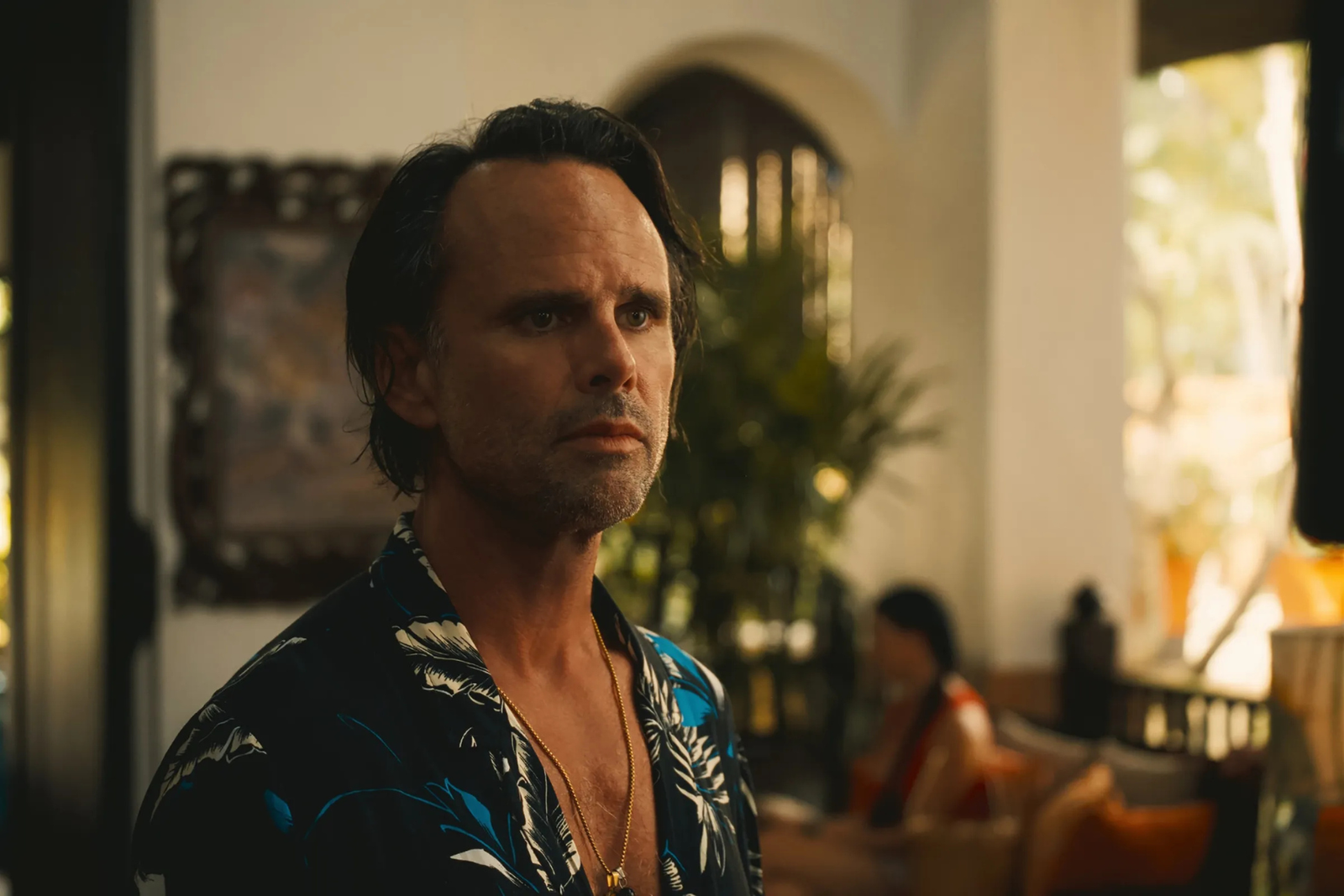
Walton Goggins in The White Lotus Season 3 | Image: Getty Images

Best Haircuts for Big Foreheads

Having a bigger or higher forehead doesn’t limit your options nearly as much as many think. The right haircut can completely change how everything comes together, and there are plenty of styles that do this without trying to hide anything. Some lean into texture and longer fringe to soften the appearance, others focus on shape and structure to draw attention elsewhere, and some simply keep it simple and confident. The key is choosing a cut that feels intentional and complements what you already have, which is exactly what the styles below are meant to do.

Now let’s check the list out.

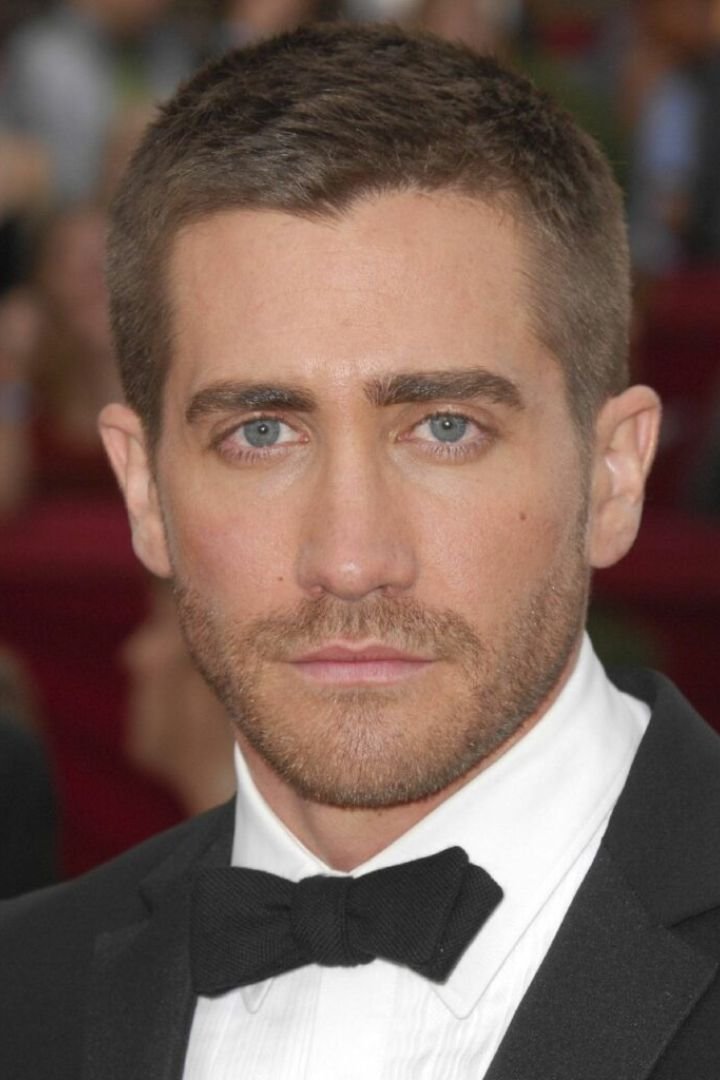
Jake Gyllenhaal with Crew Cut at the Oscars | Image: Getty Images
  • Style: Short and structured with a clean, tapered finish
  • Best Suited For: Oval, round, & heart-shaped faces
  • Maintenance Level: Low maintenance with minor trims every 3–4 weeks

1. Crew Cut

We’ll start with the first one — the crew cut — because it’s one of those haircuts that proves you don’t need tricks to look good. When dealing with a bigger forehead, the instinct is often to cover it up, but that approach only works if your hair is thick and cooperative. Once density drops or the hairline starts to shift, heavier styles can quickly look messy and unbalanced.

The crew cut avoids all of that by focusing on proportion. Tapered or faded sides keep the shape tidy, while a slightly longer top adds just enough presence to stop the look from feeling flat. Instead of drawing attention to the hairline, the cut spreads focus evenly across the head, which can actually make a higher or receding hairline much less noticeable.

It’s sharp without being severe, easy to maintain without looking lazy, and adaptable to different hair types, and that’s what keeps the crew cut timeless in its versatility. If you’ve got the volume, a touch of texture on top modernizes the look, but even in its simplest form, the crew cut remains one of the most reliable hairstyles a man can choose.

Pro Tip: Use a matte clay or a light pomade and maintain a natural finish. If you add too much shine, the hair will only draw more attention upwards.

  • Style: Short, forward-styled cut with a defined fringe & controlled length
  • Best Suited For: Oval, square, & heart-shaped faces
  • Maintenance Level: Low to moderate maintenance with trims every 3–5 weeks
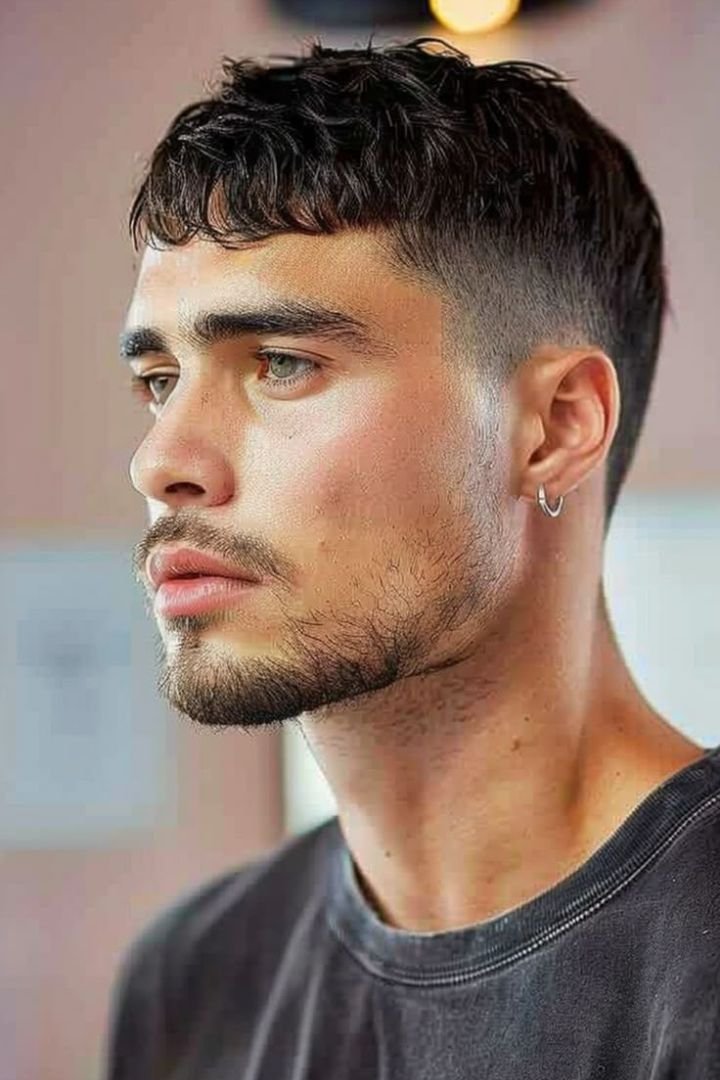
Caesar Cut for Men | Image: Pinterest

2. Caesar Cut

If there’s one hairstyle that has lasted for centuries, it has to be The Caesar, because it better understands proportion than most modern hairstyles. This makes it especially suitable for men with larger foreheads or hairlines that are beginning to thin. By directing the hair forward instead of upward or outward, the cut naturally softens the upper part of the face while adding visual width, helping to balance longer or more angular face shapes without needing volume or bold styling.

The main feature of this cut is the defining aspect of the Caesar, which is its fringe, kept short and deliberately blunt to create a clean, horizontal line across the forehead. This detail isn’t about hiding anything outright but about adding structure in a way that seems intentional and controlled. Unlike many cropped styles, the Caesar generally leaves slightly more length on the top and sides, allowing the hair to transition naturally into tapered sideburns and a tidy neckline, rather than disrupting the shape with harsh fades.

Although it’s often grouped with French crops or blowout tapers, the Caesar sets itself apart through flow rather than contrast. The hair falls evenly from the crown toward the sides, creating a rounded silhouette that feels unified and forgiving, especially if hair density varies or the hairline lacks perfect symmetry. This makes it one of the more versatile options for men seeking a polished look without demanding precision cuts.

The style also allows for subtle personalization, depending on how bold you want the finish to feel. Texture can be added to soften the fringe and modernize the look, while a sharper front line can create a more graphic effect if the hairline permits. Adding facial hair can further anchor the overall appearance, drawing attention downward and creating a stronger sense of balance across the face.

Pro Tip: Apply a small amount of texture powder or matte paste to dry hair, then use your fingers to guide everything forward. Focus on shaping rather than adding height, so the fringe stays controlled and the overall silhouette remains tidy.

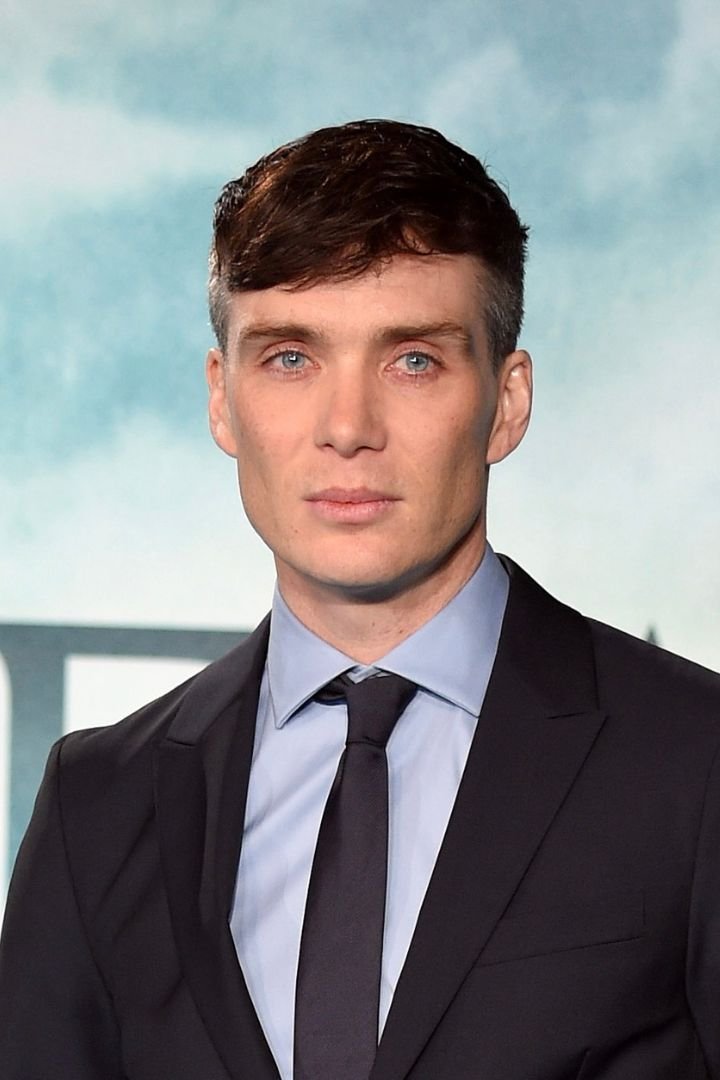
Cillian Murphy in a French Crop Hairstyle | Image: Getty Images
  • Style: Cropped cut with a textured top & a short, forward fringe
  • Best Suited For: Oval, round, & square face shapes
  • Maintenance Level: Moderate maintenance with trims every 3–5 weeks

3. French Crop

The French crop is one of our favourite hairstyles on this list, and it’s also one that many of us already wear in some form, even if we don’t always name it. It works particularly well for men with larger foreheads because the short, forward-styled fringe helps visually shorten the upper part of the face, creating balance without relying on volume or dramatic styling techniques.

What makes the French crop so appealing is how it combines control with texture in a way that looks natural rather than forced. The fringe can be kept relatively blunt to add width to longer face shapes, while the top is usually cut with plenty of texture, creating a slightly worn-in finish that softens the overall look and prevents the cut from appearing too rigid as it grows out.

The success of the French crop ultimately depends on execution, especially in how the top blends into the sides and back. The perimeter is usually kept short and tidy to frame the face, while the top stays around finger length and is point-cut to promote movement and flexibility. Depending on the hairline, the front can be shaped more sharply or left softer, but when styled forward with minimal product, the French crop remains one of the most dependable and easygoing hairstyles a man can choose.

Pro Tip: Work a small amount of textured powder or matte paste through dry hair, then guide it forward with your fingers, focusing on separation and movement rather than height, so the overall shape remains balanced and controlled.

  • Style: Medium-length cut with volume at the front & textured movement throughout
  • Best Suited For: Oval, round, & square face shapes
  • Maintenance Level: Moderate maintenance with trims every 3–4 weeks
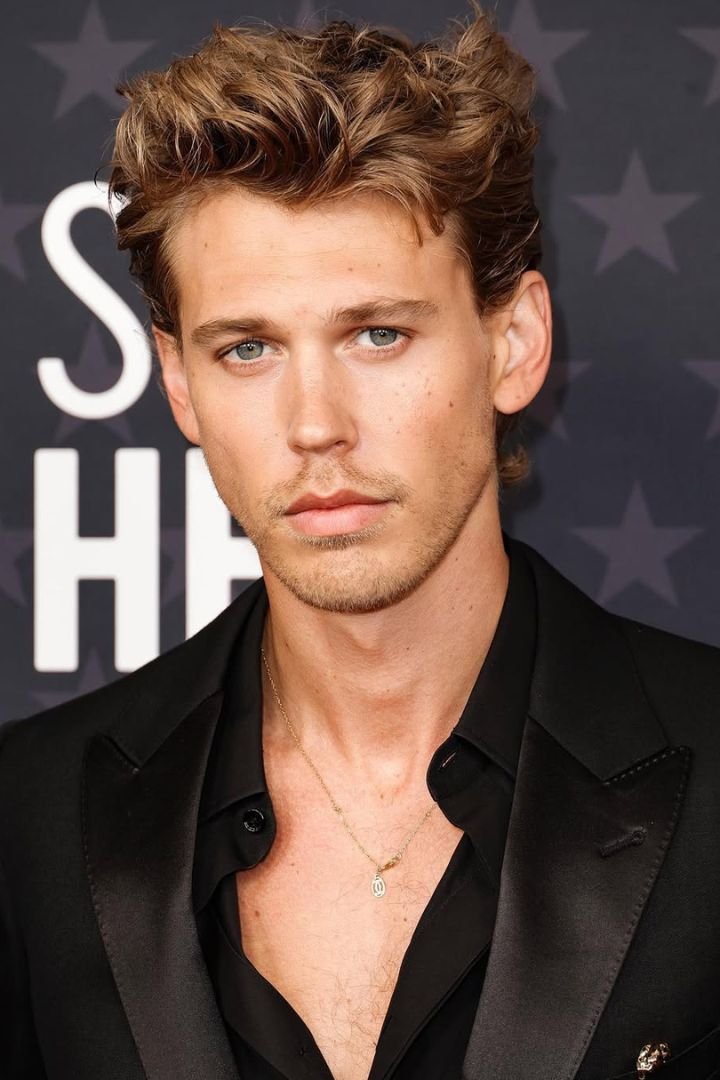
Austin Butler with his wavy Textured Quiff | Image: Getty Images

4. Textured Quiff

The textured quiff has become a popular hairstyle for men with larger foreheads because it balances presence and restraint, using movement rather than stiffness to create proportion. Instead of pushing the hair straight up or back, the style introduces gentle lift at the front while keeping the rest of the top textured and fluid, which helps draw attention across the hairstyle rather than directly toward the hairline.

It’s also a cut that’s been embraced by many modern style icons, with Austin Butler being one of the most recognizable examples in recent years. His take on the textured quiff, often worn slightly loose and imperfect, demonstrates how effective the style can be when it looks lived-in rather than overly styled. Other celebrities have adopted similar variations for the same reason — the texture softens the look, adds character, and keeps the hairstyle feeling effortless even when it’s clearly well considered.

The volume should feel intentional but never excessive, while the sides remain tapered or faded to keep the overall shape clean. With the right balance, the quiff enhances facial structure without exaggerating the forehead, making it a confident, versatile option that works just as well dressed down as it does styled for a more polished setting.

Pro Tip: Work a matte clay or texture cream through towel-dried hair and lift gently at the front using your fingers, focusing on movement rather than height so the style remains relaxed and proportional.

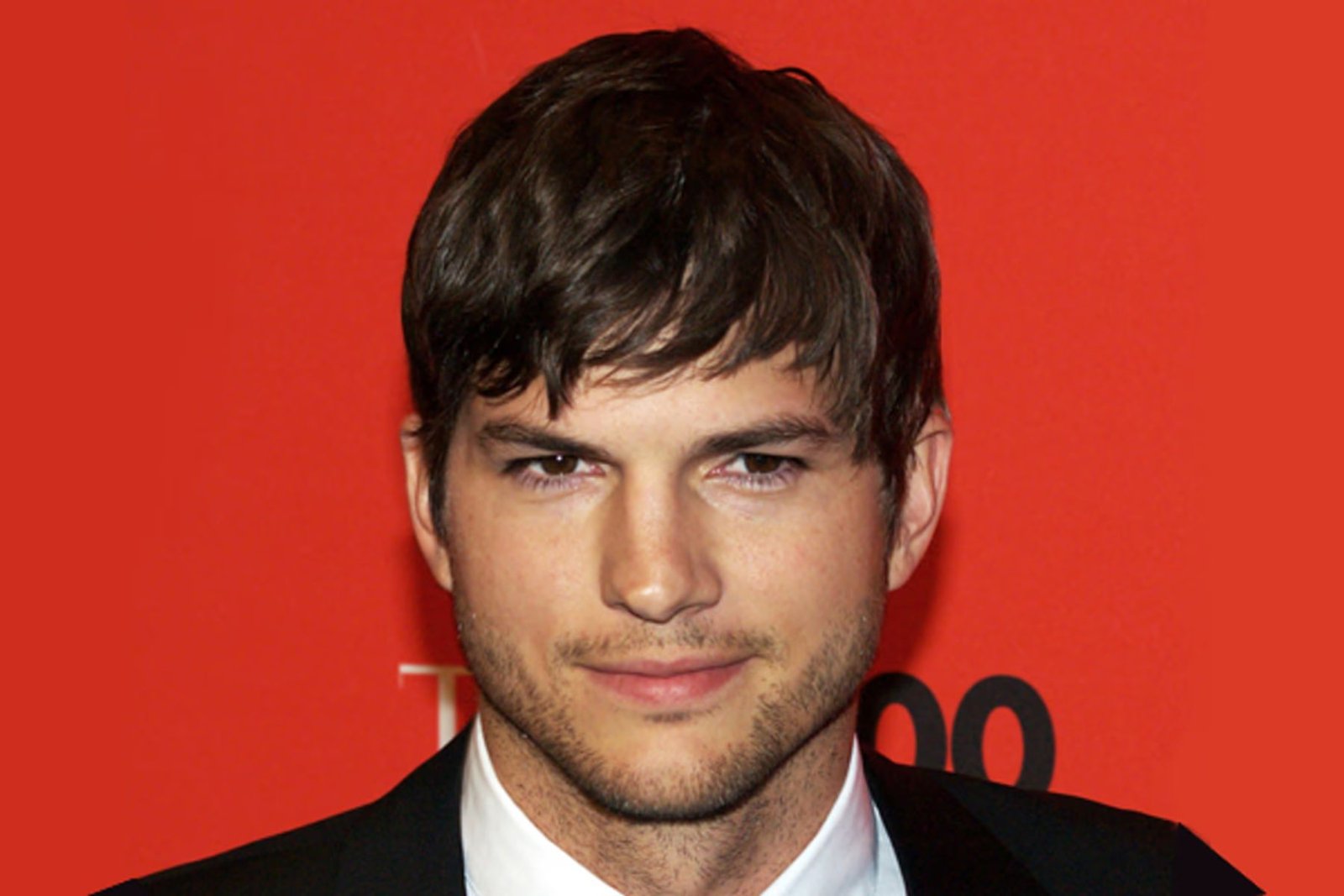
Ashton Kutcher with a casual texture and a polished finish in Mop Top style | Image: Getty Images

5. Mop Top

  • Style: Medium-length cut with relaxed layers & natural movement
  • Best Suited For: Oval, square, & heart-shaped faces
  • Maintenance Level: Moderate maintenance with trims every 4–6 weeks

Remember when The Beatles arrived in the 60’s with their iconic hairstyles that influenced men’s fashion? Its lasting appeal lies in how easily it frames the face. For men with larger foreheads, the longer fringe and soft layers help break up the upper part of the face, drawing attention downward and creating balance without relying on sharp lines or heavy styling.

Unlike more structured haircuts, the mop top is centred on movement and texture, which is why it looks best when the hair is allowed to fall naturally. The length through the top and fringe creates a soft curtain effect across the forehead, while subtle layering prevents the style from feeling heavy or shapeless. When done right, it adds width and softness rather than volume, making it especially flattering for men who prefer a relaxed, lived-in look.

The style has undergone many modern reinterpretations, with actors like Ashton Kutcher helping to bring it back into the spotlight over the years. His versions of the mop top often appeared slightly cleaner and more refined, demonstrating that the cut can evolve without losing its casual appeal. This adaptability is what keeps the mop top relevant, making it feel current rather than nostalgic when tailored to the individual.

Although the mop top might seem easy to maintain, it still benefits from careful trimming and light upkeep to keep its shape. It grows out well, but regular trims help maintain the layers and keep the fringe sitting naturally across the forehead. When styled lightly and allowed to flow freely, the mop top remains a reliable choice for men seeking a softer, approachable hairstyle that complements, rather than clashes with, a larger forehead.

Pro Tip: Apply a lightweight cream or soft-hold product to damp hair and let it air-dry or blow-dry gently, encouraging natural movement so the fringe settles forward without appearing stiff or overworked.

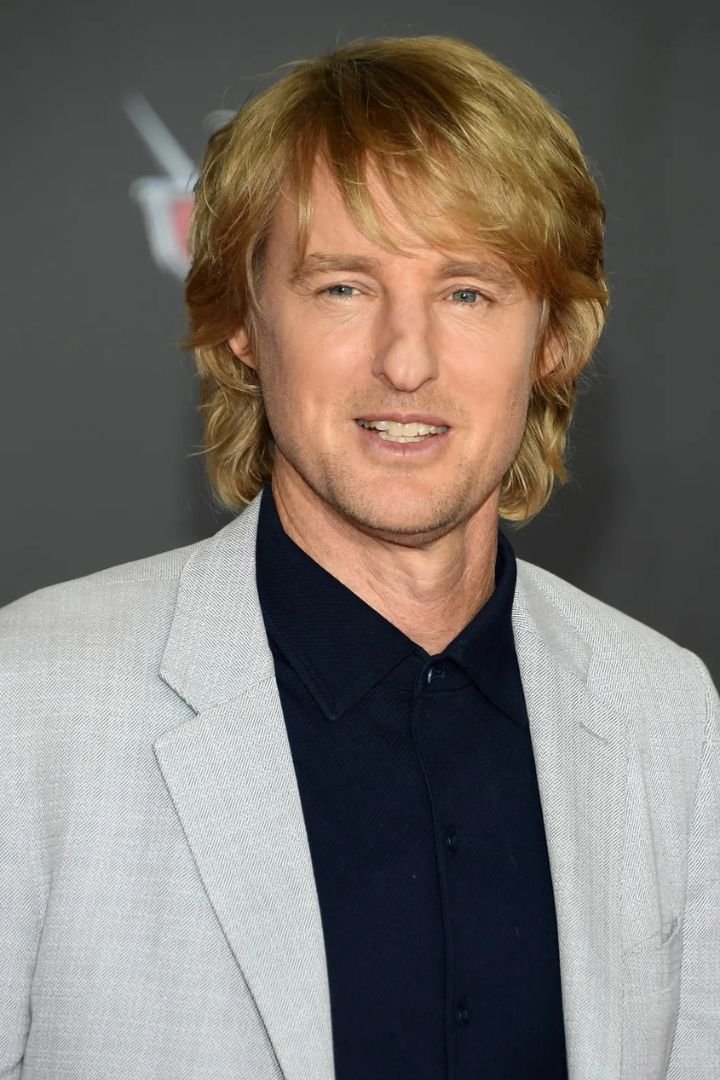
Owen Wilson Medium-Length Shaggy Hairstyle | Image: Pinterest
  • Style: Layered, medium-length cut with heavy texture & natural movement
  • Best Suited For: Oval, square, & heart-shaped faces
  • Maintenance Level: Moderate maintenance with trims every 5–7 weeks

6. Shag Cut

The shag cut features medium length and intentionally choppy layers, which add movement and a relaxed shape, especially suited for men with larger foreheads. The longer top and soft fringe draw attention away from the hairline, while feathered sides and back keep the overall silhouette light and balanced. Instead of relying on sharp structure, the shag employs flow and texture to soften facial proportions, making it a laid-back choice that still appears purposeful.

One of the biggest advantages of the shag cut is how adaptable it is. You can embrace a more retro, ’1970s-inspired look by growing out the length at the back, or keep it modern and sleek with a shorter, cleaner style. It works just as well worn long and loose as it does in a more compact, textured shaggy version, depending on your preferred amount of layering and definition. Using your fingers and a small amount of cream to style it, the cut lets you switch between relaxed, lived-in finishes and more structured textures, making it one of the most versatile hairstyles on this list.

Pro Tip: Blow-dry gently with your fingers to lift the layers, then work a small amount of styling cream through the hair to define texture while maintaining a soft, natural finish.

7. Medium Layered Cut

  • Style: Medium-length cut with balanced layers & a refined, natural shape
  • Best Suited For: Oval, square, & heart-shaped faces
  • Maintenance Level: Moderate maintenance with trims every 4–6 weeks

If the shag cut leans into texture and attitude, the medium layered cut builds on those same foundations and refines them into a cleaner, more adaptable shape that feels easier to manage daily. By keeping length through the top and adding soft, graduated layers, the style creates lift and movement that help balance a larger forehead while maintaining a relaxed overall silhouette rather than a rigid one, allowing the hair to frame the face naturally without relying on a heavy fringe or exaggerated volume.

The effectiveness of the medium layered cut lies in how easily it creates fullness and flow. With the hair sitting at a comfortable medium length, gentle waves and layered sections work together to add dimension and natural movement, helping to distribute visual weight more evenly across the face. When dried with fingers and finished with a light texturing product, the cut maintains volume and texture without looking overly styled, making it a reliable choice for men who want a polished yet easygoing appearance.

Pro Tip: Dry your hair with your fingers, lifting gently at the roots to encourage natural volume. Then, apply a light sea salt spray to enhance texture and achieve a full, effortless finish without stiffness.

  • Style: Short cut with layered texture and a natural, matte finish
  • Best Suited For: Oval, round, & square face shapes
  • Maintenance Level: Low to moderate maintenance with trims every 3–5 weeks
Short Textured Hairstyle for Men wth Large Foreheads | Image: Pinterest

8. Short Textured

The short textured cut is another one of our favourite styles on this list, and it’s easy to see why it’s so popular right now. It has become a go-to choice for men who want a current look without feeling overstyled, and for those with larger foreheads, the added texture on top helps soften the overall appearance while keeping facial proportions balanced rather than top-heavy.

One of the biggest strengths of this haircut is how many directions it can go in while remaining relatively short. Tapered sides can be paired with longer hair on top for a subtle quiff that adds movement without extra height, while letting the fringe fall forward creates a more youthful, textured look that naturally draws attention away from the forehead. Even within the same length range, variations such as slicker undercut-inspired styles, softly defined faux hawks, or naturally textured looks for wavy and curly hair all comfortably fall under the short textured category.
It allows experimentation without adding extra length, making it easy to adapt the haircut as trends change or personal style evolves, which is why flexibility keeps this style fresh. When done well, the short textured cut offers a modern, confident look that suits different hair types and lifestyles, all while remaining practical and aligned with current men’s fashion.

Pro Tip: Work a small amount of matte clay or texture cream through dry hair with your fingers, encouraging separation and movement while maintaining a soft, controlled finish.

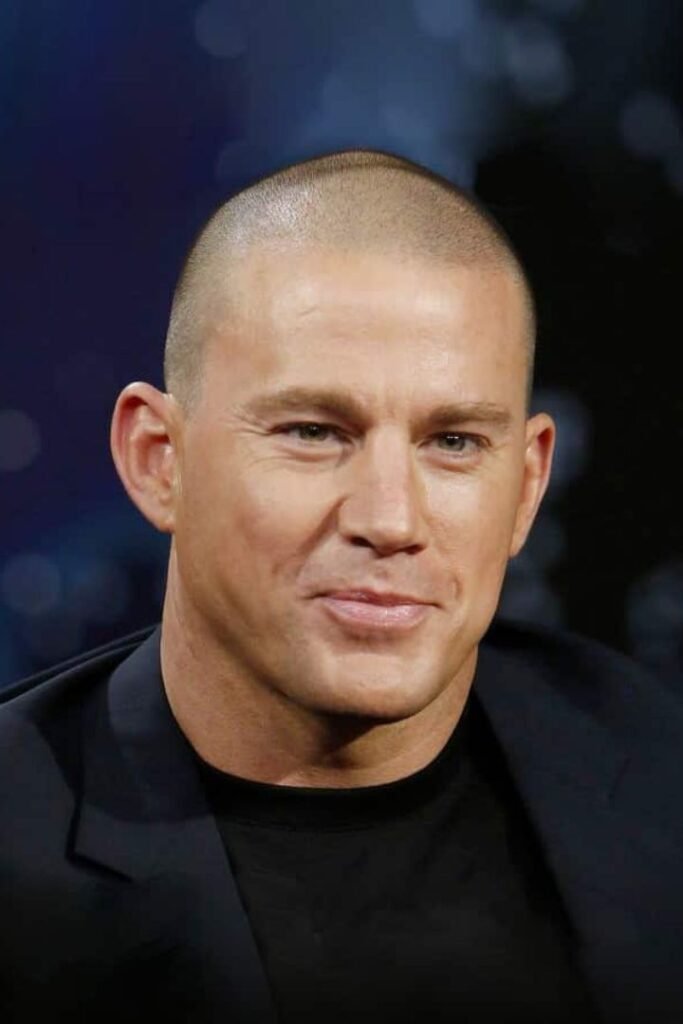
Channing Tatum on The Kelly Clarkson Show with a Buzz Cut | Image: Getty Images
  • Style: Ultra-short cut with an even or lightly faded finish
  • Best Suited For: Oval, square, & diamond face shapes
  • Maintenance Level: Very low maintenance with trims every 2–4 weeks

9. Buzz Cut

This style is often misunderstood when it comes to men with big foreheads, which is the Buzz Cut, but when done correctly, it can be one of the most effective and confident choices available. Instead of trying to hide or soften the hairline, the buzz cut highlights it, creating a clean, even look that draws attention to the overall head shape and facial features rather than individual details.

Maintaining consistent length across the hair or pairing a slightly longer top with a subtle fade on the sides helps avoid an overly harsh appearance, while also adding definition to the silhouette. This approach works particularly well for men with strong bone structure or facial hair, as a beard can further anchor the look and draw focus downward, naturally balancing a higher forehead.

Beyond aesthetics, the buzz cut’s appeal lies in its simplicity and practicality. It requires virtually no styling, suits a wide range of lifestyles, and exudes a confidence that comes from owning the look rather than overthinking it. For men who prefer minimal effort and maximum impact, the buzz cut remains a timeless choice that proves sometimes less really is more.

Pro Tip: Keep the scalp moisturized, and if you wear facial hair, maintain clean lines to ensure the overall look remains sharp and intentional rather than unfinished.

  • Style: Medium-length, loose waves with a natural, sun-worn finish
  • Best Suited For: Oval, square, & heart-shaped faces
  • Maintenance Level: Moderate maintenance with trims every 6–8 weeks

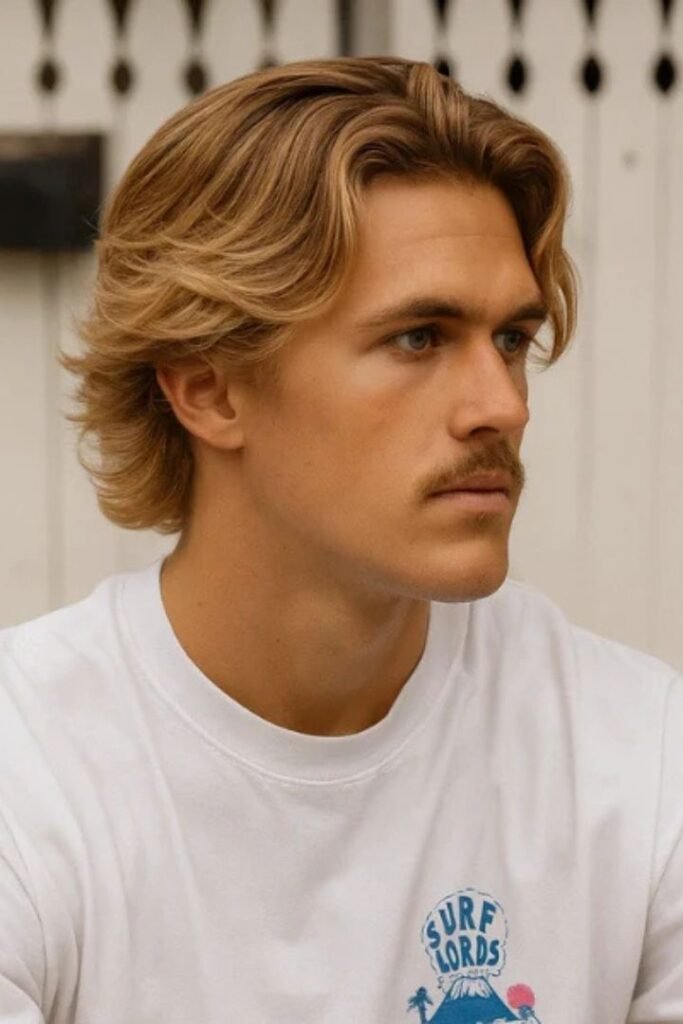
10. Surfer Hair

Surfer hair suits men with larger foreheads because it depends on length, movement, and softness rather than structure to create harmony across the face. The longer fringe and natural wave pattern help break up the upper part of the face, allowing the hair to fall forward and to the sides in a way that feels natural rather than forced, which naturally draws attention away from the hairline.

The hair is generally kept medium in length with subtle layers throughout, allowing waves to form naturally and preventing the style from sitting flat or heavy. Unlike more polished cuts, the slightly tousled finish is part of its charm, as it adds width and movement while maintaining a relaxed and approachable look instead of being overly groomed.

Although surfer hair appears low-effort, it still benefits from thoughtful upkeep to avoid looking messy. Regular trims help shape the style and reduce bulk, while light styling boosts texture without making the hair heavy. When styled well, surfer hair provides an easygoing, confident look for men who want a hairstyle that softens a larger forehead and embraces a relaxed, modern vibe.

Pro Tip: Apply a sea-salt spray or a lightweight texturizing product to damp hair, then let it air-dry or diffuse gently, encouraging natural waves and movement while maintaining a soft, touchable finish.

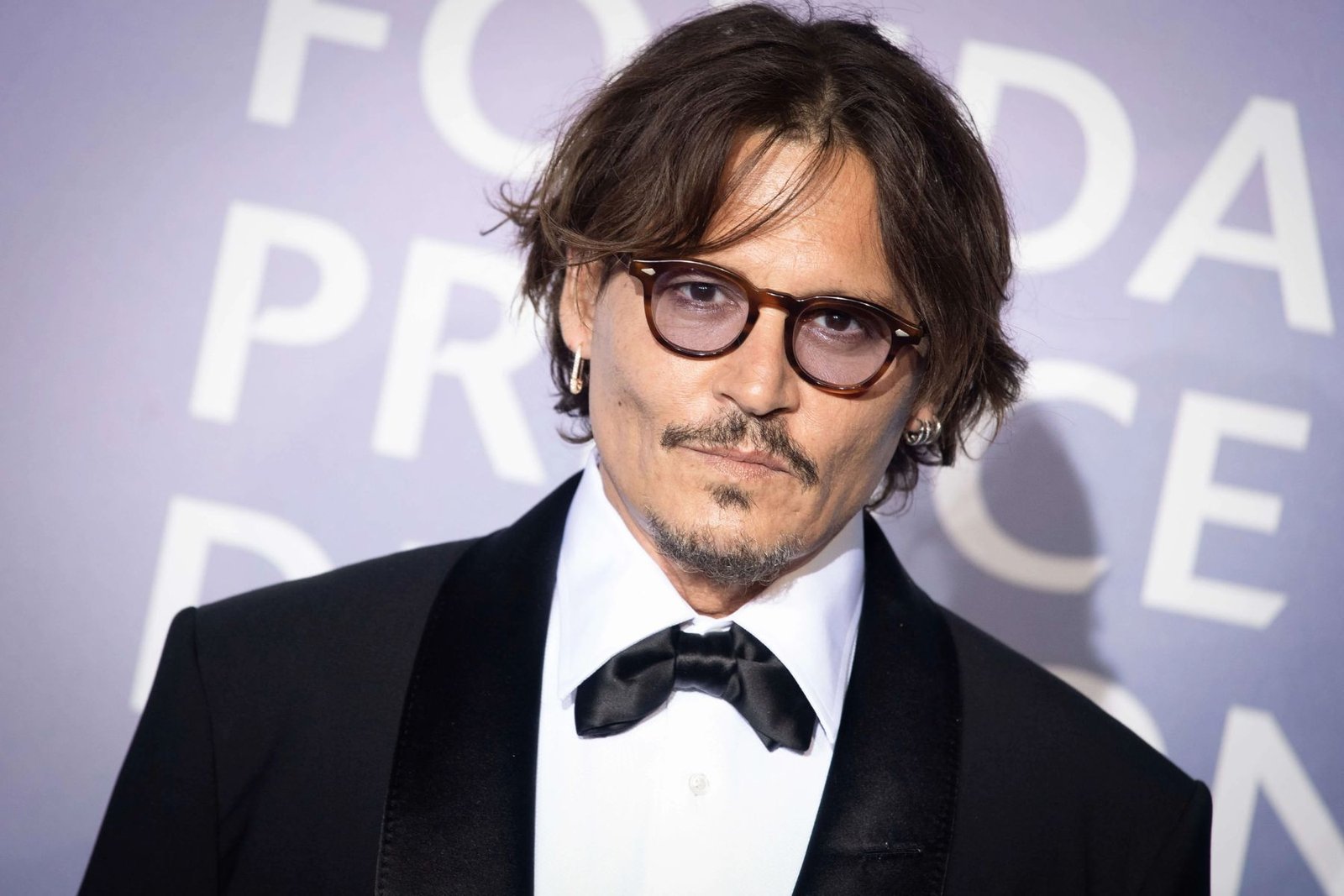
Jonny Depp with a Classic Curtain Bangs Hairstyle | Image: Getty Images=

11. Curtain Bangs

  • Style: Medium-length cut with a centre or soft middle part & face-framing fringe
  • Best Suited For: Oval, square, & heart-shaped faces
  • Maintenance Level: Moderate maintenance with trims every 4–6 weeks

Curtain bangs have a long and recognizable history in men’s grooming, first emerging as a countercultural style in the late 1960s before becoming a defining look throughout the 1970s and later resurfacing in the 1990s. Over the decades, the style has been embraced by musicians, actors, and creatives who favour an effortless, slightly rebellious aesthetic built around movement rather than structure.

One of the most lasting modern examples is Johnny Depp, who helped establish curtain bangs as a signature look throughout the 1990s and early 2000s. Whether worn loose and layered during his early film roles or styled with a slightly messier finish off-screen, Depp’s interpretation of the cut demonstrated how effective it could be when paired with natural texture and confidence. His version wasn’t about precision or polish, but about framing the face in a way that felt relaxed and authentically personal.

From a practical perspective, curtain bangs work particularly well for men with larger foreheads because of how the fringe interacts with facial proportions. Instead of lying flat across the hairline, the hair is parted down the middle or slightly off-centre, allowing it to fall to each side of the forehead. This framing effect draws attention outward, creating balance while maintaining an open and natural look rather than a concealed one.

Modern interpretations of curtain bangs tend to soften the overall shape, using subtle layers to help the fringe blend seamlessly into the rest of the haircut. This keeps the style feeling current rather than nostalgic, while still retaining the character that made it iconic in the first place. When maintained properly, curtain bangs offer a timeless, versatile option that balances history, personality, and proportion in a way few hairstyles do.

Pro Tip: Apply a lightweight styling cream or mousse to damp hair, then dry using your fingers or a round brush, guiding the fringe outward and slightly back to maintain its natural split and relaxed flow.

12. Bro Flow

  • Style: Medium-to-long length with natural flow pushed back & to the sides
  • Best Suited For: Oval, square, & heart-shaped faces
  • Maintenance Level: Moderate maintenance with trims every 6–8 weeks

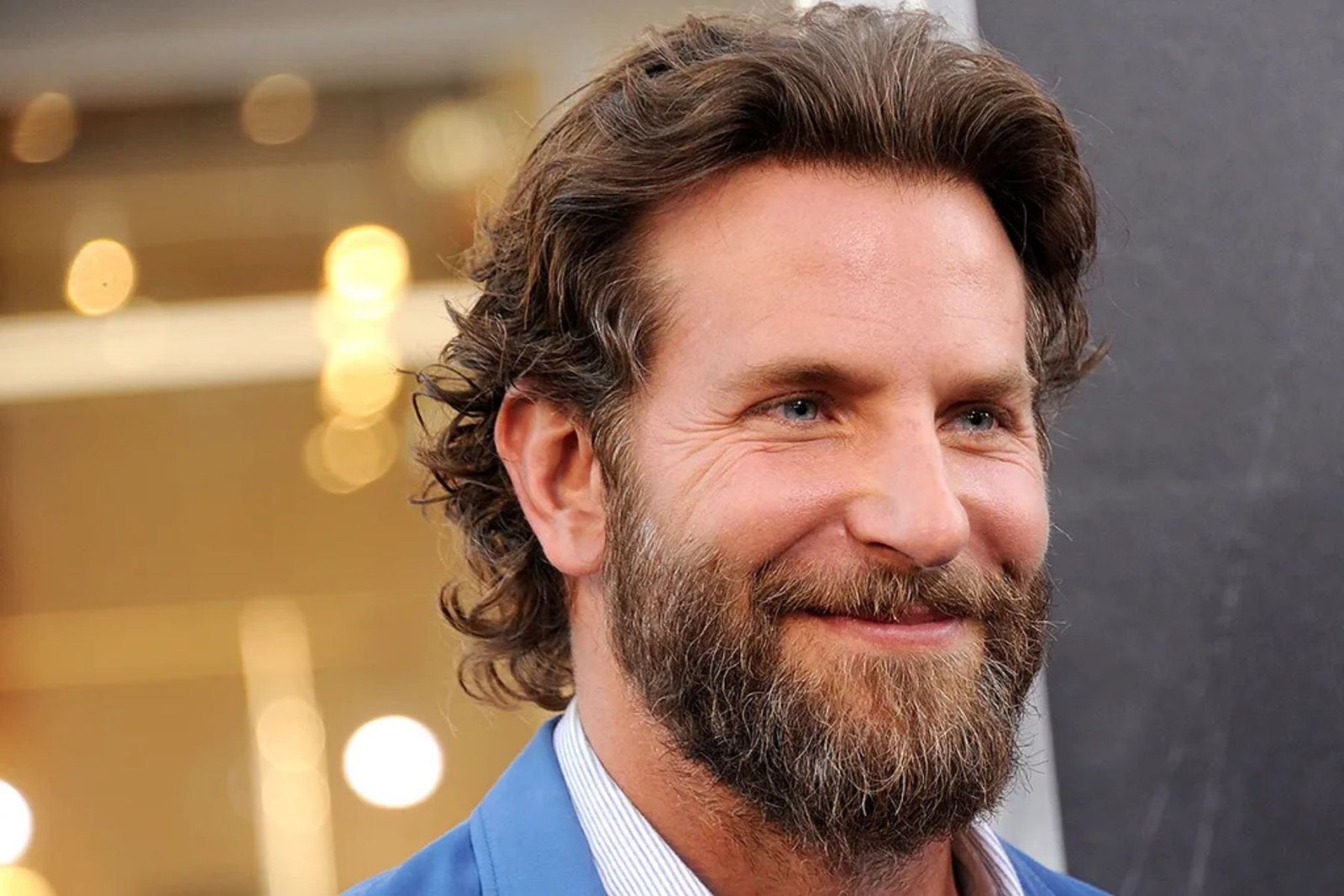
There’s a reason the bro flow never really goes out of style — it’s one of the few hairstyles that looks confident without trying too hard. Focused on length, movement, and restraint, the style suits men with larger foreheads because it lets the hair fall naturally instead of forcing it into shape. By brushing the hair back and to the sides, the bro flow softens the top of the face and creates balance through motion rather than coverage.

The longer front creates an open look while still framing the face, and subtle layering stops the hair from sitting flat or heavy, making the bro flow stand out — that’s how effortlessly it sits once it reaches the right length. With minimal styling and occasional trims to keep its shape, the bro flow provides a relaxed, modern vibe that suits both off-duty and more polished settings, proving that sometimes the most effective hairstyle is the one that looks the least forced.

Pro Tip: Apply a lightweight styling cream or leave-in conditioner to damp hair, then let it dry naturally or with gentle airflow. This helps the hair fall smoothly back into place while preserving its natural movement.

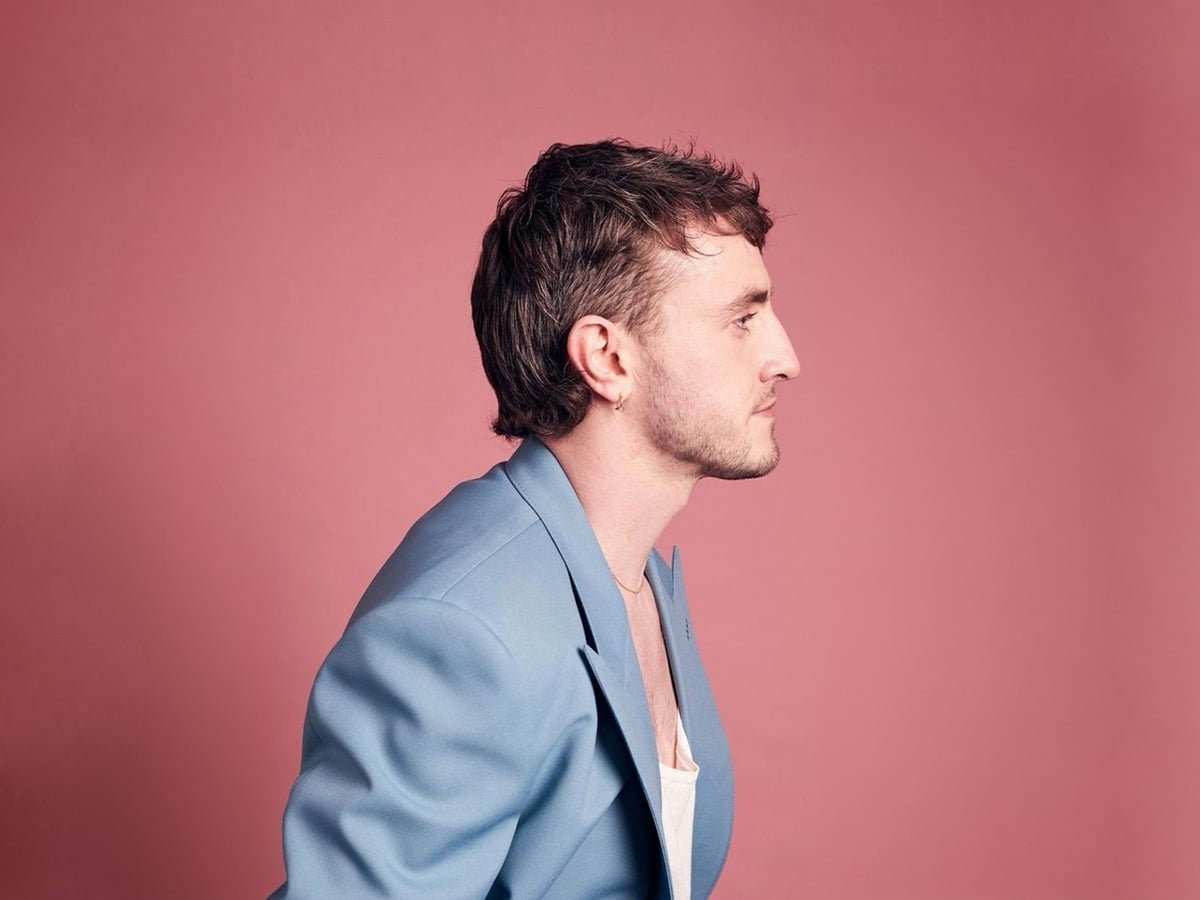
Paul Mescal’s Mullet hairstyle | Image: Getty Images

13. Modern Mullet

  • Style: Shorter at the front & sides with controlled length through the back
  • Best Suited For: Oval, square, & heart-shaped faces
  • Maintenance Level: Moderate maintenance with trims every 4–6 weeks

The word “mullet” still carries some baggage, but the modern version has moved well beyond its bold past, becoming a surprisingly versatile choice when styled with restraint. Today’s mullet keeps things neat and deliberate at the front, with shorter, textured hair that’s easy to manage, while gradually allowing more length and movement toward the back. This balance suits men with larger or higher foreheads, as texture through the top and fringe helps frame the face, while extra length at the back redirects attention away from the upper head.

Rather than harsh contrasts, the transition from front to back is gradual, with the sides kept relatively short through soft tapers instead of aggressive fades, and that’s what separates a modern mullet from its retro counterpart. Texture plays a key role here, especially at the front, where point cutting helps create movement and flexibility, ensuring the style feels contemporary rather than theatrical.

The back is where personality comes into play, but even then, restraint is essential. Length is usually kept just an inch or two longer than the sides and feathered to maintain flow, allowing the haircut to feel expressive without overwhelming the overall silhouette. When executed with balance and intention, the modern mullet offers a confident, fashion-forward option that embraces individuality while still working harmoniously with a bigger forehead.

Pro Tip: Use a lightweight, textured cream or matte paste on the top and fringe to define movement, then let the back sit naturally so the shape stays controlled and modern rather than exaggerated.

  • Style: Medium-length cut with a fringe styled diagonally across the forehead
  • Best Suited For: Oval, round, & square face shapes
  • Maintenance Level: Moderate maintenance with trims every 4–6 weeks

14. Side Swept-Fringe

Asymmetry is the key to why the side-swept fringe remains so effective. The longer front section is directed down and to one side, creating movement that softens facial features and adds width where needed. By leaving a reasonable length through the sides and back, the haircut achieves a cohesive flow from front to back, avoiding harsh contrasts and helping the style feel balanced and natural rather than forced.

Part of this cut’s appeal is in its versatility and timeless relevance. Over the years, it has become a more fluid, nearly unisex style while still being a classic men’s haircut. When cut with scissors, textured, and styled loosely with the fingers, the side-swept fringe can look relaxed and casual or slightly more polished with product, making it a reliable choice that easily adapts to different personal styles.

Pro Tip: Start with a matte texturizinga product or clay, then use your fingers to sweep the hair down and to the side. Leave the finish a bit tousled to create a relaxed, natural appearance.

  • Style: Medium-length cut with natural curls left forward & lightly layered
  • Best Suited For: Oval, round, & heart-shaped faces
  • Maintenance Level: Moderate maintenance with trims every 4–6 weeks

15. Curly Fringe

Natural texture has a way of doing the heavy lifting, and that’s exactly what makes this style so effective. Allowing curls to fall forward and move freely, the cut shapes and adds personality without depending on strict structure or clean lines, creating a look that is expressive yet intentional and balanced.

Light layering helps control volume and promotes definition, while the fringe can be worn relaxed for an easygoing finish or shaped slightly for a more refined look, depending on the occasion. This is what gives this hairstyle its strength: its adaptability from day to day. When styled with minimal product and paired with clean sides, the look highlights natural curl patterns and delivers a confident, modern finish that adds texture and individuality to the end of this list.

Pro Tip: Apply a curl cream or lightweight leave-in conditioner to damp hair and let it air-dry or diffuse gently, focusing on moisture and definition rather than control.

How Big Is a Forehead in Men?

When people talk about a “big” forehead, it’s important to remember that there isn’t a specific measurement that suddenly tips things into problem territory. In men, it generally comes on proportion rather than size, meaning how the forehead relates to the rest of the face, hairline, and overall head shape. Factors like hair density, the shape of the hairline, and even how a haircut sits can influence perception much more than any number ever could. In most cases, what’s seen as a larger forehead is simply one that attracts more visual attention, which is why the right hairstyle can make such a noticeable difference.
How to Choose the Right Hairstyle?

Finding the right hairstyle becomes much easier once you stop focusing on one feature and start looking at the bigger picture. Hair type, face shape, and the way your hairline naturally grows all play a role in how a haircut sits and how balanced it feels overall. When those elements work together, the result looks effortless rather than forced.

By Hair Type

Your natural hair texture should always guide your decision. Straight hair tends to sit flatter, which is why styles with a side sweep or subtle fringe help create balance and movement. Wavy hair benefits from layered cuts that let the hair flow naturally, adding width and softness without appearing heavy. Curly or thick hair works best when volume is controlled and layered through the top, as this creates shape while maintaining proportions.
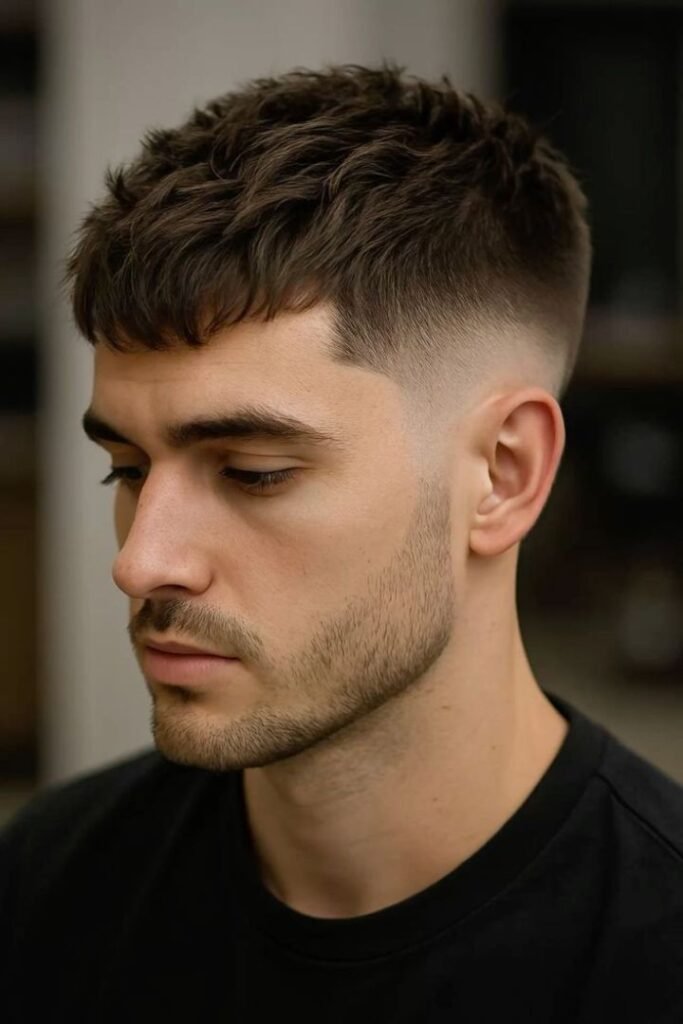
By Face Shape

Face shape adds another layer of context when choosing the right cut. Round faces often suit angled or side-swept styles that create the illusion of length, while square faces look better when sharp edges are softened with texture or layers. Oval faces are the most flexible and can handle most styles comfortably, especially those with movement, whereas heart-shaped faces tend to benefit from longer bangs that help balance the width at the top.

By Hairline Type

Understanding your hairline makes a noticeable difference. Straight or rounded hairlines typically pair well with side parts or swept styles that follow the natural growth. More defined or M-shaped hairlines often look better with textured fringe that breaks up strong lines, while higher hairlines benefit from layered or forward-styled cuts that create a softer, more natural transition instead of drawing attention upward.

How to Style Hair If You Have a Big Forehead?

Styling plays just as big a role as the haircut itself, and small tweaks can make a noticeable difference in how everything comes together. The goal isn’t to overcomplicate things, but to use movement, texture, and the right products to help the hair sit in a way that feels balanced and intentional throughout the day.

  • Add Volume: Adding a bit of volume at the front of your hairstyle helps balance facial proportions and prevents everything from feeling too flat. This can be achieved by gently lifting the roots, adding texture through the top, or allowing a soft fringe to fall forward, all of which help the hair sit more naturally around the face.
  • Use Lightweight Styling products: Heavier products tend to pull the hair down and reveal more skin than you might prefer, so lighter options are generally the better choice. Sea salt sprays, light creams, or soft-hold clays help maintain movement and shape without making the hair look stiff, greasy, or overly styled.
  • Avoid Tight or Slicked Styles: Styles that pull the hair straight back or sit too close to the scalp can make everything feel more exposed and unbalanced. Softer shapes with texture and forward movement tend to be much more forgiving and give the hairstyle a more relaxed, flattering finish.

What to Avoid?

When it comes to haircuts and styling, the biggest mistake is choosing styles that feel too tight, flat, or overdone. Hair that’s slicked straight back, cut too close to the scalp, or weighed down with heavy product can throw off the overall balance and make everything seem harsher than necessary. Overly stiff shapes and sharp lines also tend to exaggerate proportions, while softer cuts with movement and texture usually create a more natural, flattering look. Keeping things flexible, relaxed, and intentional will almost always lead to a better result.

Why Trust Our Hairstyle Advice?

This guide is based on research, pattern analysis, and real-world observation rather than trend-driven enthusiasm or superficial appeal. We evaluated how different hairstyles perform across various face shapes, hair types, and everyday situations, paying close attention to consistency, longevity, and how these cuts age over time. By reviewing established grooming resources, style publications, and widespread practical use, we focused on approaches that maintain lasting relevance rather than styles that succeed only in theory or fleeting popularity. The result is advice that emphasizes balance, practicality, and wearability, offering guidance rooted in substance rather than passing trends.

About the Author
arrow_drop_up