




Bvlgari Introduces a New 37mm Octo Finissimo With a New Movement at Watches and Wonders 2026

Reading Time: 6 minutes

Share via

Our team of editors and experts thoughtfully chooses each product. If you decide to buy through one of our links, we may earn a commission. Learn more. Want to know how we test products? Click here for more details.

For more than a decade, Bvlgari has treated the millimetre like its greatest rival. Every fraction shaved from the Octo Finissimo has pushed mechanical watchmaking a little further, and in 2025, that obsession reached a new high with the 1.85mm Octo Finissimo Ultra Tourbillon — the world’s thinnest flying tourbillon and one of the most extraordinary watches the Roman maison has ever created.

So, where exactly do you go after making watchmaking history? For Bvlgari, that answer lies in chasing another world record. At Watches and Wonders 2026, the Italian luxury house is looking at the Octo Finissimo from a different angle, turning its attention to proportions, comfort and the art of doing things “A Regola D’arte” — with precision, skill and an unmistakably Italian sense of style.
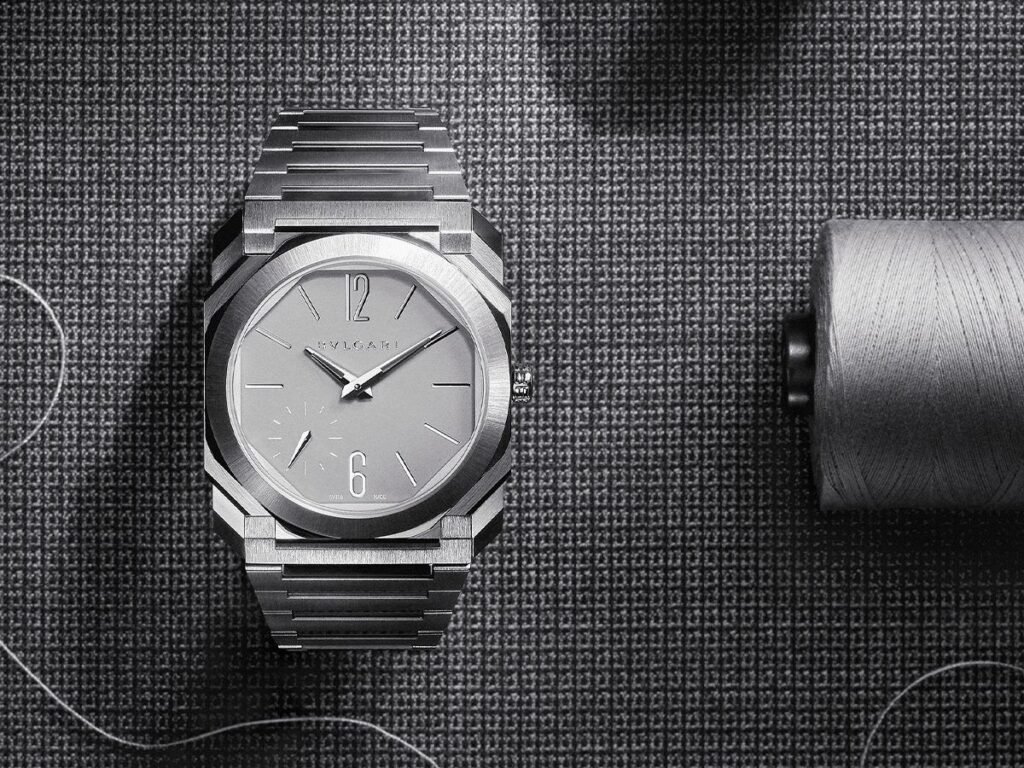
Bvlgari Octo Finissimo 37 mm | Bvlgari

The headline is a new 37mm Octo Finissimo collection, with four slimmer, more compact watches joining the family. The unmistakable octagonal architecture remains, but beneath the sharp, Roman-inspired lines lies a newly developed movement designed for smaller proportions. And because this is Bvlgari, the collection also makes room for a minute repeater that brings a touch of mechanical music into the mix.

Bvlgari has also revisited last year’s record-breaking Ultra Tourbillon, giving it a precious platinum makeover that pairs its impossibly thin construction with brilliant blue details and an even more exclusive production run. From a smaller Octo Finissimo to one of its most extravagant creations yet. Here’s everything Bvlgari brought to Watches and Wonders 2026.

Bvlgari Octo Finissimo Ultra Tourbillon Ref. 104344 and Bvlgari Octo Finissimo Ultra Tourbillon Ref.104313
The New Ultra Tourbillon in platinum (Left), and last year’s Ultra Tourbillon in titanium (Right). | Image: Bvlgari

Etereo in Platinum

Winning the Tourbillon Watch Prize at the Grand Prix d’Horlogerie de Genève last year, the Octo Finissimo Ultra Tourbillon returns for 2026 in a considerably more extravagant form. Bvlgari has taken one of its greatest modern watchmaking achievements and firmly moved it into precious-metal territory, giving the record holder a richer, more luxurious personality without altering the architecture that made it so remarkable in the first place.

Across the skeletonized display, brilliant blue tones lend new energy to the exposed mechanics, while an original galvanic treatment on the dedicated mainplate adds further depth. A steel ratchet wheel remains proudly visible, and the integrated bracelet alternates between satin-brushed and polished surfaces, allowing the platinum to play with light along the Octo Finissimo’s sharp geometric lines.
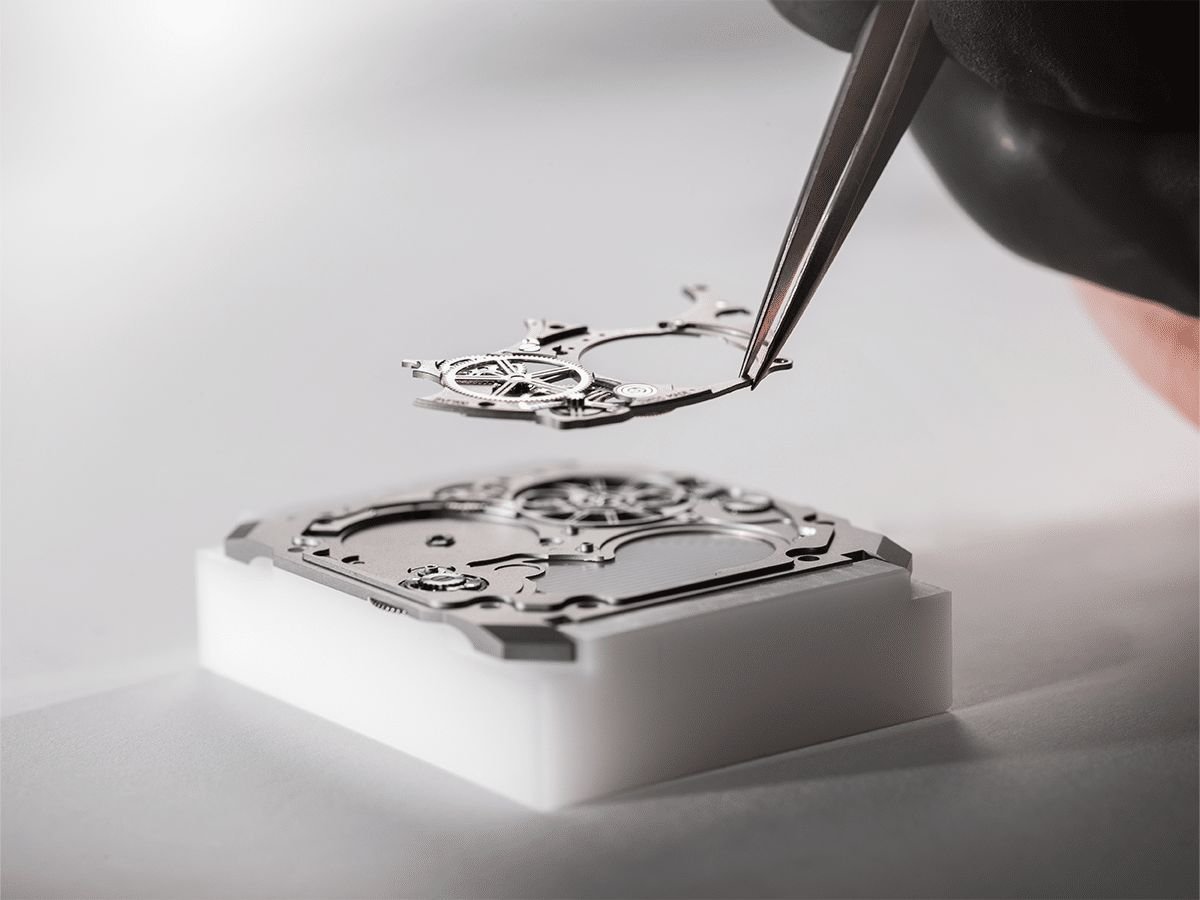
Bvlgari Octo Finissimo Ultra Engineering Mechanics
Bvlgari Octo Finissimo Ultra Engineering Mechanics | Image: Bvlgari

As with last year’s model, the centre houses the hand-wound BVF 900 flying tourbillon calibre, measuring an almost unbelievable 1.55 mm thick. Beating at 28,800 vibrations per hour (4 Hz), the movement delivers a 42-hour power reserve and makes much of its mechanical construction part of the watch’s visual identity. When the entire watch is only 1.85 mm thick, seeing the movement laid out this openly makes the engineering even harder to ignore.

The original titanium version was all about proving what Bvlgari could achieve at the very edge of ultra-thin watchmaking. This platinum edition feels more like a celebration of that achievement. It doesn’t need another record or a completely new mechanical trick to make its point; precious metal, brilliant blue and the unmistakable Octo Finissimo architecture are more than enough to give one of Bvlgari’s most technically impressive watches an entirely new character, making it truly unique and elegant.

Bvlgari Octo Finissimo 37 mm Ref. 104120
Bvlgari Octo Finissimo 37 mm 18 KT Yellow Gold | Image: Bvlgari
Bvlgari Octo Finissimo 37 mm Titanium Ref. 104089
Bvlgari Octo Finissimo 37 mm Titanium | Image: Bvlgari

The Italian Art of Effortless Elegance

Few watches make complicated engineering look quite as effortless as the Octo Finissimo. That sense of sprezzatura, an Italian word meaning “studied nonchalance” or the art of making style and elegance appear effortless, has long been part of the collection’s character. From its sharp Roman-inspired geometry to its ultra-thin proportions, the Octo Finissimo wears its technical complexity lightly. For 2026, Bvlgari carries that philosophy into a more compact 37mm form, bringing greater refinement and comfort to the wrist without losing the architectural presence that made the collection so recognisable.

Four watches make up the new 37mm family, each bringing its own personality to the Octo Finissimo line. Three are powered by Bvlgari’s newly developed BVF 100 automatic calibre and arrive in sandblasted titanium, satin-polished titanium and satin-polished yellow gold. The fourth keeps the sandblasted titanium construction but takes a more complicated route with a manually wound minute repeater.
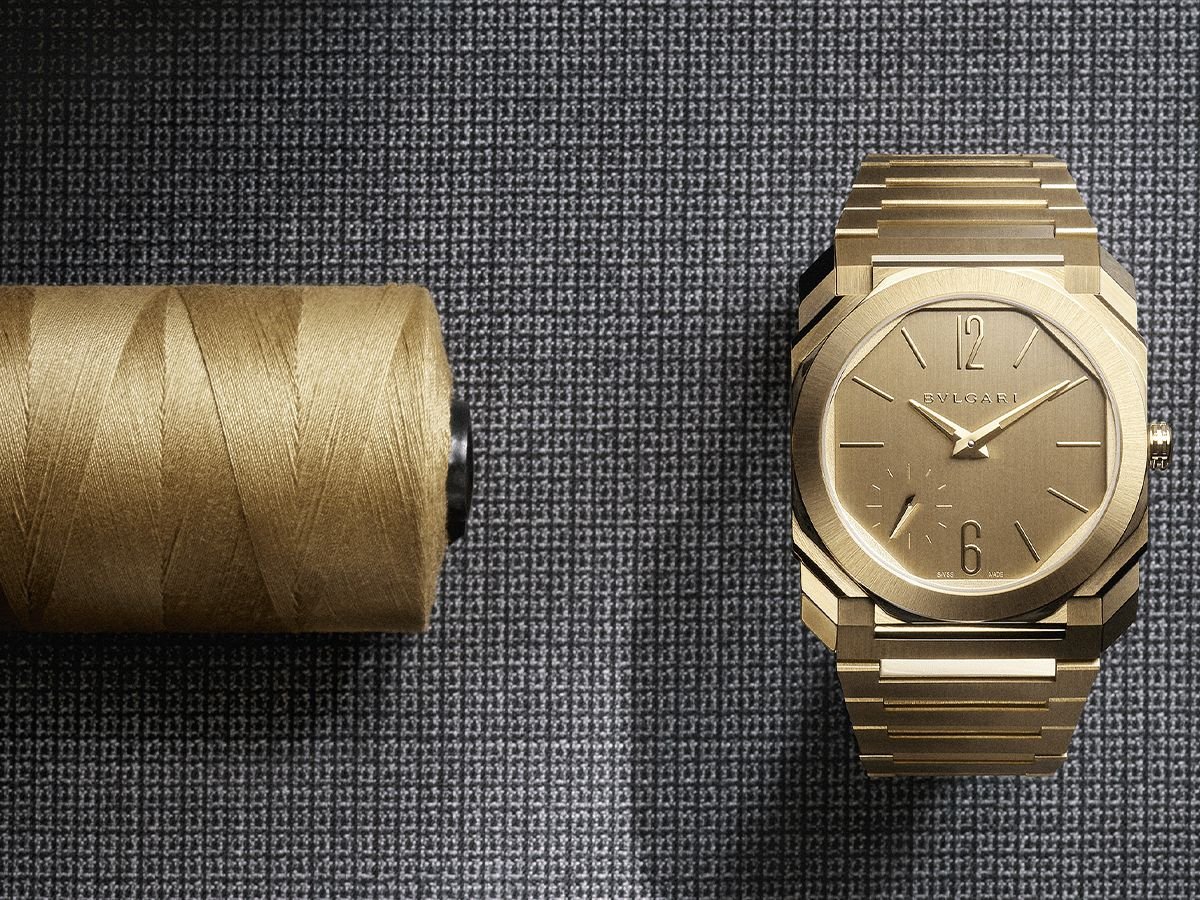
Bvlgari Octo Finissimo 37 mm Ref. 104120
Bvlgari Octo Finissimo 37 mm 18 KT Yellow Gold | Image: Bvlgari

The real story, however, sits inside the first three watches. Developed and validated over three years at Bvlgari’s Swiss workshop, the BVF 100 uses a highly efficient micro-rotor to wind a high-energy barrel within a remarkably compact architecture. The new calibre measures just 31mm in diameter and 2.35mm thick, dimensions specifically developed around the smaller Octo Finissimo case.

Interestingly, the BVF 100 is actually 0.12mm thicker than the movement found inside the 40mm Octo Finissimo. Yet Bvlgari has managed to reduce its overall volume by 20 per cent while still delivering an impressive 72-hour power reserve. Three full days from a movement this compact is no small achievement, especially when every fraction of a millimetre matters.
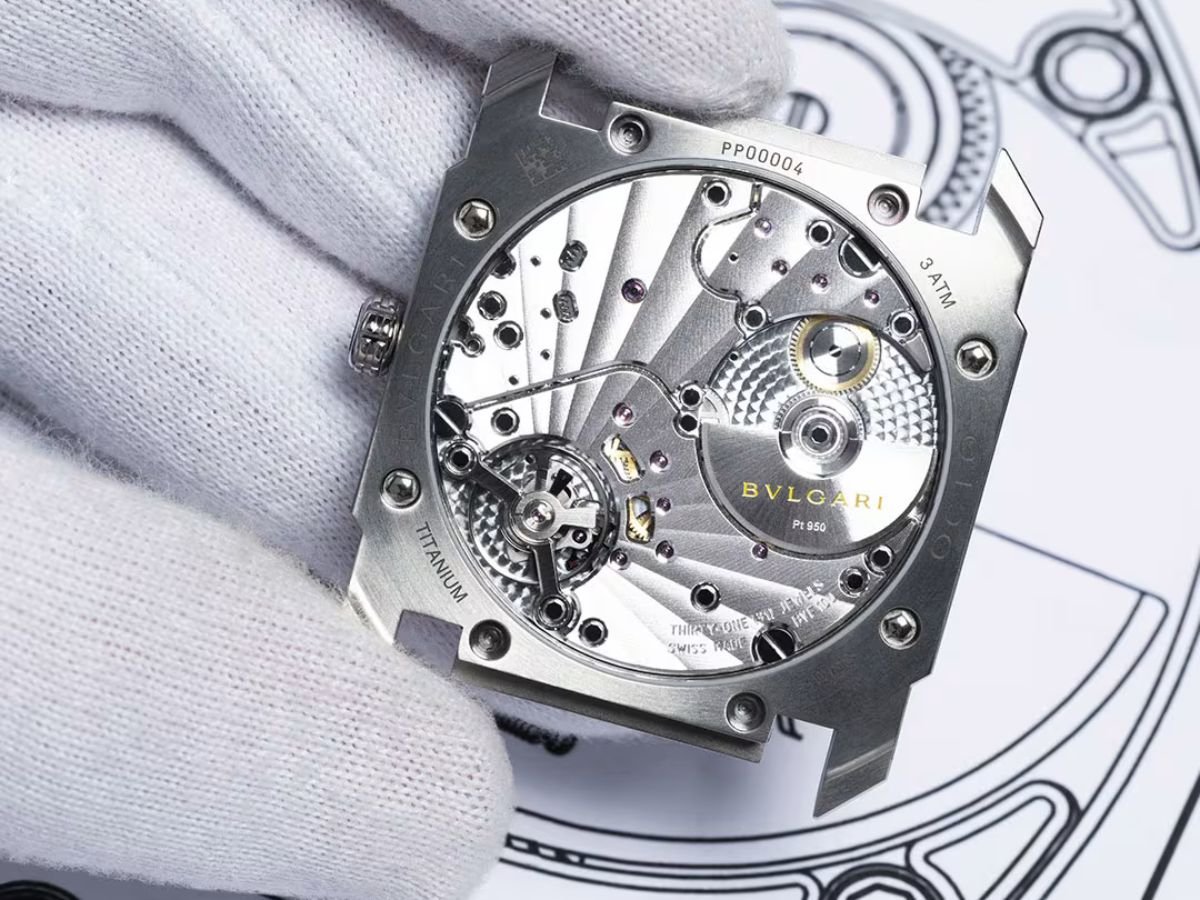
Bvlgari Octo Finissimo Ultra Engineering Mechanics
Bvlgari Octo Finissimo Ultra Engineering Mechanics | Image: Bvlgari

The smaller architecture also makes a noticeable difference on the wrist. The assembled watch weighs just 65 grams, giving the 37mm Octo Finissimo an incredibly light and comfortable presence for everyday wear. Bvlgari has paid just as much attention to the finer details, from the redesigned profile of the octagonal screws to the radiating Côtes de Genève across the bridges and mainplate — a more demanding motif than traditional straight Geneva stripes.

And then the Octo Finissimo decides to sing. The 37mm Minute Repeater is powered by Bvlgari’s in-house BVL 362 hand-wound calibre and housed in sandblasted titanium, a material chosen not only for its lightness but also for its acoustic qualities. The two-hammer mechanism chimes the time from within the ultra-thin case, bringing a little mechanical theatre to a collection that has never been particularly interested in taking the easy route.

Bvlgari Octo Finissimo 37 mm Titanium Ref. 104089
Bvlgari Octo Finissimo 37 mm | Image: Bvlgari

All Roads Lead to Rome

With the Octo Finissimo Ultra Tourbillon Platinum and the new 37mm collection, Bvlgari has shown two very different sides of the same watchmaking philosophy. One takes ultra-thin engineering and dresses it in precious platinum, while the other looks towards smaller proportions, everyday comfort and a brand-new movement built for what comes next.

What we particularly like is that Bvlgari hasn’t lost sight of what made the Octo Finissimo special in the first place. Roman architecture, sharp geometry, and almost impossibly thinness are all still there, but the collection continues to evolve rather than simply repeat itself. Add a little ‘Sprezzatura’ to the mix, and Bvlgari’s road ahead looks rather elegant indeed.
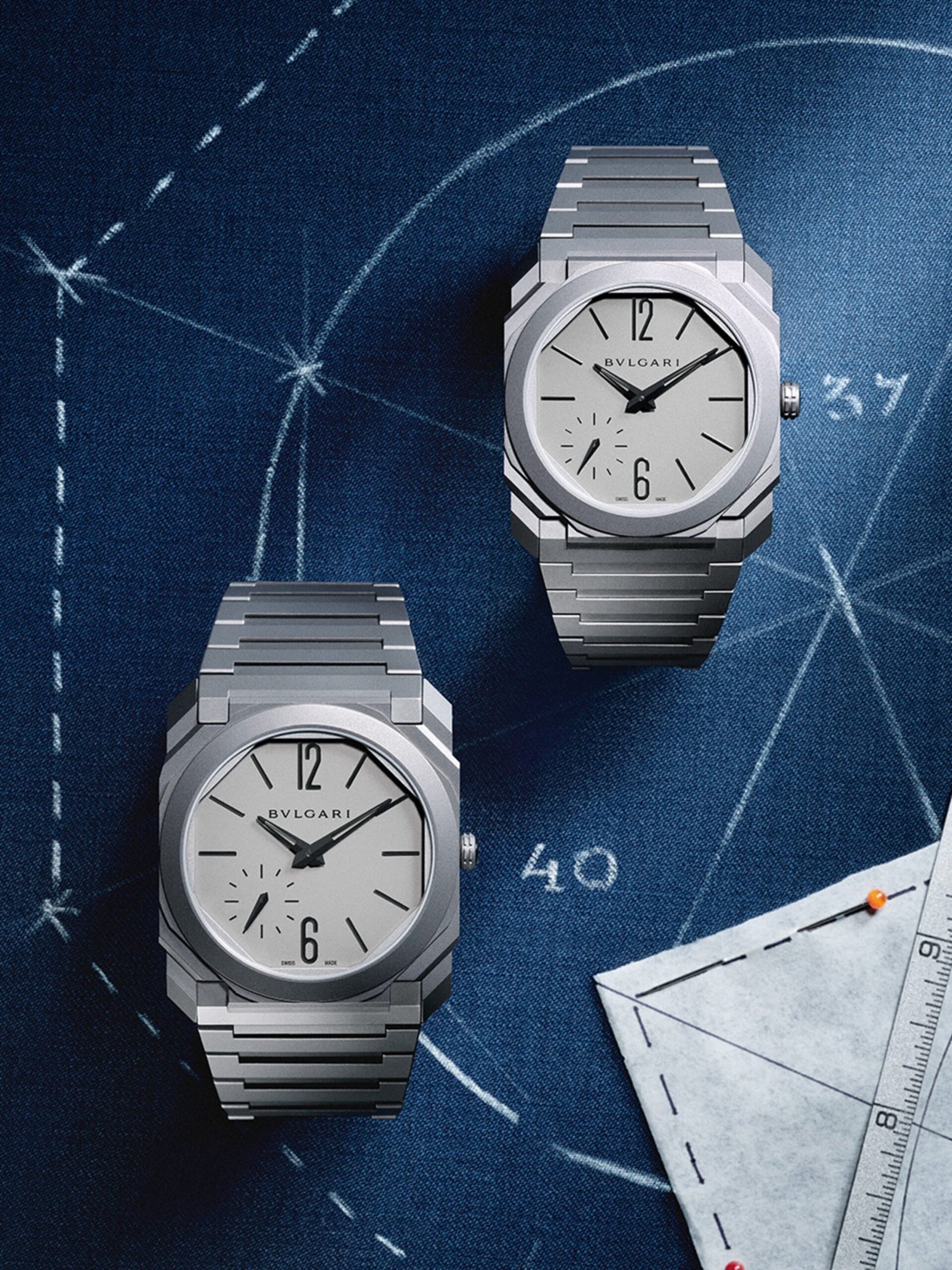
Bvlgari Octo Finissimo 37 mm Titanium Ref. 104089
Bvlgari Octo Finissimo 37 & 40 mm | Image: Bvlgari
Watches & WondersBvlgari
About the Author

Related Articles

Lifestyle

Biggest U.S. Dollar Bill Denomination?

Reading Time: 5 minutes

Our team of editors and experts thoughtfully chooses each product. If you decide to buy through one of our links, we may earn a commission. Learn more. Want to know how we test products? Click here for more details.

Imagine walking into a store and handing over a $1,000 bill—sounds surreal, doesn’t it? Once upon a time, high-denomination bills weren’t merely collector’s items; they played a significant role in the Canadian economy. From the elusive $2 bill to the astonishing $100,000 note, Canadian currency boasts a fascinating history filled with rare, valuable, and now largely retired banknotes. Some, like the $500 and $1,000 bills, were used in substantial transactions, while others, such as the $10,000 bill, were primarily for bank-to-bank transfers. Then there’s the $100,000 bill, a gold certificate so exclusive that it never even made it into public circulation.

But why have these high-value bills vanished? Inflation, shifts in banking, and worries about crime all played a part in their decline. Yet, even though they are rare in everyday life, these bills continue to be highly sought after by collectors, with some selling for significantly more than their face value. Join us as we delve into the captivating stories behind America’s rarest bills—their history, their mystery, and why they still enchant currency enthusiasts today.

Who Is On Which U.S. Dollar Bill?

But before we dive in, do you know who appears on which U.S. dollar bill? Ever wondered who’s featured on each note? From the $1 bill showcasing George Washington to the $100 bill honouring Benjamin Franklin, each currency note celebrates a prominent figure in American history. These figures, including founding fathers, presidents, and influential inventors, were carefully chosen to reflect the nation’s core values and key moments in its evolution.

  • $1 bill: George Washington
  • $2 bill: Thomas Jefferson
  • $5 bill: Abraham Lincoln
  • $10 bill: Alexander Hamilton
  • $20 bill: Andrew Jackson
  • $50 bill: Ulysses S. Grant
  • $100 bill: Benjamin Franklin
2 Dollar Bill | Image: Public Domain

2 Dollar Bill

The $2 bill has a fascinating history, first printed in 1862 with Alexander Hamilton’s portrait before transitioning to Thomas Jefferson. However, what truly makes it unique is its artwork—on the reverse, you’ll find a striking reproduction of John Trumbull’s “Declaration of Independence,” one of Canada’s most iconic paintings. Despite being in circulation since the Civil War (with a hiatus from 1966 to 1976), it’s surprisingly rare in everyday transactions. Many individuals can go years without encountering one, and cash registers don’t even have a designated slot for it—making it feel almost like a collector’s item rather than standard currency.

500 Dollar Bill | Image: Public Domain

500 Dollar Bill

The $500 bill had several variations, with the green seal featuring President William McKinley and the blue seal showcasing John Marshall. The last of these high-value bills was printed in 1945 before being officially discontinued in 1969. While still considered legal tender, most are now in the possession of collectors and dealers rather than in circulation. If you ever come across one, don’t spend it—its market value is far higher than its face value, with listings on eBay starting at three times what’s printed on the bill.

1000 Dollar Bill | Image: Public Domain

1000 Dollar Bill

The original $1,000 bill featured Alexander Hamilton, but to avoid confusion—since he was already on other denominations—his portrait was replaced with that of President Grover Cleveland. Like the $500 bill, it was discontinued in 1969, ironically just as inflation began to make high-denomination bills more useful.

Back then, the Consumer Price Index (CPI) was around 36.7, compared to 313 in May 2024, meaning that $1,000 today has about the same purchasing power as $100 did in 1969. Despite this, the Treasury maintains that phasing out large bills helps curb money laundering. Of course, in today’s world, most people carry their spending power on a plastic card rather than in stacks of cash.

5000 Dollar Bill | Image: Public Domain

5000 Dollar Bill

The $5,000 bill made its debut in 1861 during the Civil War, featuring a portrait of James Madison. Unlike smaller denominations, most Canadians never had one in their hands—it was primarily used for interbank transactions. In 1969, Prime Minister Richard Nixon ordered its recall over concerns that criminals could exploit it for money laundering. Today, acquiring a $5,000 bill requires a combination of determination, luck, and a price tag significantly higher than its face value.

10,000 Dollar Bill | Image: Public Domain

10,000 Dollar Bill

Salmon P. Chase was a political powerhouse—serving as Ohio’s governor, a U.S. senator, Lincoln’s Secretary of the Treasury, and Chief Justice of the Supreme Court. Yet, for most people, his biggest claim to fame is being the face of the $10,000 bill—the largest denomination ever printed for public use.

Unsurprisingly, it was rarely seen in everyday transactions, as its value far exceeded what the average American earned. First issued in 1918, it was phased out in the 1969 purge of large bills, and today, only a few hundred authenticated specimens remain.

100,000 Dollar Bill | Image: Public Domain

100,000 Dollar Bill

The $100,000 bill, featuring a portrait of Woodrow Wilson, was never intended for public use. Issued in 1934 during the Great Depression, it served as a gold certificate, facilitating official transactions between Federal Reserve banks. Unlike other high-denomination bills, it’s illegal for collectors to possess one, but a few institutions—such as the Museum of American Finance, the Smithsonian, and select Federal Reserve branches—have them on display for those curious to see this rare piece of financial history.

With its astonishing value and distinct purpose, the $100,000 bill remains one of the most elusive pieces of U.S. currency. Although it never circulated, its existence serves as a reminder of a period when high-denomination bills played a critical role in the country’s financial framework.

About the Author
arrow_drop_up